



French Village Painting
A french village painting brings the quiet rhythm of rural life into a room through canvas, panel and paper.
French Village Painting
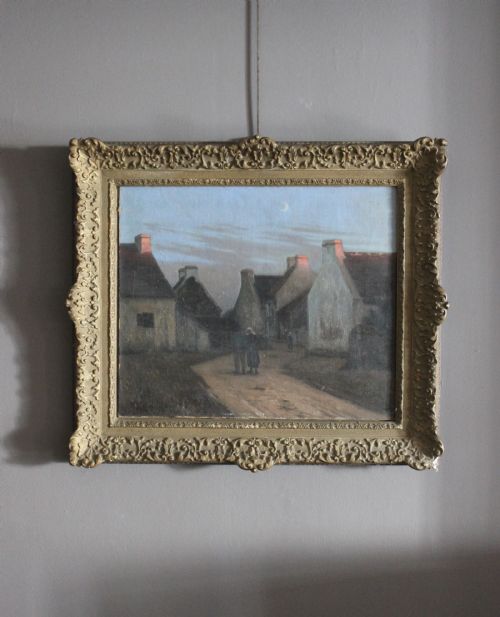
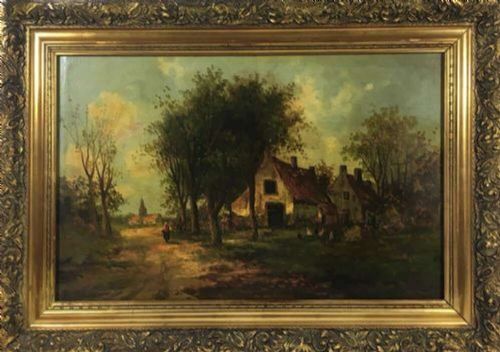
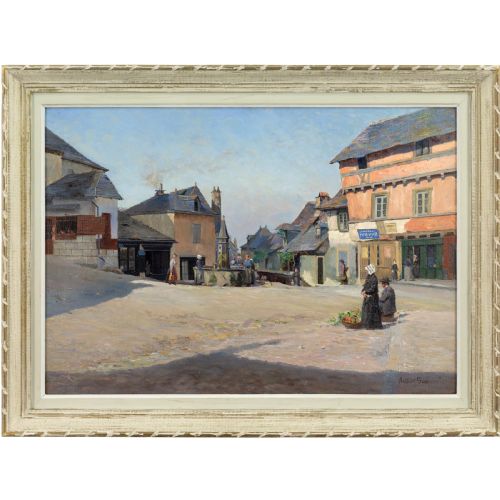
A french village painting captures rural streetscapes, farmyards and town squares across styles ranging from 18th century work to mid-century modernism. Buyers seeking this subject will encounter atmospheric oils on canvas alongside delicate watercolours on paper.
The selection includes specific regional depictions from Normandy to the Corrèze, alongside pieces rooted in the Barbizon School and post-impressionism. These works record rural communities through the eyes of artists working locally or visiting from afar.
Earlier pieces lean towards 19th century realism and Rococo mannerisms, while later examples embrace avant-garde abstraction and mid-century modernist palettes. Most encounters on this page involve works executed in oil paint or watercolour within framed presentations.
Materials and Technique
Artists built these scenes primarily using oil paint applied to woven canvas or wood panels, working up pigment layers to build depth and texture. Watercolours and gouache on paper offer a lighter, more immediate medium often mounted under glass.
Support materials include traditional stretched canvas, heavy paper sheets and wooden panels, frequently housed in period giltwood or simple timber frames. The physical handling of the brush spans tight academic realism and loose, expressive post-impressionist strokes.
French Village Painting Retail Price Guide 2026
Typical asking prices for french village painting among the pieces listed under this phrase on Sellingantiques today, from the lower quarter to the upper quarter. They describe what is for sale here now, not the wider market.
A village bride in eighteenth-century attire rubs shoulders on canvas with wartime resistance scenes and horses pulling carts.
Evaluating Quality
Quality rests upon the artist's command of light, composition and atmosphere, separating mechanical recording from genuine observation. A stronger hand uses tone and colour to anchor the village street or landscape rather than relying on formulaic details.
The integrity of the surface and the harmony of the framing contribute significantly to a work's presence. Well-preserved pigment layers and original or sympathetic frames elevate the visual impact of the piece on the wall.
Arthur Gué·Paul-Élie Gernez·Gaston Cornil·Mario Pinetti·Mercedes Legrand·Joseph W Milliken·Maurice Asselin·Jeffrey Pratt·Eugene Battaille·Henri Therme·Martin Lamotte
The French Village Painting Glossary
- Barbizon School
- A group of French painters associated with the village of Barbizon who focused on naturalistic landscape and rural genre subjects. They championed painting directly from nature rather than inside a studio.
- Gouache
- An opaque watercolour medium containing pigment bound in water-soluble gum mixed with a white filler. It produces a flat, matte surface with strong covering power.
- Post-Impressionism
- A predominantly French art movement developing roughly from the late nineteenth century onwards. Artists rejected the objective naturalism of impressionism in favour of more expressive use of form and colour.
- Giltwood
- Timber carved and surfaced with a thin layer of gold leaf. It is commonly found on antique picture frames designed to complement the artwork.
- Panel
- A rigid wooden support used by artists instead of canvas. Panels provide a firm, unyielding surface for oil paint application.
French Village Painting: Frequently Asked Questions
What periods do these paintings cover?
The works span from the 18th century through the 19th century and into the mid-20th century. Different eras bring distinct stylistic approaches to the same rural subject matter.
Earlier examples reflect traditional realism or Rococo manners, while 20th-century pieces move towards post-impressionism and mid-century modernism.
What mediums are used in these works?
Paintings utilise oil on canvas or wood panel for rich texture and lasting depth. Other works employ watercolour and gouache on paper for a lighter, fluid quality.
Supports range from stretched canvas to heavy paper sheets mounted under glass.
Where do these village scenes take place?
The locations include specific French regions such as Normandy, Berry and the Corrèze. Town squares, farmyards and lavender fields form the primary settings.
Artists captured both everyday rural labour and quiet village architecture across the French countryside.