


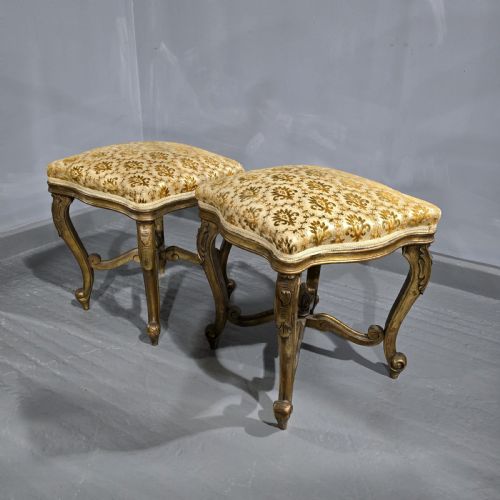
French Upholstered Ottoman
A french upholstered ottoman brings continental scale and soft textile comfort to a room, functioning as a seat or rest.
French Upholstered Ottoman
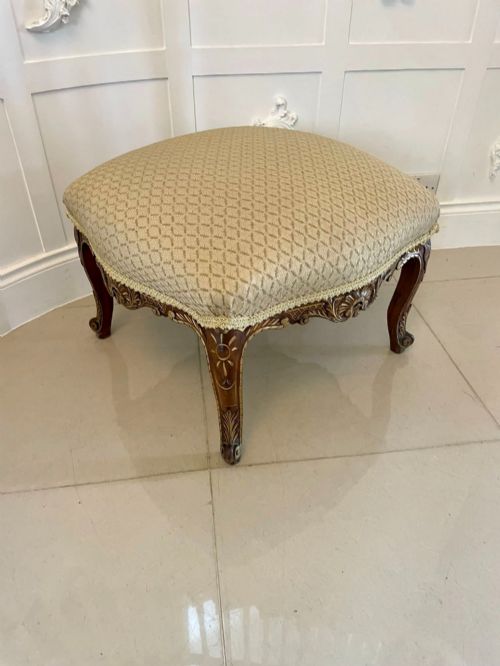
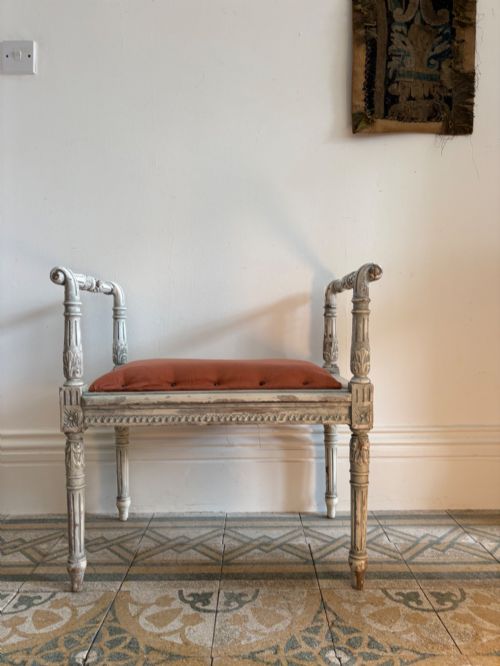
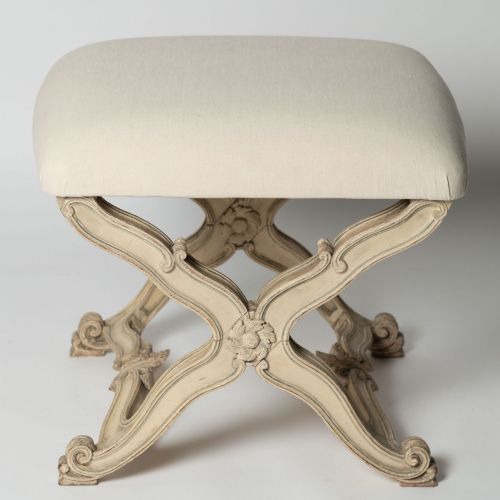
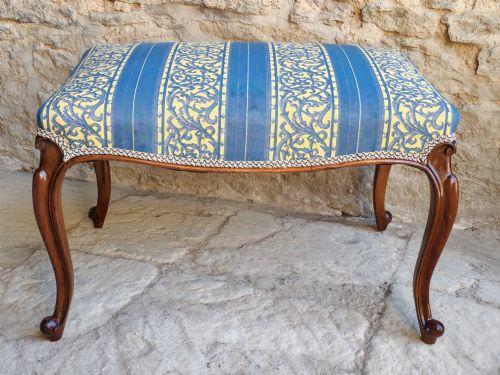
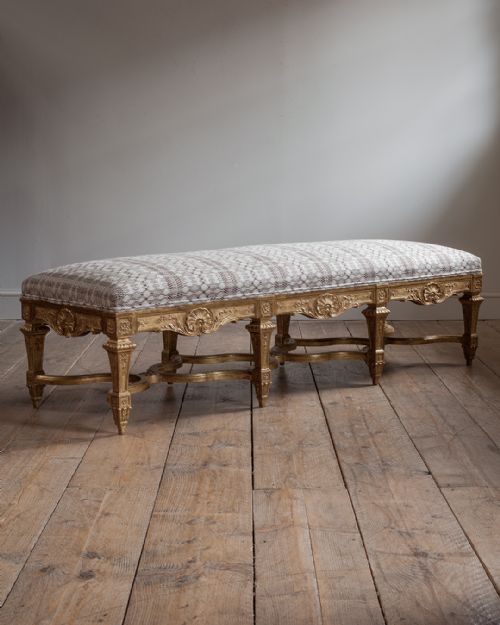
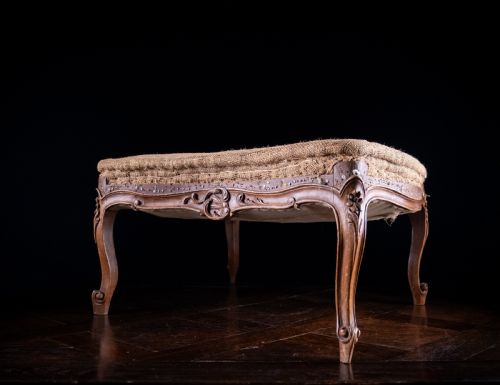
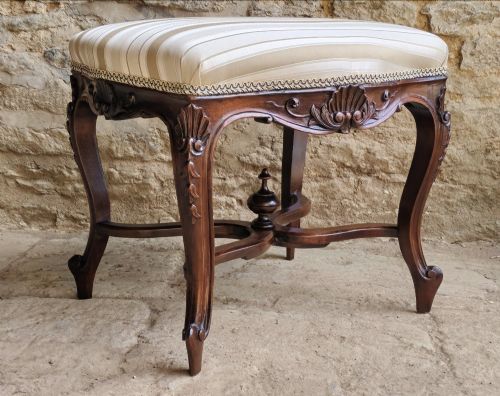
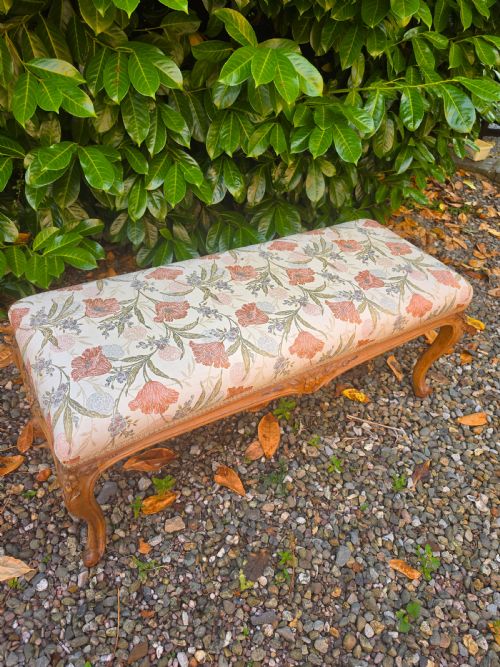
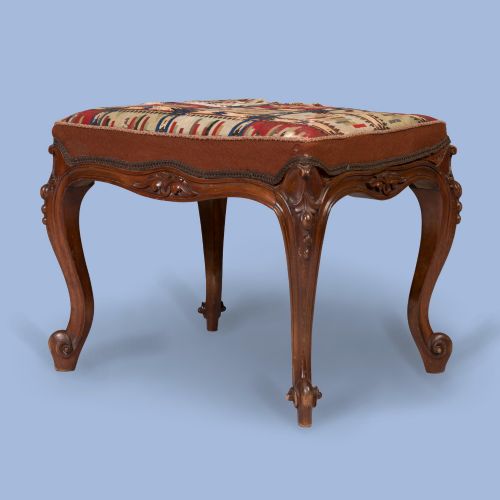
When searching for a french upholstered ottoman, buyers encounter low seating forms ranging from small footstools to long window seats and duet stools. These pieces originate predominantly from the nineteenth century, including specific decades such as eighteen eighty and nineteen hundred, alongside revival iterations.
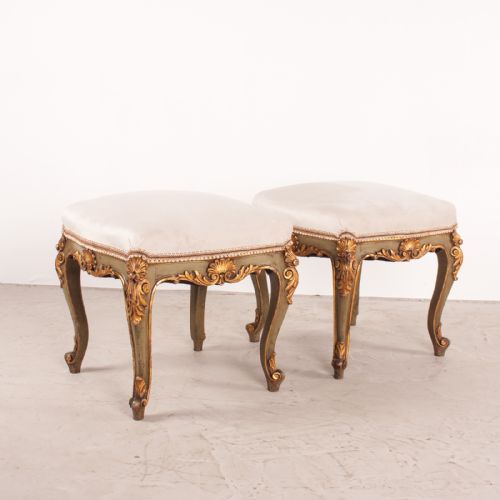
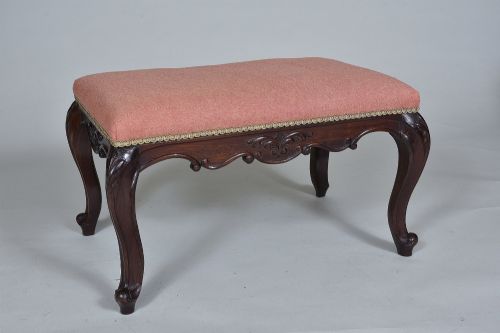
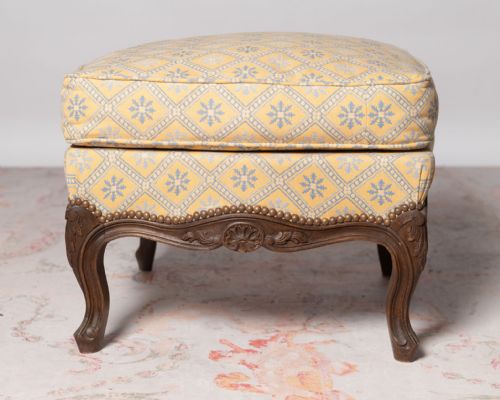
The selection here draws heavily on continental workshops, featuring forms associated with French chateau and salon life. Makers produced these items in various configurations, from walnut cabriole leg stools to giltwood window seats and needlework upholstered footstools.
How They Were Made
Carpenters shaped structural frames from hardwoods including walnut, mahogany, beech, oak, and rosewood, often applying giltwood, paint, or parcel gilding to the visible woodwork. Cabriole legs and intricate carved details define the structural ornamentation of these frames.
Upholstery completed the pieces using traditional textiles such as silk, velvet, tapestry, fabric, and Toile de Jouy. Brass hardware occasionally secured decorative elements or structural joints.
One industrious nineteenth-century Parisian workshop stamped its giltwood stool so firmly that the maker's name survives today.
What Varies in Quality
The degree of hand-carved detail on the wooden frame distinguishes standard productions from exceptional works. Crispness in the acanthus leaves, shell motifs, and cabriole curves indicates a higher grade of craftsmanship.
The choice of original or period-appropriate covering materials, such as silk or finely woven tapestry, elevates the standing of an individual piece. Structural integrity in the joinery of the walnut or giltwood frame dictates longevity.
Loidrault Freres Paris
The French Upholstered Ottoman Glossary
- Cabriole leg
- A furniture leg that curves outward and then tapers inward, mimicking an animal limb. This form appears frequently on nineteenth-century salon stools.
- Giltwood
- Wood that has been coated with gold leaf or thin gold paint. It provides a reflective surface on decorative revival frames.
- Toile de Jouy
- A traditional cotton or linen fabric featuring printed pastoral scenes in a single colour. It often covers nineteenth-century French seating.
- Duet stool
- An elongated seat designed for two people playing a keyboard instrument together. These pieces double as window seats or dressing stools.
- Window seat
- A long, upholstered stool created to sit beneath a window. Examples in the evidence date from the nineteenth century and incorporate carved oak or mahogany.
French Upholstered Ottoman: Frequently Asked Questions
How do I use a French ottoman?
These low seats function as footrests, dressing table perches, or window seats in living spaces and bedrooms. Their upholstered tops provide practical comfort alongside decorative presence.
They pair well with matching armchairs or serve as standalone accent pieces in hallways and dressing rooms.
What periods do these pieces span?
The available inventory spans the nineteenth century through the early twentieth century, encompassing Victorian productions and various revival movements. Specific decades represented include eighteen sixty, eighteen eighty, and nineteen hundred.
Stylistic influences draw heavily from earlier French reigns, reinterpreted by makers working across the nineteenth and early twentieth centuries.
What woods were used for the frames?
Cabinetmakers utilised walnut, mahogany, beech, oak, and rosewood for the structural frames of these stools. Softer woods or secondary timbers occasionally received paint or giltwood finishes.
Carved details were worked directly into these hardwoods before the application of upholstery and decorative trims.
How do I identify Louis XV style?
Louis XV style pieces display flowing asymmetric curves, naturalistic leaf carving, and characteristic cabriole legs. This aesthetic emerged strongly during revival periods in the nineteenth century.
Frames often feature giltwood or painted finishes that highlight the undulating woodwork typical of rococo revivals.