


French Upholstered Chaise Longue
A French upholstered chaise longue offers a deep seat for reclining, blending elaborate carved frames with soft textile surfaces.
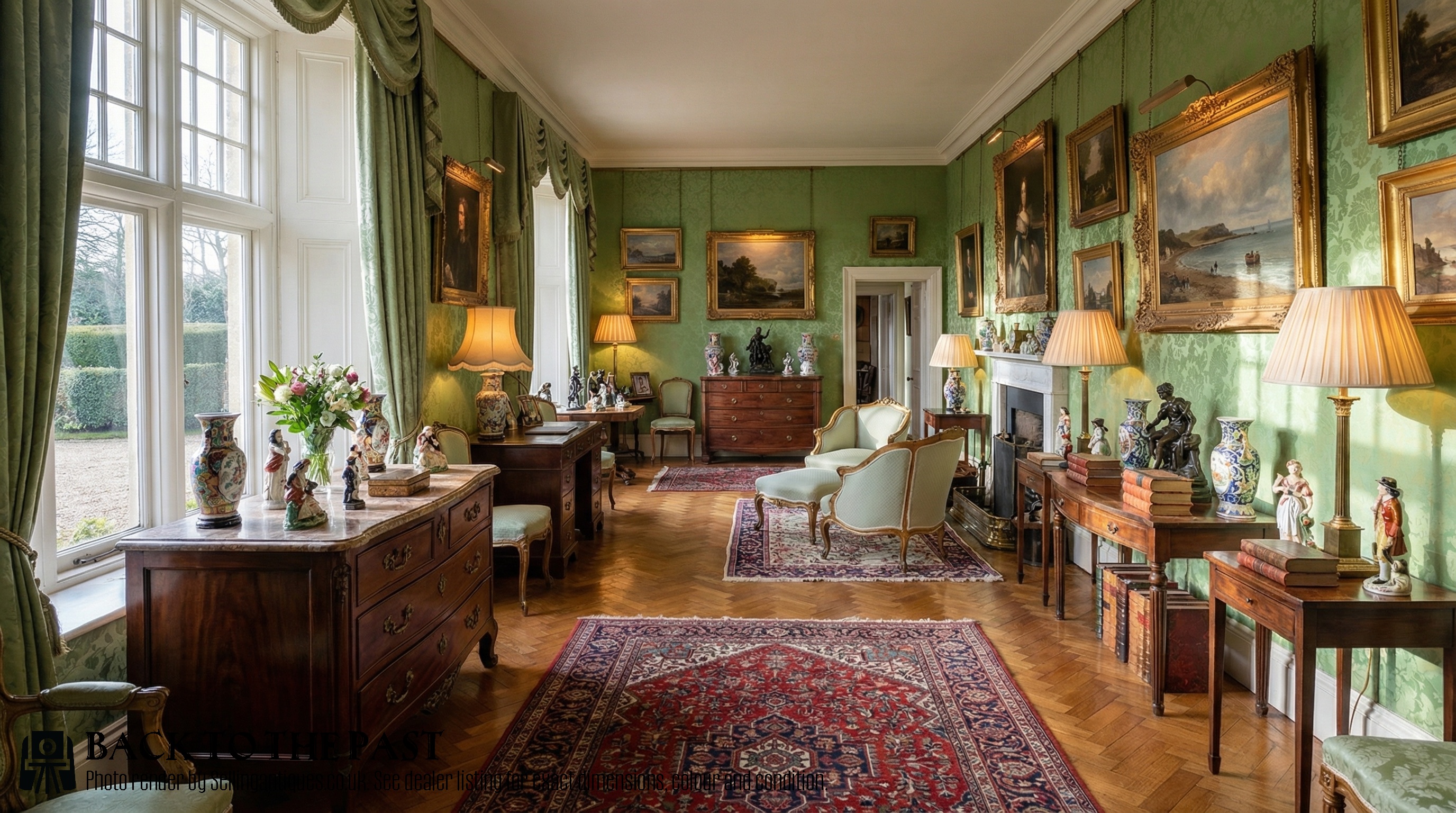
French Upholstered Chaise Longue
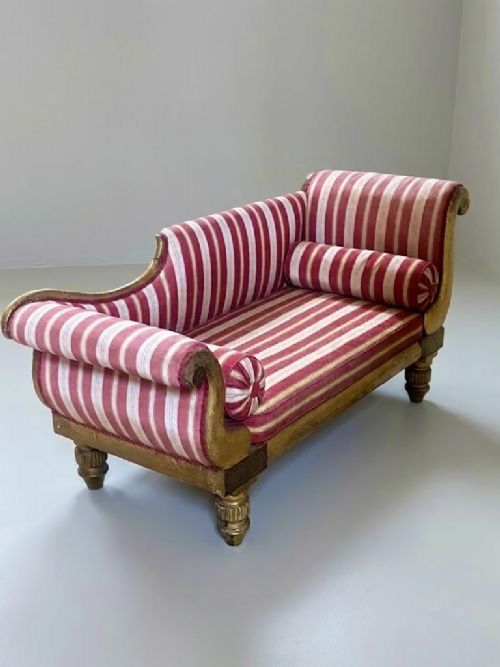
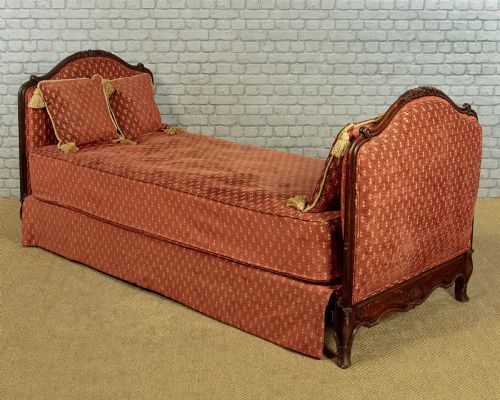
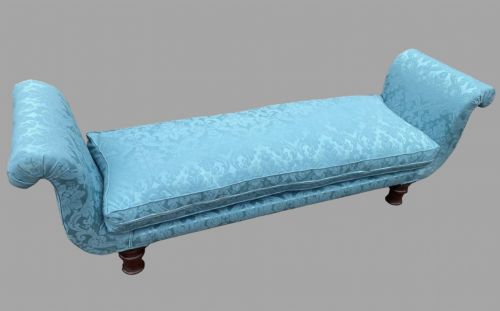
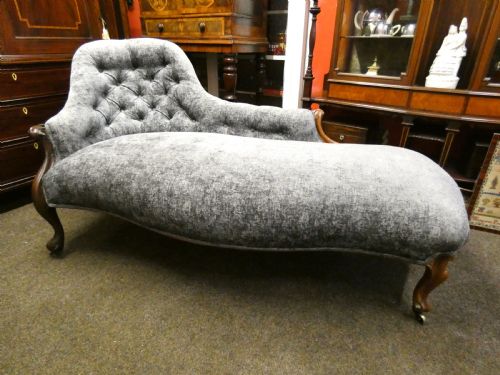
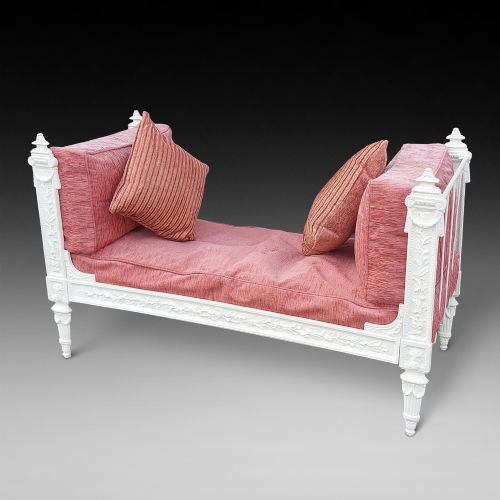
A French upholstered chaise longue combines an extended seat with a raised backrest designed for daytime resting, appearing in various revival styles including Louis XVI, Victorian Rococo, and French Empire. Buyers frequently encounter nineteenth century walnut and giltwood examples alongside later twentieth century iterations.
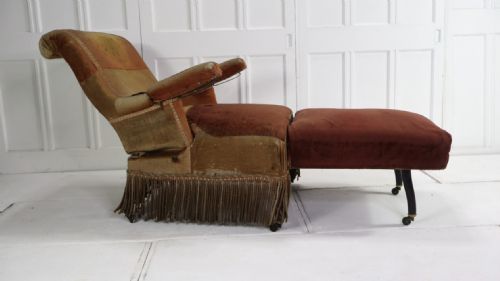
Makers and designers produced these daybeds and duchesse brisée forms using timber frames, mahogany, and brass accents, often upholstered in velvet, silk, or patterned fabric. The selection ranges from single-piece chaises to multi-part seating arrangements like the duchesse brisée.
Materials and construction
Wood frameworks utilise walnut, mahogany, and giltwood, carved with ornamental detail or finished in original paint. Structural integrity relies on solid timber joints supporting extended lounging surfaces.
Upholstery methods incorporate traditional fabric, velvet, and silk coverings, sometimes featuring buttoned detailing. Brass components appear on specific frames as decorative mounts or hardware.
Listings feature walnut, mahogany, and giltwood frames paired with velvet, silk, and fabric upholstery across Victorian and nineteenth century periods.
Quality differences
The refinement of the carved woodwork and the crispness of the giltwood or original paint finishes distinguish standard production from superior pieces. Deeply carved walnut frames and balanced proportions indicate higher workshop skill.
The choice and execution of the textile upholstery, whether velvet, silk, or buttoned fabric, affect the overall integrity and visual cohesion of the daybed.
The French Upholstered Chaise Longue Glossary
- Duchesse brisée
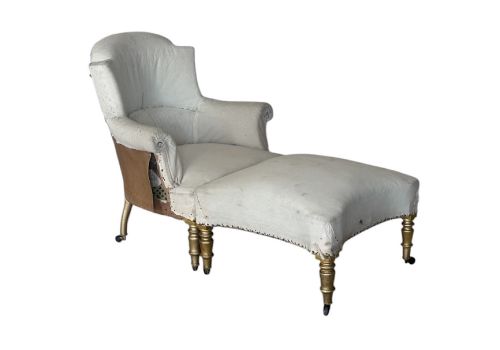
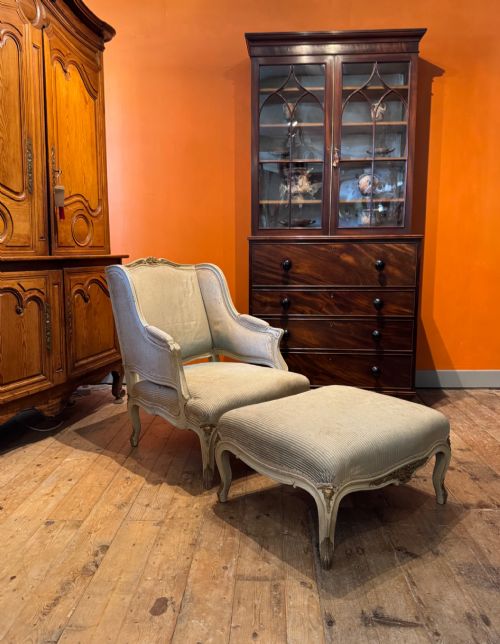
- A multi-part daybed consisting of a chair and one or two footstools that combine to form a continuous reclining surface. This form allows the pieces to be separated or used together.
- Giltwood
- Wood coated with a thin layer of gold leaf or gilt powder. It provides a bright, reflective surface popular in formal French seating.
- Lit bateau
- A daybed or bed with scrolled ends resembling a boat. The symmetrical or asymmetrical curved ends define the silhouette.
- Piecrust
- A decorative carved edge shaped with undulating curves resembling a pastry crust. It commonly trims the woodwork of nineteenth century frames.
French Upholstered Chaise Longue: Frequently Asked Questions
What is a duchesse brisée?
A duchesse brisée is a multi-part daybed system that splits into an armchair and matching footstools. It provides versatile seating configurations for reclining.
This form allows the user to adjust the overall length of the daybed by separating or joining the individual timber sections.
How do I identify a French Empire chaise?
French Empire pieces typically feature mahogany timber, classical architectural lines, and occasional brass mounts. The aesthetic draws on ancient Roman and Greek design motifs.
Carved details remain restrained compared to later revival styles, focusing instead on dramatic wood grain and imposing scale.
Where should I place a chaise longue?
A chaise longue suits bedrooms, dressing rooms, or generous drawing rooms where it can sit away from walls. Its asymmetric silhouette requires open floor space to be appreciated.
Positioning the piece alongside a window echoes historic domestic arrangements seen in nineteenth century interiors.
Are these daybeds comfortable for daily use?
Most antique daybeds provide a firm sit due to traditional stuffing methods and solid wood foundations. They are designed for reclining rather than deep slouching.
Upholstery condition varies depending on whether the textile covering is historic or a later replacement.