

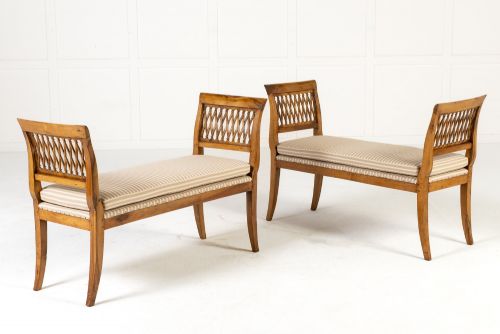


French Upholstered Banquette
A french upholstered banquette brings low-slung seating with period charm to halls, bedrooms and corners.
French Upholstered Banquette
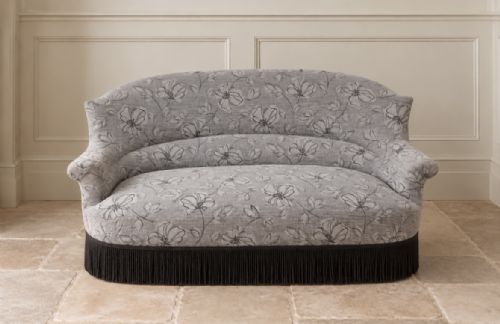
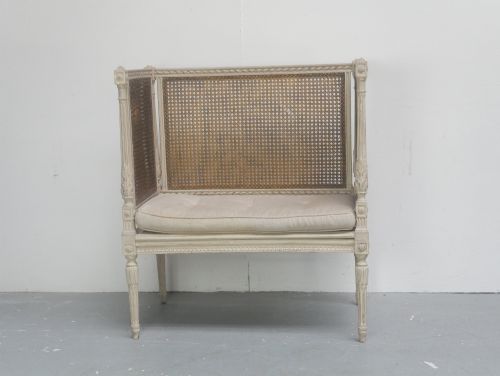
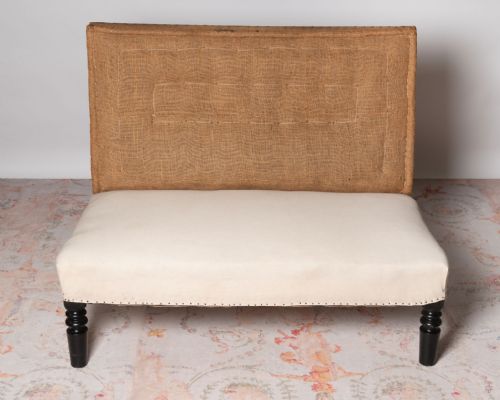
A french upholstered banquette encompasses a variety of long seats, window seats, settees and corner sofas designed for domestic use. The selection spans the nineteenth century through to the early decades of the twentieth century, capturing diverse domestic forms from intimate two-seater sofas to architectural corner pieces.
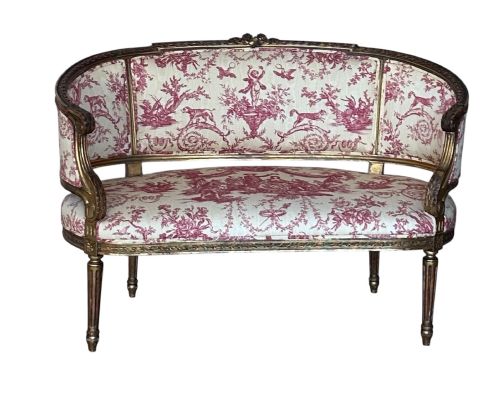
The versions most commonly met on this page include nineteenth-century window seats and compact sofas shaped by Louis XV and Louis XVI styles, alongside later Art Deco and Belle Époque interpretations. Buyers frequently encounter walnut, oak and painted wood frameworks paired with various textile coverings.
Makers and designers worked within distinct regional traditions, producing both ornate giltwood salon seating and simpler French country or chateau benches. These items function as versatile additions to living spaces, offering practical seating paired with decorative presence.
How they were made
Makers utilised solid timbers such as walnut, oak and other woods for the foundational frames, often carving structural elements by hand or applying gilt and painted finishes. Wood selection dictated the initial strength and visual weight of the frame, whether finished in smooth polish or painted surfaces.
Upholstery techniques combined traditional stuffing with textiles including velvet, linen, leather and patterned fabrics. Skilled artisans secured these materials over supportive webbing and springs, finishing edges with trims to frame the seat.
French Upholstered Banquette Retail Price Guide 2026
Typical asking prices for french upholstered banquette among the pieces listed under this phrase on Sellingantiques today, from the lower quarter to the upper quarter. They describe what is for sale here now, not the wider market.
Some nineteenth-century makers evidently believed no bedroom was complete without a petite seat positioned squarely at the foot of the bed.
What varies in quality
The distinction between standard examples and superior pieces rests in the execution of the woodwork, from crisp hand-carved detailing on walnut frames to the finesse of gilded or painted surfaces. Finer items display harmonious proportions and sophisticated joinery that endure across generations.
The integrity of the internal construction and the choice of covering material also define the standard. Pieces retaining period leather, rich velvet or specialist designer textiles alongside robust underlying frames occupy the upper tier of the range.
The French Upholstered Banquette Glossary
- Banquette
- A long upholstered seat or bench, often designed for placement against a wall or in a corner.
- Canapé
- A traditional French term for a decorative sofa or settee, usually featuring an exposed wooden frame and upholstered seat and back.
- Giltwood
- Timber that has been coated with a thin layer of gold leaf or gilt powder, prevalent in formal nineteenth-century seating.
- Window seat
- A narrow upholstered bench constructed specifically to fit into the recess of a window.
- Palisander
- A dense, dark exotic hardwood utilised in finer cabinet making and furniture frames during the twentieth century.
French Upholstered Banquette: Frequently Asked Questions
Where should I place a banquette?
These pieces suit narrow hallways, bedroom ends, window recesses or living room corners where standard sofas prove too bulky. Their compact footprint provides functional seating without overwhelming the room.
Matching the scale of the seat to the surrounding architecture ensures the piece integrates naturally into the space.
How do I identify Louis XV style?
Louis XV style furniture is characterised by flowing asymmetrical lines, curved cabriole legs and naturalistic carved ornamentation such as floral motifs. This aesthetic emerged in eighteenth-century France and inspired revivals throughout the nineteenth century.
The absence of straight structural lines and the presence of graceful, sweeping curves help distinguish this design vocabulary.
What is Belle Époque style?
The Belle Époque period spans the late nineteenth century up to the First World War, representing an era of optimism and cultural confidence in France. Furniture from this time often blends historic revival motifs with luxurious materials like leather and velvet.
These pieces frequently display a refined urban elegance suited to sophisticated drawing rooms and salons.
Can I use these seats daily?
Most of these historic seats were built for practical domestic use, employing sturdy timbers like walnut and oak for their primary frames. Regular daily seating remains entirely appropriate provided the underlying structure and joints are sound.
Placing the furniture away from direct heat sources helps preserve both the wooden frame and the fabric coverings.