
French Traveling Clock
A French travelling clock brings precise mechanical movement and polished brass to any mantelpiece, offering portable timekeeping shaped by nineteenth-century craftsmanship.
French Traveling Clock
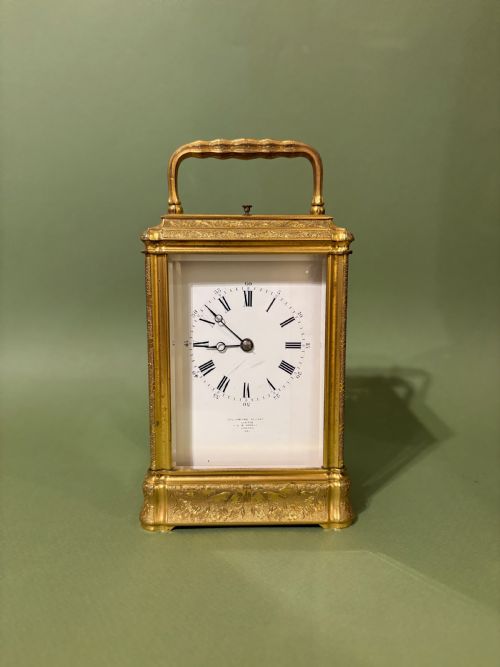
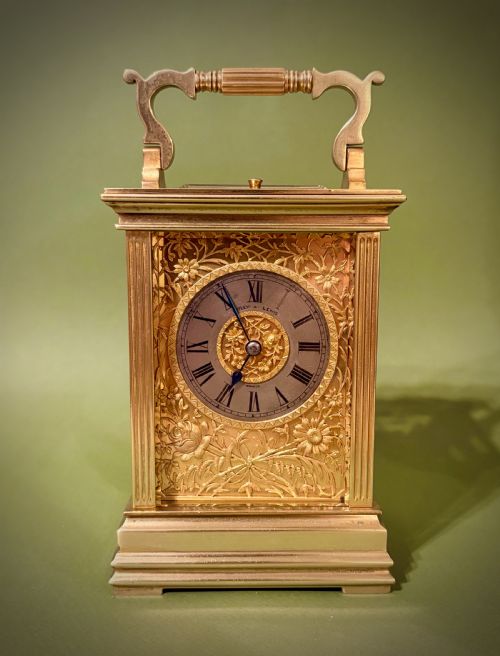
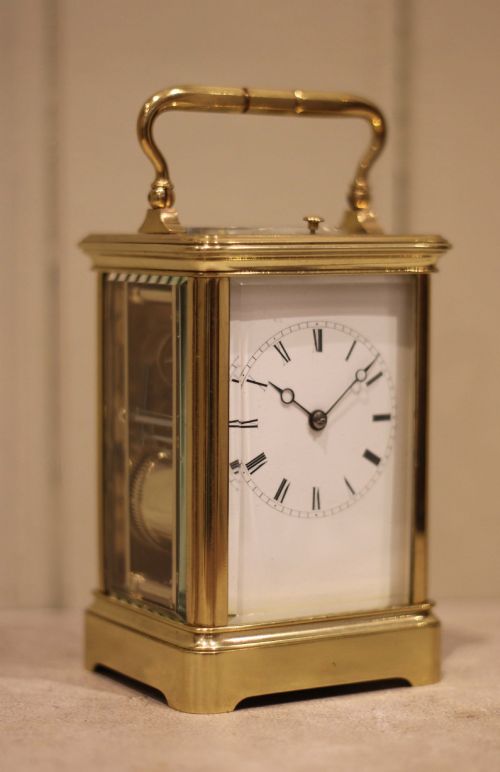
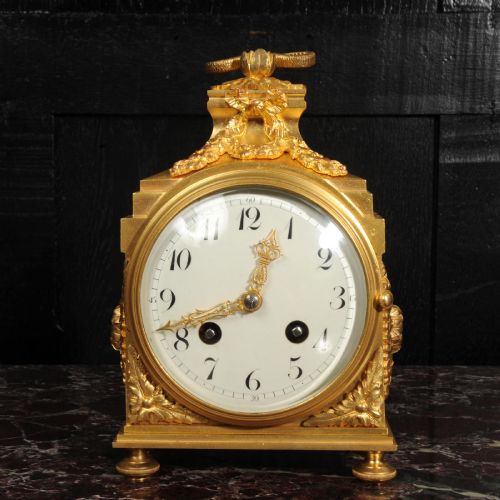
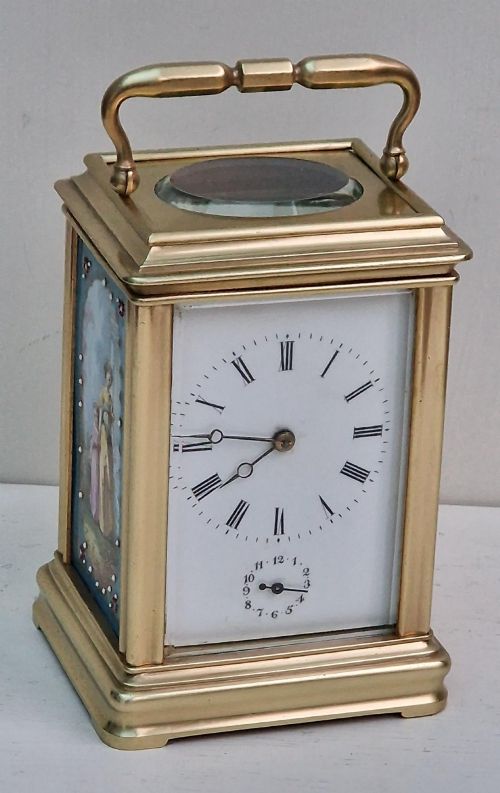
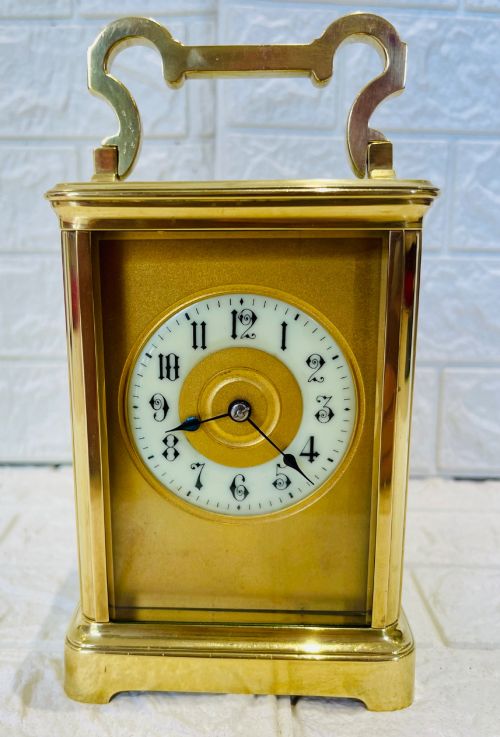
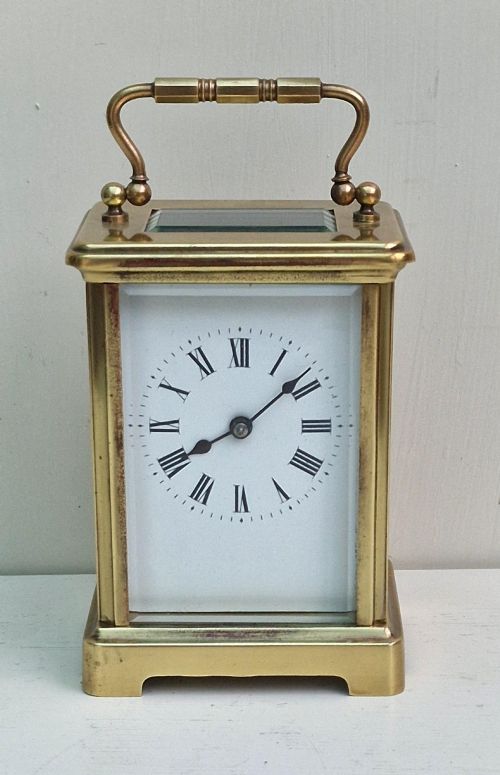
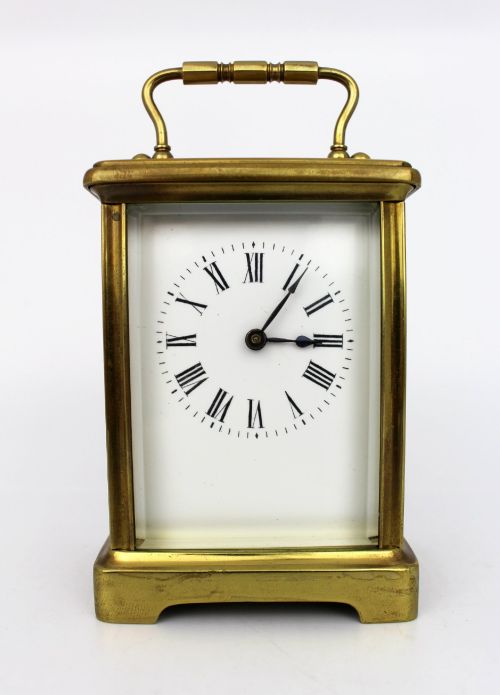
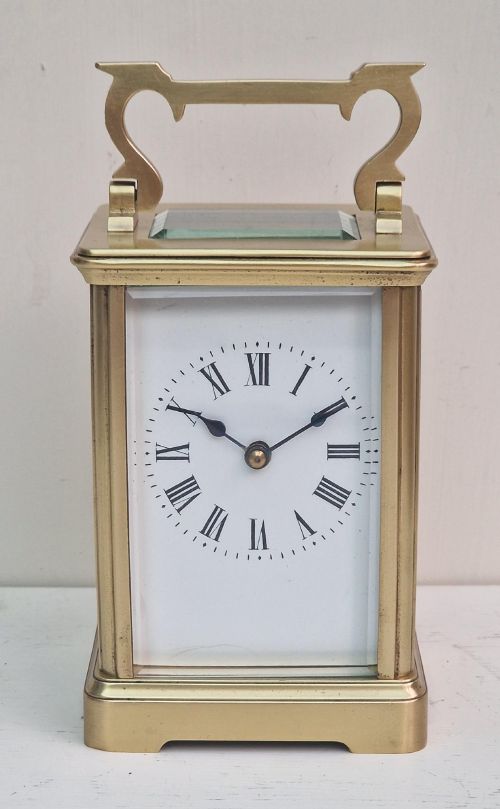
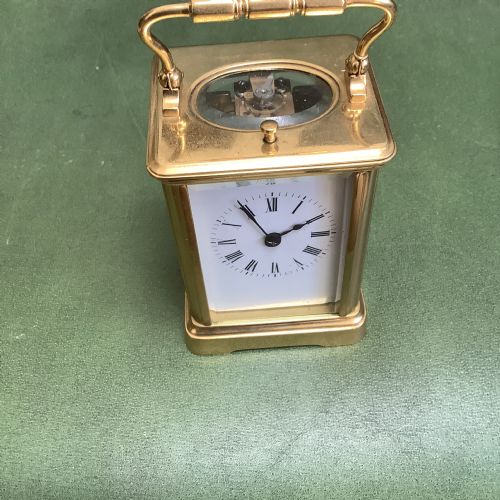
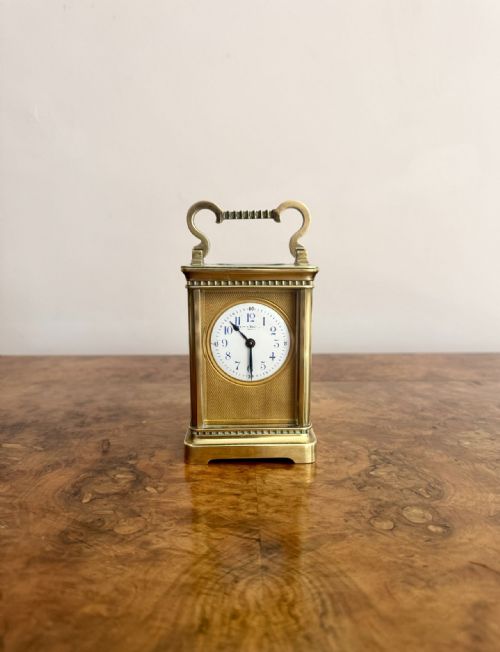
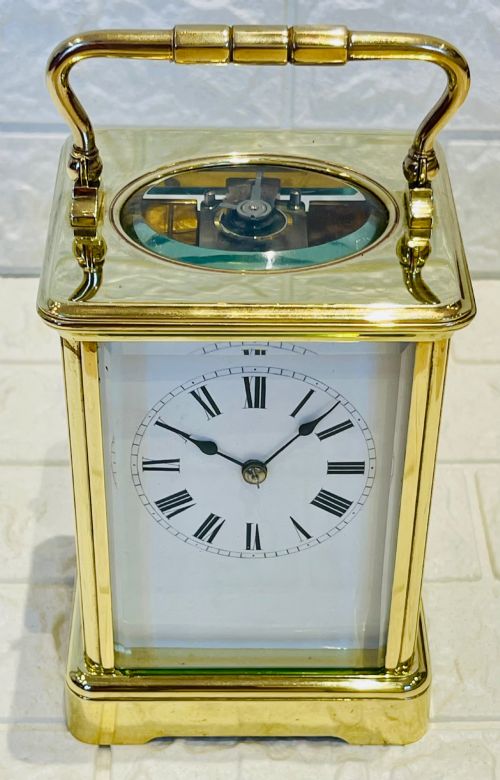
A French travelling clock is a portable timepiece designed for movement, frequently housed in a brass case with glass panels that reveal the escapement within. These pieces originate primarily from the nineteenth century and the Edwardian era, spanning styles from the Victorian period to the Belle Epoque.
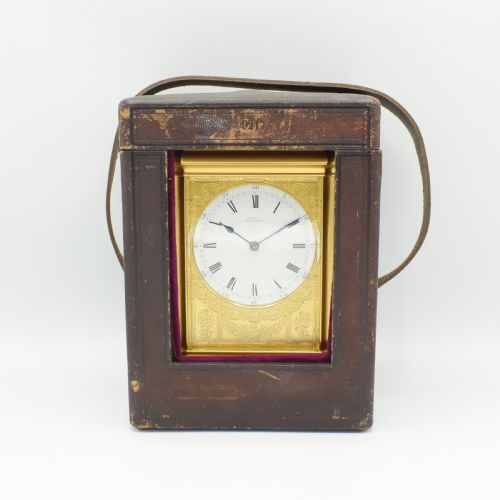
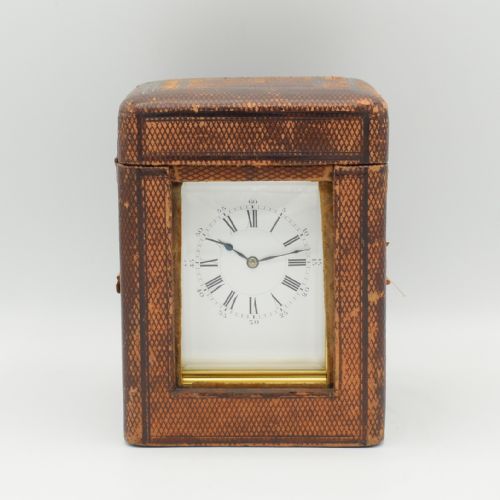
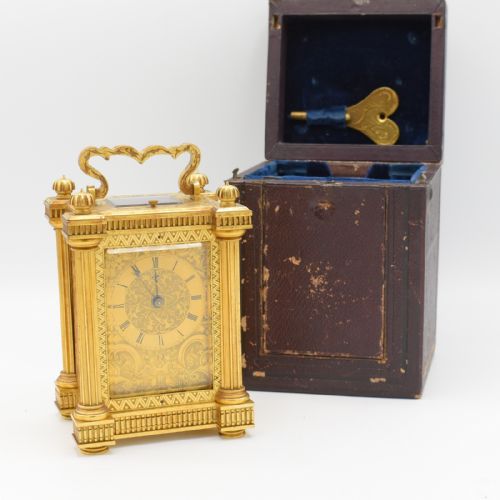
The most common examples on this page take the form of carriage clocks and desk clocks. They often arrive with original travel cases of leather, protecting the metalwork and glass during transit across continents or between rooms.
Distinctions in Quality and Execution
Quality rests in the crispness of the cast brass case, the depth of any manual engraving, and the complexity of the internal movement. Clocks featuring striking mechanisms, repeating functions, or porcelain panels demonstrate higher ambition than standard timepieces.
The integration of original components, such as matching leather travel cases and intact glass panels without chips, elevates a piece. Finer examples display harmonious proportions, substantial weight, and refined finishing on the internal plates.
The listings include specific complications such as striking mechanisms, repeaters, and patent alarm functions.
HENRI JACOT·Howell & James London·Drocourt Paris·T. Martin & Co·C. Detouche Paris·Antoine Redier of Paris·Margaine Of France
The French Traveling Clock Glossary
- Carriage clock
- A portable mechanical timepiece with a handle, originally designed for officers and travellers during the nineteenth century. These clocks typically feature a spring-driven movement and glass inspection panels.
- Repeating mechanism
- A complication that strikes the hours and quarters on demand when a lever or button is pressed. This feature allowed travellers to check the time in the dark without lighting a candle.
- Gorge case
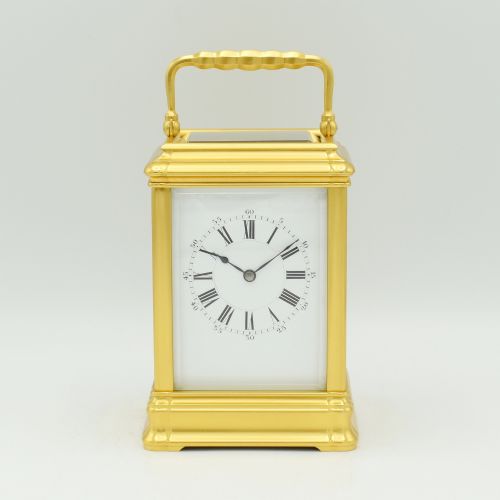
- A distinct rectangular brass case style characterised by stepped mouldings at the top and base. It represents a standard housing for finer nineteenth-century French timepieces.
- Escapement
- The internal mechanism that controls the release of power in a clock, translating the force of the mainspring into regulated ticks. Visible escapements, such as the platform cylinder or lever, allow the motion of the balance wheel to be observed.
- Pendule d'Officier
- An early form of French officer's clock predating the standard carriage clock format. These pieces often exhibit robust proportions and specialised military or campaign origins.
French Traveling Clock: Frequently Asked Questions
What is a French travelling clock?
A French travelling clock is a portable mechanical timepiece, usually encased in brass and glass, designed to be moved safely.
Originating largely in the nineteenth century, these objects combine robust engineering with decorative metalwork and portable formats.
How do repeating mechanisms work?
A repeating mechanism sounds the last hour and quarters when a button on top of the case is pressed.
This complication was essential for travellers needing to know the time during the night without striking a match.
Where should I place a carriage clock?
These clocks suit stable surfaces like mantelpieces, desks, or tables where vibrations are minimal.
Keeping them away from direct sunlight and damp environments preserves the brass finish and internal oils.
How do I identify the period of a clock?
Period identification relies on case design, engraving styles, and the signature of the maker on the movement backplate.
Victorian and late nineteenth-century examples often display specific case profiles like the gorge or corniche mouldings.
Are original travel cases important?
Original leather travel cases provide historical context and protect the brass and glass during storage.
Finding a clock with its fitted case adds a layer of completeness valued by collectors.