

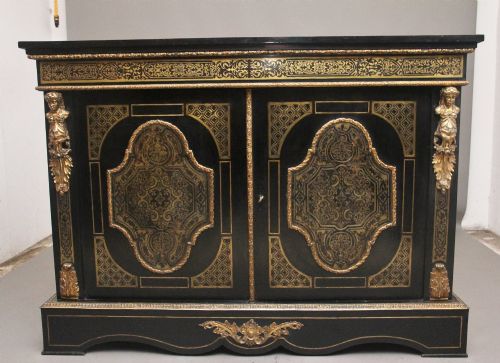
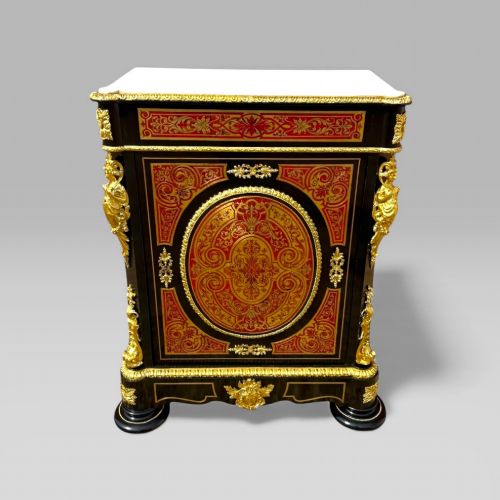


French Tortoiseshell Cabinet
A french tortoiseshell cabinet brings unmistakable nineteenth-century grandeur to a room through intricate tortoiseshell and brass inlay.
French Tortoiseshell Cabinet
A french tortoiseshell cabinet represents the pinnacle of nineteenth-century decorative arts, combining rich ebonised wood with ornate metalwork. These pieces emerge predominantly from the Napoleon III and Victorian periods, reflecting a revival of elaborate craftsmanship.
Buyers will most frequently encounter pier cabinets, side cabinets, and grand credenzas across these listings. They serve as striking focal points in a drawing room or study, designed to display prized possessions while offering enclosed storage.
The form is heavily rooted in French revival styles and Louis XVI aesthetics, often incorporating serpentine fronts or glazed doors. Each piece demonstrates the enduring appeal of nineteenth-century marquetry within classic interior schemes.
Materials and construction methods
The distinctive surface decoration relies on the exacting technique of boulle marquetry, where tortoiseshell and brass are cut together in intricate patterns. This is typically set against a dark ground of ebonised wood or rosewood, creating a high-contrast visual rhythm.
Casting and chasing ormolu and gilt bronze mounts define the structural edges, framing the panels and corners with sculptural hardware. Glass panels frequently feature in the doors of display cabinets and vitrines to showcase the contents within.
Marble tops, often shaped to follow the serpentine contours of the carcass, provide a durable and luxurious finish to credenzas and side cabinets. Velvet linings occasionally appear inside, adding a tactile layer of refinement to the display spaces.
French Tortoiseshell Cabinet Retail Price Guide 2026
Typical asking prices for french tortoiseshell cabinet among the pieces listed under this phrase on Sellingantiques today, from the lower quarter to the upper quarter. They describe what is for sale here now, not the wider market.
Listings feature pieces spanning the mid-to-late nineteenth century, dominated by Victorian and Napoleon III interpretations of boullework.
Distinguishing quality across the range
The precision and complexity of the brass and tortoiseshell inlay set the finest examples apart from standard production. Superior pieces display seamless integration of the marquetry with crisp, sharp engraving across the metal surfaces.
The weight and finish of the ormolu mounts indicate the standard of the workshop that produced the cabinet. Finely chased bronze elements with deep relief and rich gilding elevate a piece far above those with simpler, cast-only fittings.
Proportion and structural ambition also dictate the tier of a piece, from compact pier cabinets to massive breakfront credenzas and bibliotheques. The harmony of the serpentine curves and the stability of the ebonised timber carcass reveal the maker's underlying mastery.
The French Tortoiseshell Cabinet Glossary
- Boulle
- A form of marquetry using contrasting panels of tortoiseshell and brass, named after the master cabinetmaker André-Charles Boulle. It became immensely popular during nineteenth-century revivals.
- Ormolu
- Gilded bronze used for decorative mounts and feet on nineteenth-century furniture. The technique involves applying a gold amalgam to bronze before firing.
- Pier cabinet
- A low cabinet designed specifically to fit the wall space between windows. These are common among the surviving nineteenth-century examples.
- Credenza
- A grand sideboard or display cabinet featuring doors and sometimes open shelving. They often anchor the wall of a principal reception room.
- Bonheur du jour
- A light lady's writing desk featuring an upper section with shelves or drawers. Examples decorated with tortoiseshell combine utility with immense decorative presence.
French Tortoiseshell Cabinet: Frequently Asked Questions
Where should I place a french tortoiseshell cabinet?
These cabinets suit principal reception rooms or hallways where their reflective brass and tortoiseshell surfaces catch the light. They require stable environmental conditions away from direct sunlight and excessive heat.
Position them against a solid wall where their proportions can be appreciated without obstruction. Ensure the surrounding decor complements the dark ebonised wood and gilded mounts.
How do I care for tortoiseshell and brass inlay?
Dust the cabinet regularly with a soft, dry cloth to prevent particulate buildup on the delicate surfaces. Avoid chemical polishes and commercial cleaners that can damage the antique organic shell and lacquer.
Maintain consistent humidity levels in the room to prevent the wood from expanding or contracting. This protects the intricate brass and tortoiseshell marquetry from lifting away from the substrate.
How can I identify a Napoleon III period piece?
Napoleon III furniture dates from the Second French Empire and is characterised by lavish revivals of earlier royal styles. You will often see dense boulle marquetry, ebonised finishes, and elaborate ormolu mounts.
Construction methods from this period include mahogany or pine secondary timbers beneath the ebonised veneer. The emphasis is on theatrical display and eclectic, highly decorative ornamentation.