






French Tiered Shelving Unit
These french tiered shelving unit pieces bring practical vertical display and characterful timberwork to any interior.
French Tiered Shelving Unit
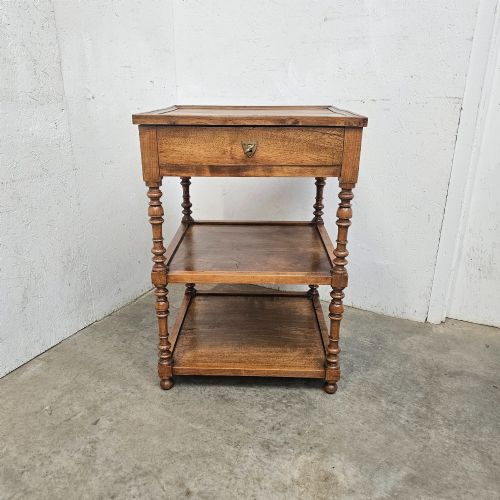
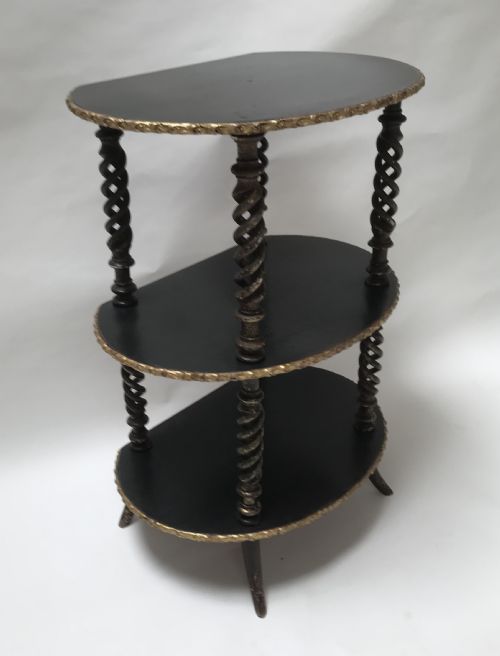
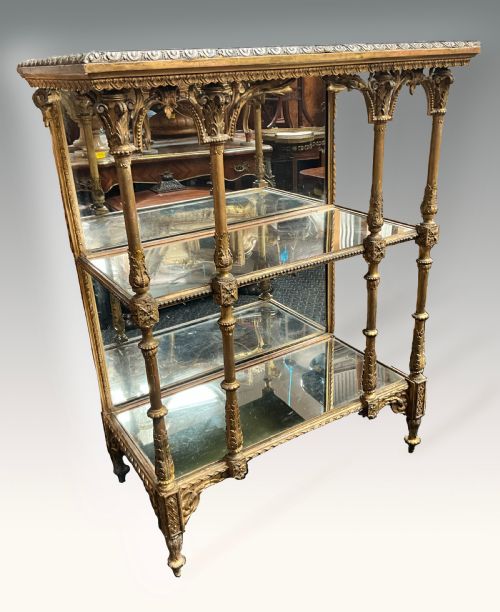
A french tiered shelving unit provides open levels for display and storage, appearing in forms such as etageres, whatnots, wall shelves, and plant stands. These pieces distribute storage across multiple horizontal tiers while occupying a modest floor or wall footprint.
The selections span the nineteenth century through the early twentieth century, taking stylistic cues from French Provincial, French Chateau, Art Deco, and Victorian traditions. Walnut, cherry wood, and amboyna form the backbone of the wooden pieces, alongside painted finishes and ebonised wood.
Buyers frequently encounter freestanding etageres with turned legs alongside hanging wall shelves constructed for domestic or shop display. Each iteration serves the fundamental purpose of organising books, ornaments, or plants within a room.
How they were made
Cabinetmakers utilised dense hardwoods like walnut, cherry, and amboyna, occasionally applying ebonising or paint to achieve specific surface appearances. Marquetry and gesso over gilt wood appear on select pieces to introduce decorative detail to the framework.
Structural support often relied on turned wooden legs, whilst metal elements such as brass, cast iron, bronze, and wrought iron provided alternative framing for display stands and shelving units. Glass panels also feature in specific display configurations.
French Tiered Shelving Unit Retail Price Guide 2026
Typical asking prices for french tiered shelving unit among the pieces listed under this phrase on Sellingantiques today, from the lower quarter to the upper quarter. They describe what is for sale here now, not the wider market.
Periods represented span the nineteenth century, Victorian era, and the early twentieth century up to the 1920s.
What varies in quality
The choice of timber and decorative technique dictates the standing of a piece, distinguishing simple pine or painted storage racks from finely figured amboyna, marquetry work, or gilt wood and gesso ornamentation. The selection of brass or bronze hardware further separates standard utility pieces from more elaborate designs.
Execution in the joinery and the precision of turned supports define the structural integrity. Pieces displaying refined proportions and considered detailing across the tiers demonstrate a higher grade of workshop production.
The French Tiered Shelving Unit Glossary
- Etagere
- An open piece of furniture with multiple tiers or shelves used for displaying small objects and ornaments. The form gained popularity in nineteenth-century domestic interiors.
- Whatnot
- A freestanding set of open shelves designed for displaying ornaments or books. This traditional term frequently overlaps with etagere and display shelving.
- Gesso
- A plaster-like mixture applied to wood surfaces as a base for gilding or painting. It allows craftsmen to carve intricate relief details before applying gold leaf.
- Marquetry
- The art of applying pieces of veneer to a structure to form decorative patterns and pictures. Workshops employed contrasting timbers to achieve tonal variation.
French Tiered Shelving Unit: Frequently Asked Questions
What is an etagere?
An etagere is an open shelving unit with multiple tiers designed specifically for displaying decorative objects, porcelain, or books.
These pieces function well in reception rooms and bedrooms where accessible vertical display is required without heavy cabinet doors.
How do I use wall shelves?
Wall-hanging shelves utilise vertical wall space to hold books, small plants, or decorative items without occupying floor area.
They mount securely to plaster or masonry walls, making them suitable for compact hallways, kitchens, or living spaces.
What is a whatnot?
A whatnot is a multi-tiered freestanding shelving unit traditionally used to house ornaments and knick-knacks.
Placed in corners or against walls, these pieces provide multiple open surfaces for decorative arrangement.
How do I date these shelves?
Dating relies on observing timber choices, construction techniques, and stylistic markers associated with periods such as the nineteenth century or the 1920s.
Turned legs, specific veneers like amboyna, and applied brass or iron elements help place a piece within its historical era.