



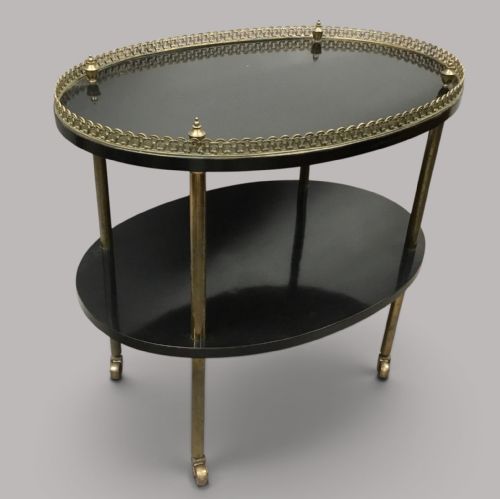
Ebonised French Etagere
An ebonised french etagere brings tiered display space and dark, striking timber to a room, offering multi-level shelving for ornaments and books.
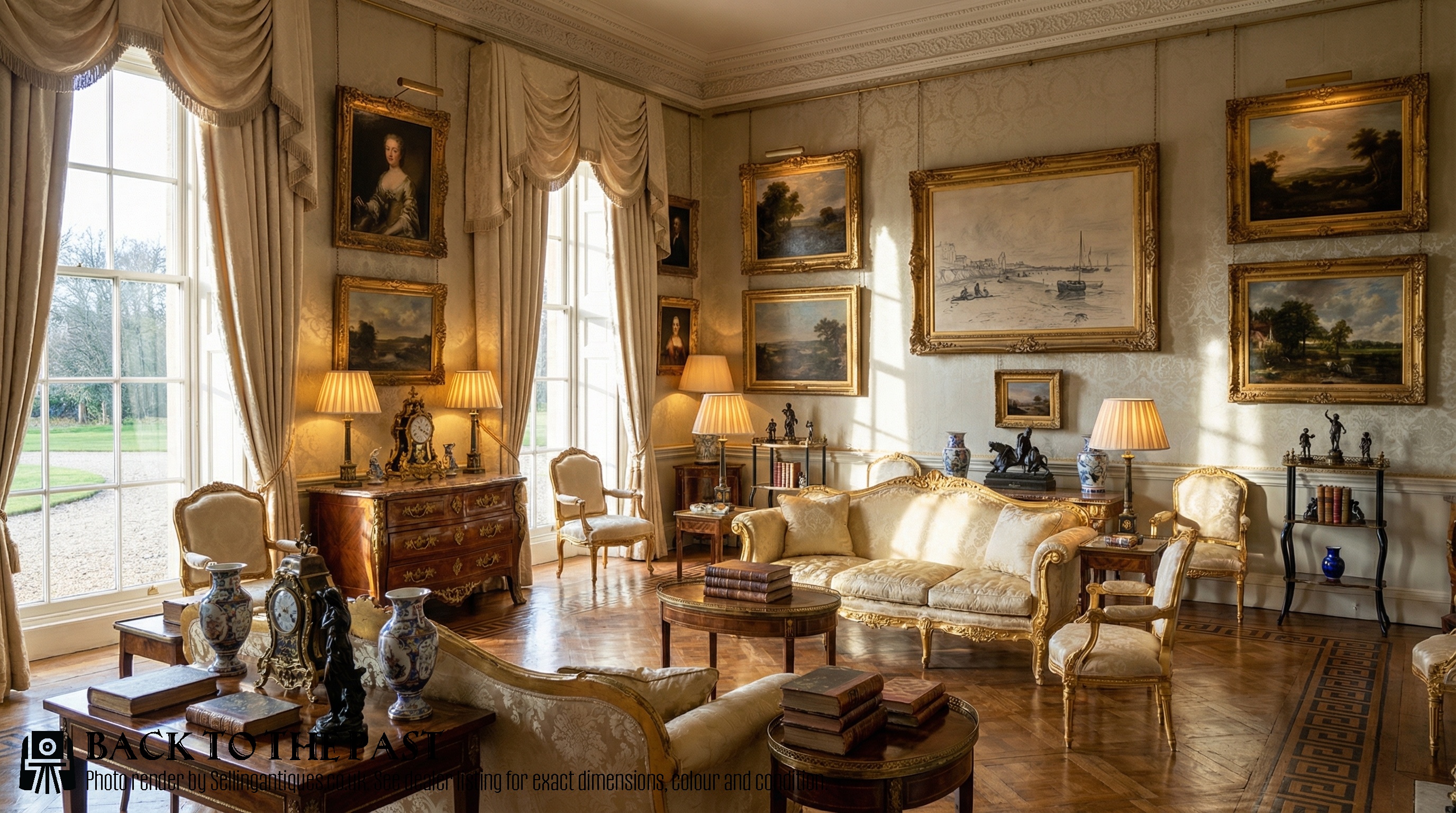
Ebonised French Etagere
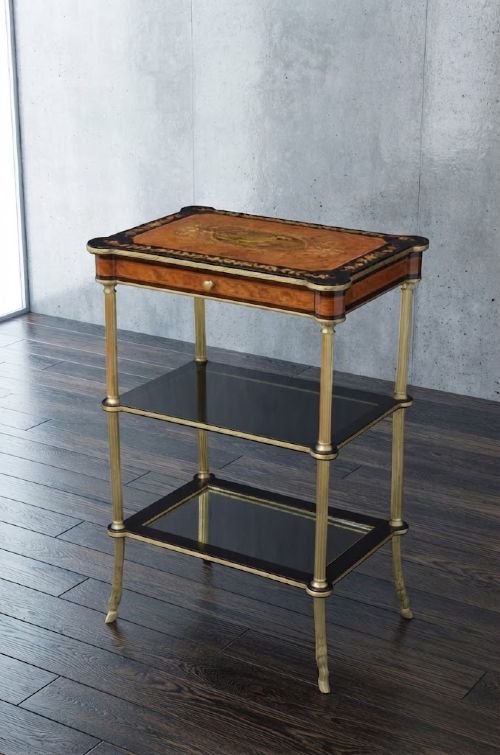
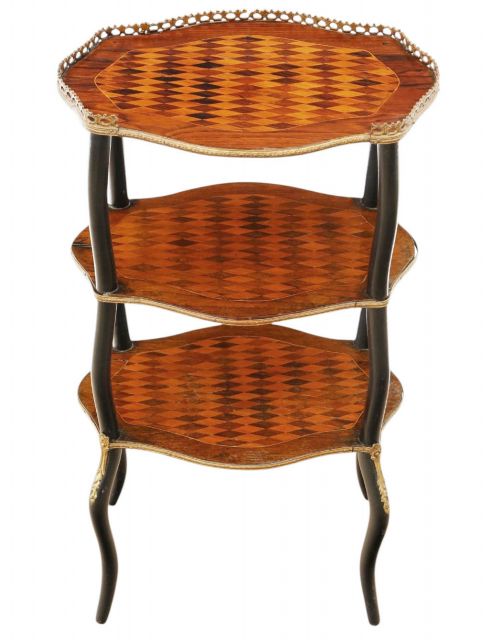
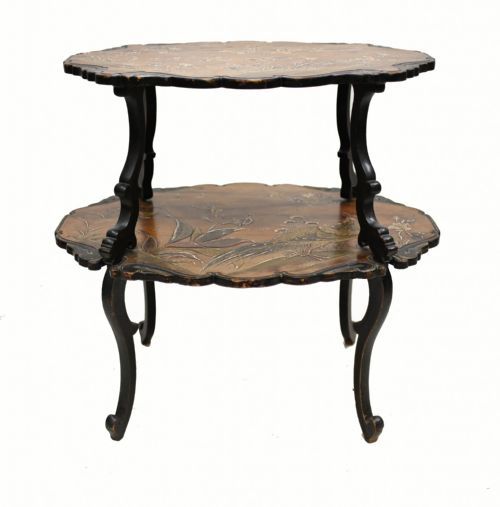
An ebonised french etagere provides tiered shelving for display, appearing in forms such as side tables, wall shelves, and freestanding whatnots. These pieces serve to hold decorative objects across multiple open levels while introducing a strong dark finish to an interior scheme.
The versions most frequently met on this page span the nineteenth century through the early twentieth century, taking shape in French Napoleon III, Louis XV style, and Japonisme or Chinoiserie aesthetics. They utilise timber structures ranging from ebonised wood to walnut, amboyna, and cherry wood.
Makers and cabinetmakers constructed these display pieces as etageres, tier tables, and display shelves, often incorporating multiple heights of shelving. Buyers encounter variations that include mirrored tiers, wall hanging formats, and occasional tables designed for parlour or drawing room use.
How they were made
Cabinetmakers utilised timber carcasses built from ebonised wood, walnut, cherry wood, and amboyna veneer, applying dark finishes or japanning techniques to achieve the characteristic ebonised surface. Structural stability was maintained through joinery suited to multi-tiered shelving units.
Decoration relied heavily on marquetry, parquetry, and inlaid details using mixed timbers, complemented by ormolu mounts and brass elements. Certain pieces introduced mirrored tiers and gilt brass accents to catch the light between the dark wooden shelves.
Ebonised French Etagere Retail Price Guide 2026
Typical asking prices for ebonised french etagere among the pieces listed under this phrase on Sellingantiques today, from the lower quarter to the upper quarter. They describe what is for sale here now, not the wider market.
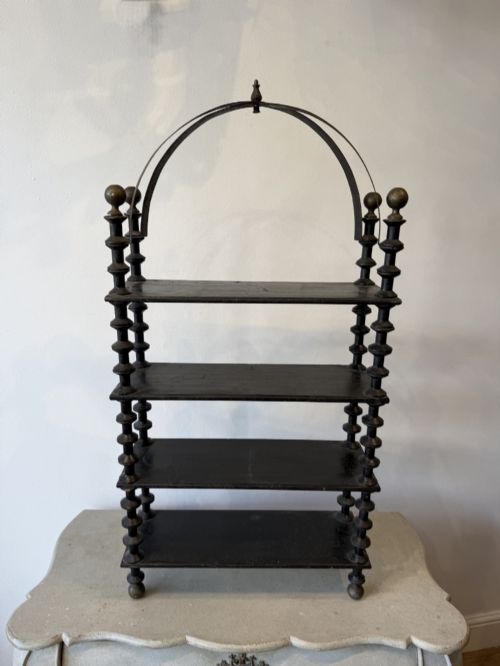
Bobbin shelves bring carved wooden spools to nineteenth-century walls.
What varies in quality
The refinement of the inlay work and parquetry separates standard examples from finer pieces, alongside the crispness of ormolu mounts and brass fittings. Complex marquetry patterns and well-executed japanning demonstrate greater workshop skill.
The choice of secondary and primary timbers also alters the character of the piece, with amboyna veneer, walnut, and mixed timber parquetry offering varied visual richness compared to plain ebonised surfaces. The integration of mirrored tiers and balanced proportions marks higher craftsmanship.
The Ebonised French Etagere Glossary
- Ebonised
- Wood treated to imitate ebony, usually through staining or painting to create a deep black finish. This technique was widely utilised in nineteenth-century furniture to provide a striking contrast with gilt metal mounts.
- Etagere
- A piece of furniture consisting of a set of open shelves for displaying small objects or ornaments. Originating in France, these tiered stands appear as freestanding tables or wall-hung units.
- Marquetry
- Decorative veneer work where pieces of various woods are applied to a structure to form pictorial or geometric designs. Skilled artisans cut these elements to fit precisely together.
- Ormolu
- Gilded bronze mounts applied to furniture for decorative effect during the eighteenth and nineteenth centuries. These metal elements enhance the corners, legs, and aprons of finer cabinets and tables.
- Japanning
- A European imitation of East Asian lacquerwork, applied to furniture surfaces to create a glossy dark finish with decorative motifs. It reflects the nineteenth-century interest in Japonisme and Chinoiserie styles.
Ebonised French Etagere: Frequently Asked Questions
What is an etagere used for?
An etagere is designed for displaying decorative objects, small ceramics, and books across its open tiers. These pieces functioned traditionally in French salons and drawing rooms to exhibit prized possessions.
Today, they serve a similar purpose in domestic interiors, offering vertical display space without heavy enclosed cabinetry.
How do I identify a nineteenth-century piece?
Nineteenth-century pieces often display characteristic French styling such as Napoleon III or Louis XV influences, combined with traditional joinery methods. The use of amboyna veneer, ebonised wood, and hand-cut marquetry points directly to this era.
Examining the underside and interior timbers helps confirm the age and construction techniques used by period cabinetmakers.
Where should I place an etagere?
These tiered shelves suit reception rooms, hallways, and studies where vertical display space is needed. Wall hanging versions fit well in smaller areas, while freestanding side tables work effectively against open walls.
Positioning them away from direct sunlight protects vulnerable amboyna veneer and ebonised finishes from fading over time.
What is the difference between an etagere and a whatnot?
The terms are often used interchangeably to describe multi-tiered shelving units designed for display. Historically, a whatnot typically refers to a freestanding set of shelves with multiple levels, while an etagere can also describe tiered occasional tables.
Both forms share the primary function of holding ornaments and decorative items in an accessible, open format.