
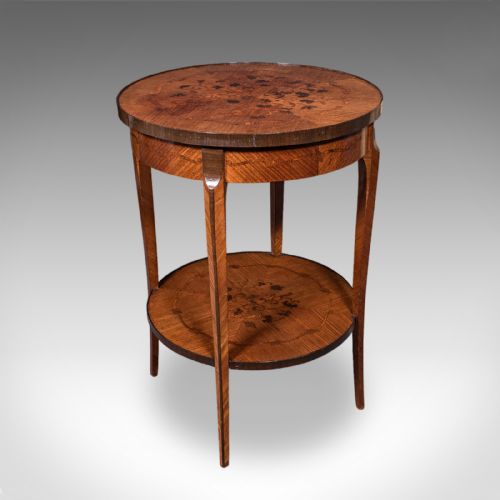
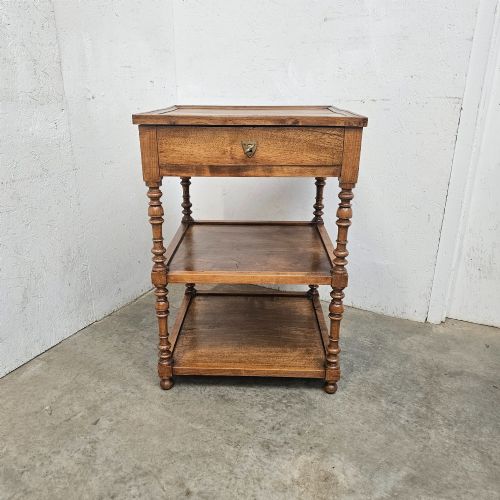


French Tiered Plant Stand
A french tiered plant stand brings vertical botanical display into a room, offering graduated surfaces for greenery and flowers.
Materials and Construction
Cabinetmakers constructed these stands using timber foundations of walnut, mahogany, and oak, frequently employing marquetry inlay and parquetry patterns. Surface decoration often incorporates ormolu mounts, gilt brass, and galleried edges to secure pots and objects.
Metalwork variants utilise wrought iron, cast iron, and wirework, sometimes finished with white paint or specialised patination for conservatory use. Insets of white or coloured marble provide durable, water-resistant surfaces designed to withstand regular watering of potted plants.
Assessing Quality
The distinction between standard production and superior craftsmanship rests in the crispness of the bronze or ormolu mounts and the precision of the timber inlay. Hand-turned wooden legs and finely woven canework indicate higher workshop standards than mass-produced alternatives.
Structural integrity depends on the original joining of the tiers and the quality of the stone or marble tops. Superior examples maintain the original balance between decorative metalwork and structural timber without supplementary bracing.
Some wirework stands spent decades holding ferns in damp Victorian conservatories before reaching the modern sitting room.
Gabriel Viardot·Majorelle·Michel Dufet
The French Tiered Plant Stand Glossary
- Etagere
- A piece of furniture consisting of a set of open shelves for displaying small objects or plants. These tiered structures allow multiple levels of display within a compact footprint.
- Jardiniere
- An ornamental pot or stand for holding plants or flowers. In French furniture, it often incorporates a metal liner to protect surrounding woodwork from moisture.
- Gueridon
- A small round table supported by one or more columns, originating in seventeenth-century France. Later nineteenth-century iterations frequently feature multiple tiers and marble tops suitable for display.
- Ormolu
- Gilded bronze used as a decorative mounting on fine furniture. The technique involves applying a gold amalgam to bronze before heating.
- Marquetry
- Decorative veneer applied to furniture in geometrical patterns or pictorial designs. Craftsmen use contrasting woods to create detailed surface decoration across the tiers.
French Tiered Plant Stand: Frequently Asked Questions
How do I care for marble tops?
Marble surfaces require regular wiping with a damp cloth and mild soap to prevent staining from stagnant water. Avoid acidic cleaners that etch the polished stone finish.
Applying a neutral stone wax occasionally helps maintain the lustre and protects the porous material from moisture rings left by plant pots.
Where should I place an etagere?
These pieces suit corners, window recesses, or hallway spaces where vertical display adds architectural interest without blocking movement. Ensure the location provides appropriate light if housing live plants.
Keep wooden and veneered stands away from direct heat sources and strong sunlight to prevent timber warping and finish fading.
How do I distinguish nineteenth-century pieces?
Examine the construction methods visible underneath the tiers, looking for hand-cut joints, timber shrinkage, and natural wear patterns on the feet. Nineteenth-century examples often employ heavy brass mounts and patinated mahogany or walnut.
Maker attribution stamps or distinct regional French joinery techniques can further confirm the production period.
Can these stands hold heavy pots?
Most antique stands were built for decorative ceramic pots rather than massive terracotta planters. Assess the sturdiness of the lower tier and the joints supporting each shelf before placing substantial weight.
Using saucers underneath pots protects the timber or cane surfaces from water damage and potential staining.