






French Terracotta Urns
French terracotta urns are robust vessels and garden planters shaped in provincial styles across the eighteenth and nineteenth centuries.
French Terracotta Urns
When a buyer searches for french terracotta urns, they encounter a range of rustic earthen vessels primarily designed for gardens, storage, and agricultural use. These objects span periods from the eighteenth century through to the mid-twentieth century, originating largely from provincial regions of France.
The most common examples on this page take the form of garden planters, olive jars, confit pots, and amphora vessels. Many of these pieces display utilitarian roots, shaped for practical rural life before finding a place in ornamental settings.
Materials and Techniques
The objects listed are constructed from terracotta, earthenware, and stoneware, frequently shaped by hand into large vessels and jars. Potters utilised local clay bodies to form heavy garden urns and oil pots, which were sometimes left porous or finished with applied glazes.
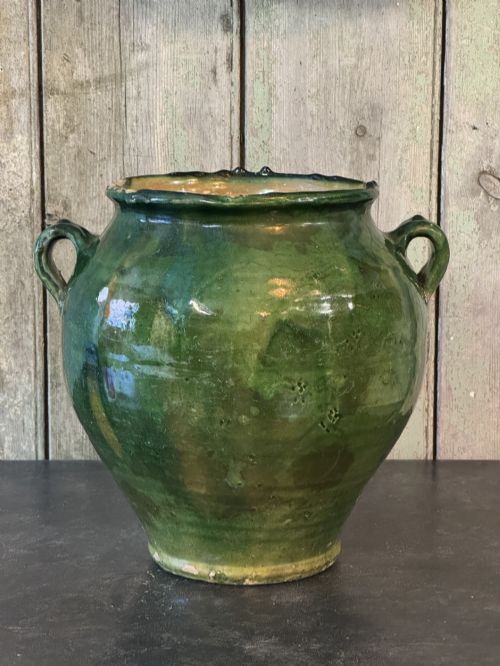
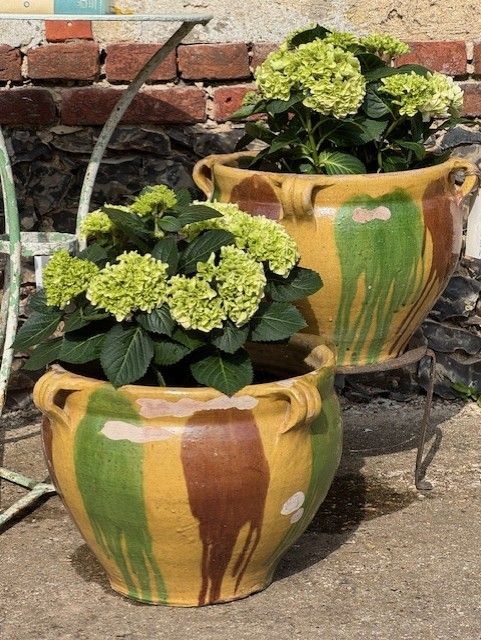
Surface treatments vary from fully glazed green and drip-glazed finishes to painted exteriors and aged patinas. Additional structural elements incorporate wrought iron stands and carved heads on handles to support the heavy earthenware bodies.
French Terracotta Urns Retail Price Guide 2026
Typical asking prices for french terracotta urns among the pieces listed under this phrase on Sellingantiques today, from the lower quarter to the upper quarter. They describe what is for sale here now, not the wider market.
Materials documented across the inventory include wrought iron stands, drip-glazed earthenware, and painted finishes on large olive jars.
Distinctions in Quality
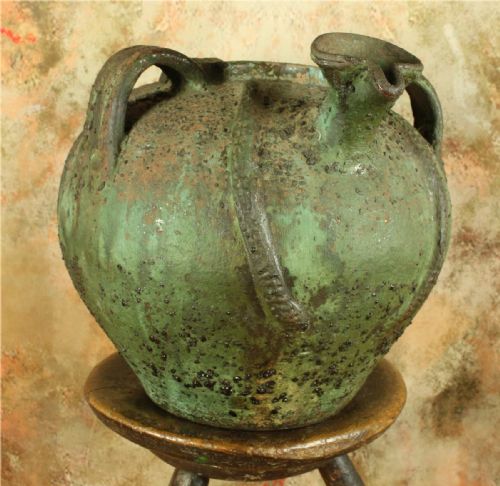
Quality in these pieces rests upon the integrity of the form, the depth of the patination, and the character of any applied glaze. Examples featuring unusual handle configurations, such as three-handle olive jugs or carved heads, demonstrate distinct craftsmanship.
The presence of period-specific glazes, such as drip-glazed surfaces or full green finishes, distinguishes the finer decorative wares from simpler utilitarian garden pots.
The French Terracotta Urns Glossary
- Terracotta
- A porous, unglazed or glazed fired earthenware clay used for vessels and garden planters. This material forms the primary body of the pieces listed on this page.
- Confit Pot
- A traditional French earthenware pot featuring handles, historically used for preserving food. These pots frequently display green or dripped glazes.
- Biot Jar
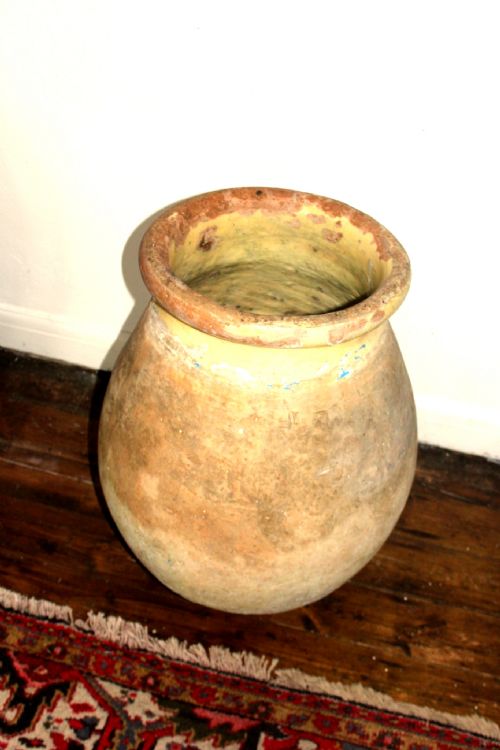
- A large terracotta storage jar originating from the Provençal town of Biot. These vessels were traditionally utilised for holding olive oil or water.
- Amphora
- A two-handled antique vessel with a narrow neck, used since antiquity for storage and transport. These forms appear in nineteenth-century earthenware and terracotta.
- Jardinière
- An ornamental pot or stand designed to hold growing plants or flowers. These decorative pieces often appear in glazed pottery from the twentieth century.
French Terracotta Urns: Frequently Asked Questions
What were French terracotta urns used for?
These vessels served primarily practical purposes in French agriculture and rural households, functioning as storage containers for olive oil, wine, and preserved foods. Confit pots and large oil jars were essential for rural sustenance before their survival as decorative objects.
Over time, many of these utilitarian containers transitioned into garden planters and architectural ornaments for courtyards and terraces. Their robust construction made them suitable for both indoor storage and outdoor display.
How do I care for antique terracotta outdoors?
Antique terracotta is porous and can absorb moisture, which makes it vulnerable to freezing temperatures if left damp in winter. Garden urns and planters benefit from being emptied or raised off the ground during cold weather to prevent cracking.
Cleaning should be done gently with water and a soft brush to preserve the historic patina and surface glazes. Harsh chemical cleaners or pressure washers will strip away the aged character accumulated over the centuries.
How can I tell the age of a terracotta jar?
Dating these pieces relies on observing tool marks, clay consistency, glaze characteristics, and overall wear patterns. Eighteenth and nineteenth-century examples often display irregularities from hand-shaping and natural surface weathering that modern reproductions lack.
Reference to specific regional styles, such as Provençal olive jars or nineteenth-century confit pots, also helps establish a chronological timeframe. Examining the base and interior surfaces reveals manufacturing methods specific to particular eras.
Where should I place these urns at home?
Large garden urns and amphora vessels anchor spaces in entryways, gardens, and conservatory settings where their heavy scale provides a focal point. Smaller confit pots and oil jars suit interior tabletops or kitchen counters as decorative accents.
Pairing pairs of planters or placing a single jar on a wrought iron stand highlights the proportions and silhouette of the piece. Their earthy tones complement both traditional rustic interiors and contemporary spaces.