
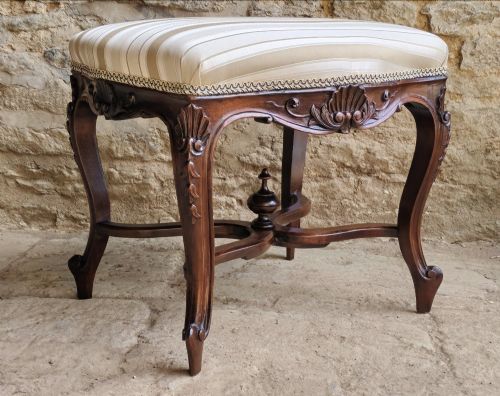

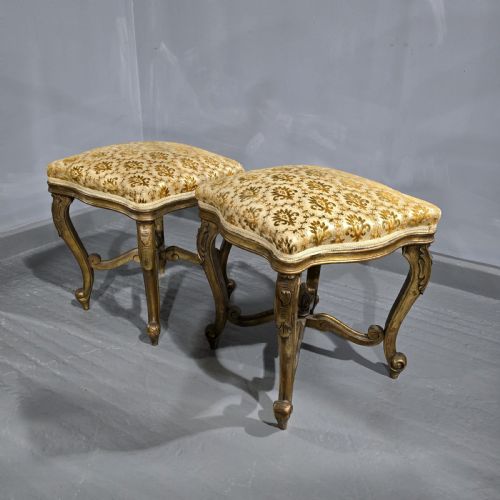
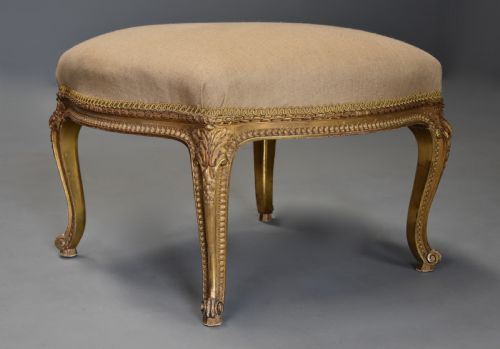


French Style Vanity Stool
A french style vanity stool brings period elegance to a dressing room through carved woodwork and upholstered seating.
French Style Vanity Stool
A french style vanity stool serves as a seating option for dressing tables and boudoirs, drawing upon historical continental designs. Buyers searching this phrase encounter low seats designed for placement near mirrors or windows, often built with supportive frames.
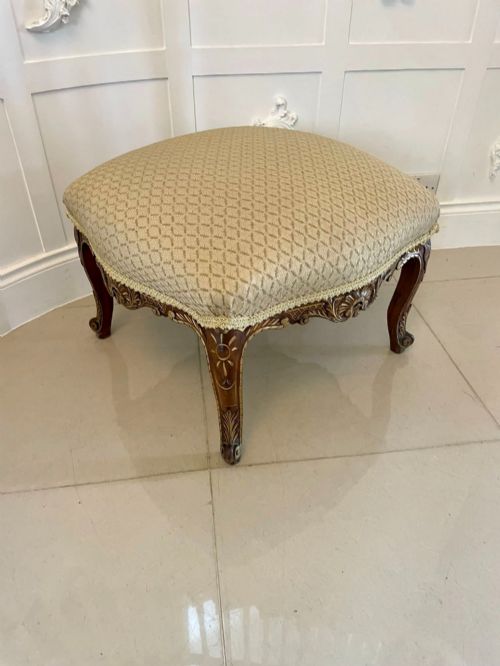
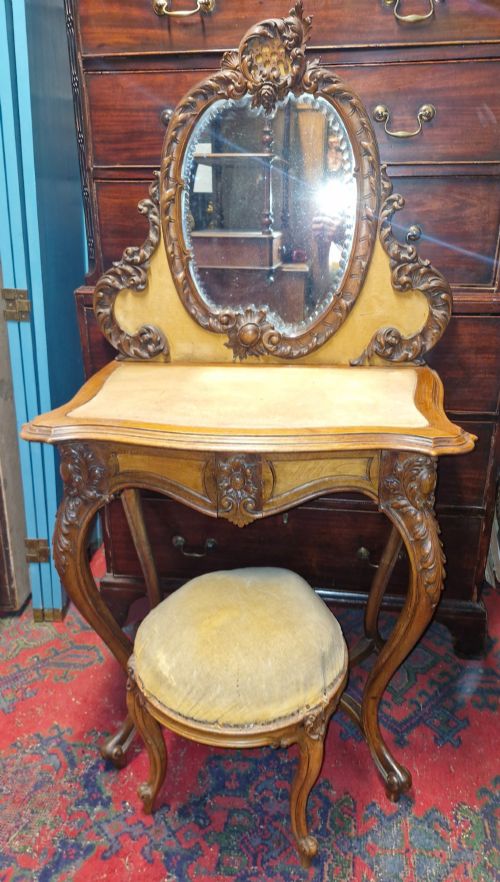
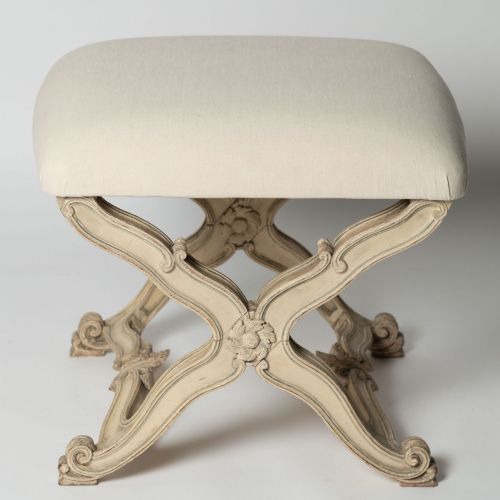
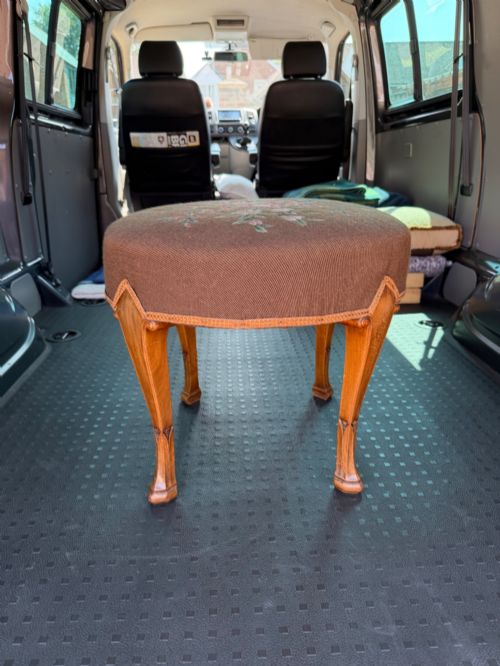
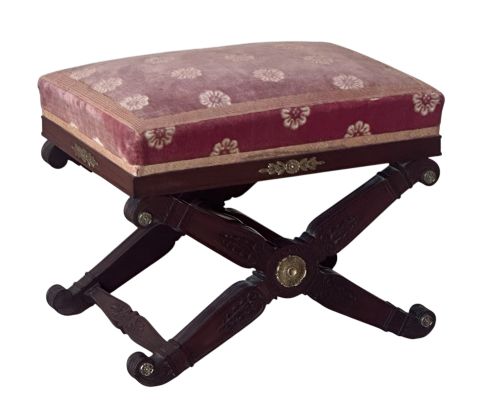
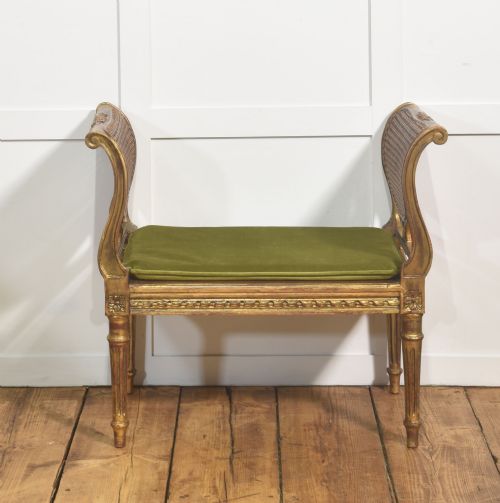
The pieces appearing here span the nineteenth and early twentieth centuries, incorporating revival aesthetics such as Louis XV and Louis XVI styles alongside Victorian interpretations. Forms range from simple circular boudoir seats to X-frame stools and elaborate window benches.
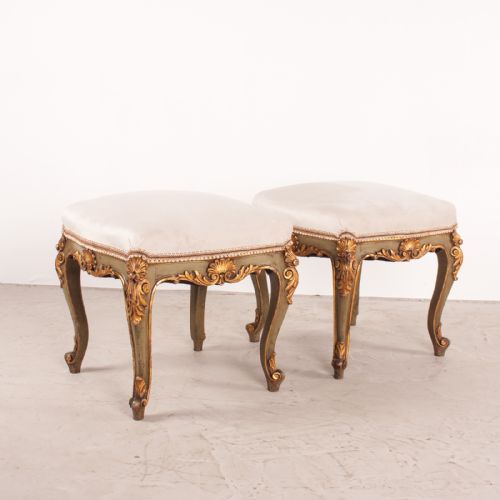
Makers produced these items in pairs or as single decorative pieces, utilising compact dimensions suited to dressing areas. Walnut, mahogany, and giltwood provide the primary structures, frequently complemented by textile or velvet upholstery.
Materials and Construction
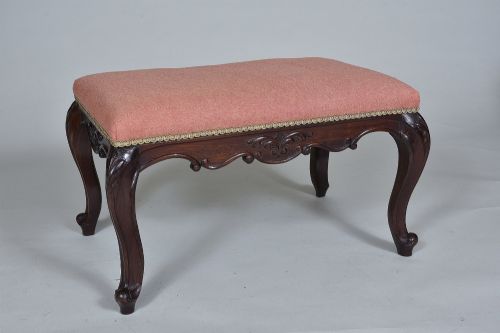
Cabinetmakers shaped these frames from solid hardwoods like walnut and mahogany, alongside softer woods designated for painted or gilded finishes. Wood carving requires steady skill, seen in the floral motifs and curved cabriole legs characteristic of the period.
Gilding techniques applied thin layers of gold leaf or paint over prepared wooden surfaces to create reflective, decorative finishes on formal salon and boudoir seating. Brass hardware occasionally appears in adjustable mechanisms on specific piano and vanity stool variants.
Upholstery methods secure fabric, velvet, or cane across the seat platforms using traditional webbing and stuffing techniques. Textile choices range from plain coverings to decorative patterned fabrics matching period interior schemes.
Makers occasionally added a hidden screw top beneath the seat, allowing owners to spin the stool upward like a piano player.
Evaluating Craftsmanship
The depth and crispness of hand carving distinguish standard production from superior examples, where artisans rendered acanthus leaves and scrolls with precise relief. Plain machine-cut mouldings lack the tactile fluidity found in nineteenth-century hand-shaped walnut and giltwood frames.
Structural integrity relies upon the joinery concealed beneath the upholstery and frame connections, separating robust seating from fragile pieces. Timbers selected for dense grain and stable seasoning endure structural weight better than inferior secondary woods.
The quality of surface gilding and paint application dictates the visual presence of the object, with layered gold leaf outlasting basic metallic paints. Preserved original upholstery and tightly woven cane panels also elevate the historical integrity of the piece.
LOIDRAULT FRERES PARIS
The French Style Vanity Stool Glossary
- Cabriole leg
- A furniture leg that curves outward at the knee and tapers inward toward the foot, inspired by animal limbs. This form appears frequently on eighteenth-century revival and Victorian seating.
- Giltwood
- Timber coated with gold leaf or gold powder applied over a prepared gesso surface. This finish provides a bright decorative sheen common on formal french style vanity stool designs.
- X-frame
- A structural base formed by intersecting curved or straight wooden members resembling the letter X. It provides stable support for folding or stationary stools and window seats.
- Cane
- Woven rattan or plant material stretched across a wooden frame to form a light, permeable seat panel. It appears on lighter window stools and boudoir seating.
- Curule stool
- An ancient Roman magistrate seat design featuring opposing curved legs joined in the centre. Nineteenth-century revival makers adapted this ancient form for neoclassical interiors.
French Style Vanity Stool: Frequently Asked Questions
What is a french style vanity stool used for?
These low seats provide practical placement in front of dressing tables, vanities, or low windows within a bedroom. They offer comfortable seating while maintaining a decorative profile suitable for private chambers.
Historically, they also served auxiliary seating needs in formal drawing rooms and boudoirs when extra guests arrived. Their compact size allows them to tuck neatly beneath matching dressing desks when not in use.
How do I date a french style vanity stool?
Dating relies on examining the timber species, joinery techniques, and stylistic revival indicators present in the frame construction. Nineteenth-century pieces often display hand-carving details and specific period finishes like genuine gold leaf.
Comparative study of leg profiles, such as Victorian cabriole versus Louis XVI tapered fluted legs, helps narrow the manufacturing decade. Maker stamps or handwritten signatures beneath the frame occasionally provide exact workshop origins.
Are these stools comfortable for daily use?
Most antique vanity stools feature padded upholstered tops designed for short-duration seating during grooming or dressing routines. The underlying webbing and stuffing provide firm support rather than deep lounge cushioning.
Modern users frequently reupholster the seat pads with contemporary foam to increase comfort while preserving the antique wooden frame. The low height is specifically proportioned for sitting close to dressing table mirrors.
How should I care for gilded wood?
Gilded surfaces require gentle dusting with a soft, dry cloth to prevent abrasion of the delicate gold leaf layer. Avoid chemical cleaners, polishes, or excessive moisture that can lift or dissolve historic water gilding.
Keep the stool away from direct sunlight and fluctuating radiator heat to prevent the underlying wood from shrinking and cracking the surface finish. Professional conservators should handle any structural repairs to damaged gilding.