




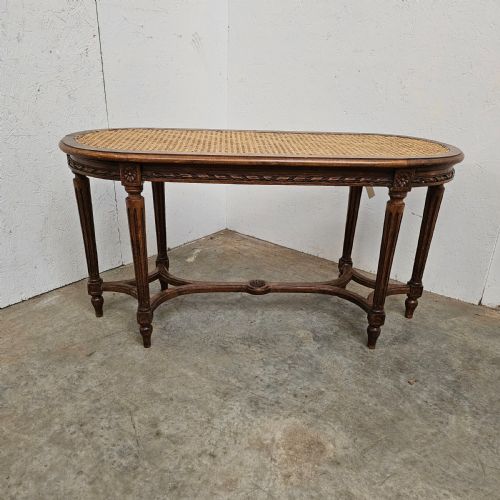


Fluted Leg Window Stool
These fluted leg window stool options bring classical elegance to a room, offering practical seating shaped by centuries of European craftsmanship.
Fluted Leg Window Stool
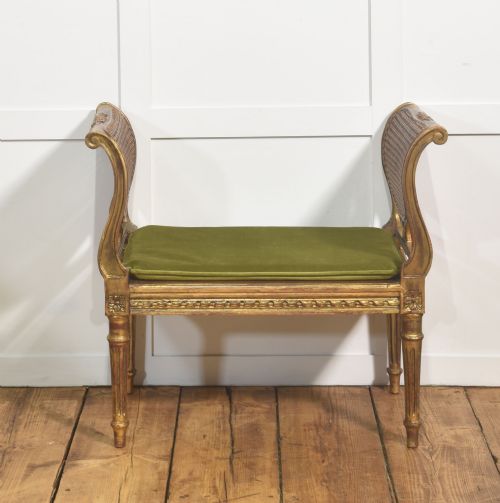
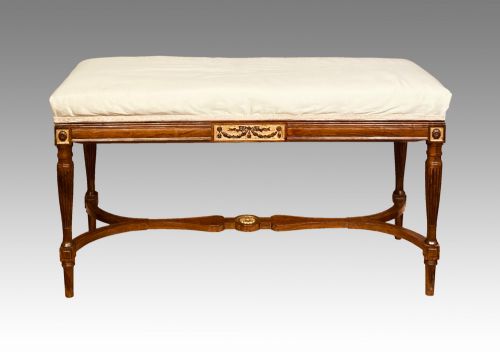
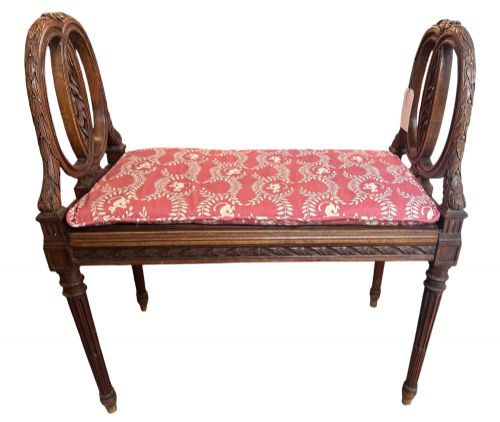
A fluted leg window stool is a seating form designed for placement beneath windows or in hallways, drawing on historical forms ranging from the Georgian and Regency periods to the late nineteenth century. These pieces appear in styles such as Louis XVI, Neoclassical Revival, Gustavian, and English Country House, reflecting classical restraint and balanced proportions.
The pieces listed on this page span several decades and origins, uniting domestic function with ornamental carving and upholstery. Buyers encounter everything from walnut and mahogany frames to giltwood finishes, cane seating panels, and recovered textile coverings.
How They Were Made
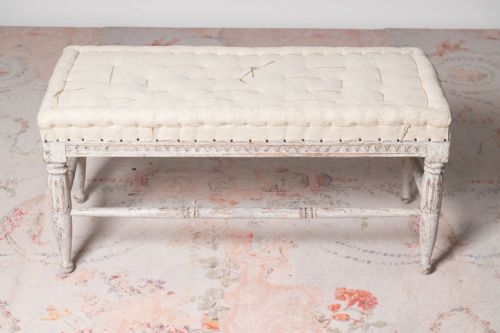
Cabinetmakers shaped these frames from dense hardwoods including mahogany, walnut, beech, and rosewood, alongside decorative options finished in giltwood and paint. Structural detailing relies on hand carving, notably the distinctive vertical fluting channelled directly into the wooden legs.
Upholstery methods vary from traditional buttoned leather studded with brass nails to simpler drop-in cane work and modern fabric coverings in linen and velvet. Joinery techniques reflect the period of origin, securing long benches and compact stools for domestic use.
Several stools have survived history wearing brass-studded leather trousers.
What Varies in Quality
The distinction between standard examples and finer pieces rests upon the crispness of the hand-carved fluting and the integrity of the underlying timber frame. Superior workshops invested greater skill into surface ornament, gilding application, and structural joinery.
Upholstery and seating materials also dictate character, where original leather hides or intact cane work demonstrate a higher degree of preservation than later recovered textile surfaces.
Charles Nosotti
The Fluted Leg Window Stool Glossary
- Fluting
- Vertical rounded grooves carved into the surface of a wooden leg or column. This classical detail draws on ancient architectural precedents to create a sense of height and refinement.
- Giltwood
- Timber that has been coated with a thin layer of gold leaf or gold paint. It provides a luminous surface finish characteristic of formal European seating.
- Cane
- Woven material made from the outer skin of rattan palm, used to create breathable and light seating panels. It is commonly found on frames from the late nineteenth century.
- Regency
- A British design period spanning the early nineteenth century defined by classical restraint and archaeological revival motifs. Furniture from this era often incorporates dark hardwoods and precise turning.
- Banquette
- An upholstered long bench or window seat designed for domestic seating. These pieces combine extended wooden frames with cushioned or caned surfaces.
Fluted Leg Window Stool: Frequently Asked Questions
Where should I place a window stool?
These pieces fit naturally beneath low window frames, at the foot of a bed, or along a narrow hallway wall. Their compact proportions allow them to provide seating without blocking light or views.
Because many examples feature finished backs or refined carving on all sides, they also function well as freestanding occasional seats in larger reception rooms.
How do I identify a Regency period piece?
Regency seating typically employs dark mahogany or rosewood timbers combined with classical elements such as fluted legs and brass detailing. The overall aesthetic is influenced by Greek and Roman archaeological discoveries.
Proportions remain strict and uncluttered, distinguishing these frames from the more heavily carved ornamentation of later Victorian revivals.
What is the difference between cane and upholstered seats?
Caned panels utilise woven rattan to create a firm, lightweight seating surface often associated with French and Swedish regional styles. They offer a lighter visual weight within a room.
Upholstered versions use padding covered in leather, linen, or velvet, sometimes secured with decorative brass studs. These provide softer seating suited to long periods of use.
Are these stools sturdy enough for daily use?
Solid hardwood frames constructed during the nineteenth or early twentieth centuries were built for active domestic life. Traditional joinery ensures structural stability under normal weight.
Pieces with delicate gilt surfaces or older cane panels require more careful handling than heavy mahogany or walnut benches.
What defines Louis XVI style furniture?
Louis XVI design favours straight lines, symmetrical geometry, and classical motifs derived from ancient excavations. Fluted legs replace the curved cabriole forms of earlier French periods.
This aesthetic appears in giltwood, carved beech, and painted finishes across various European workshops of the nineteenth century.