




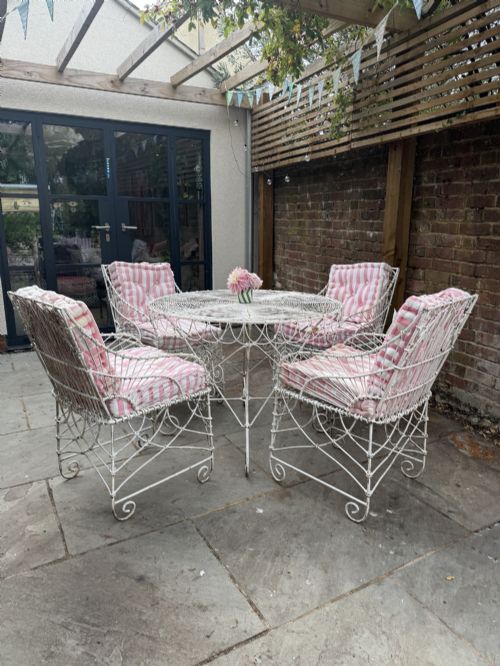
French Style Seating
French style seating brings classical European elegance into a room through carved woodwork, gilded frames, and traditional upholstery.
French Style Seating
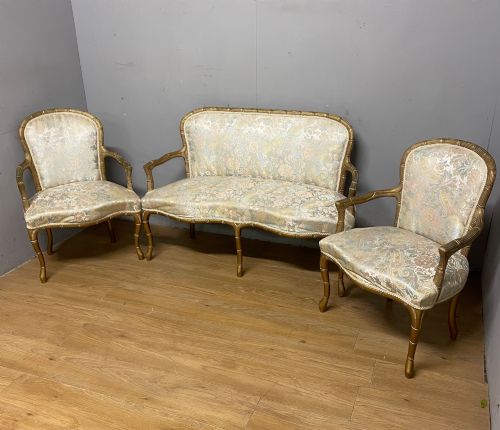
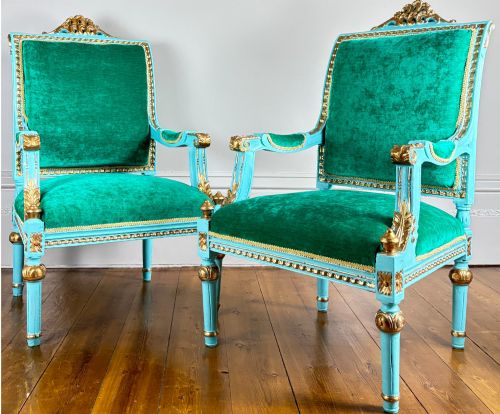
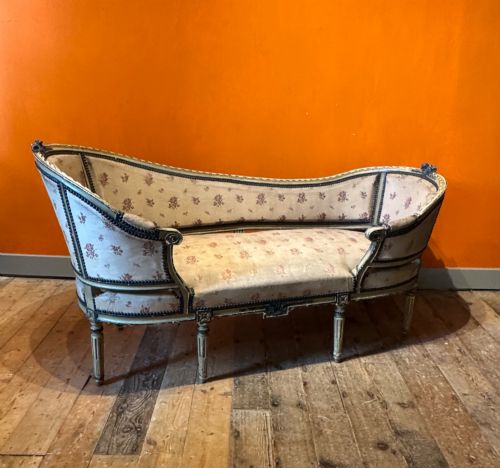
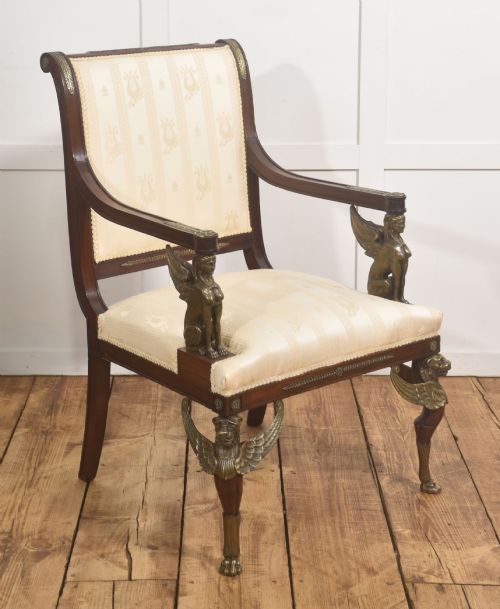
French style seating encompasses armchairs, sofas, daybeds, and stools created across the nineteenth and early twentieth centuries. Pieces emerge in distinct revival iterations, including Louis XV, Louis XVI, Empire, and Rococo styles.
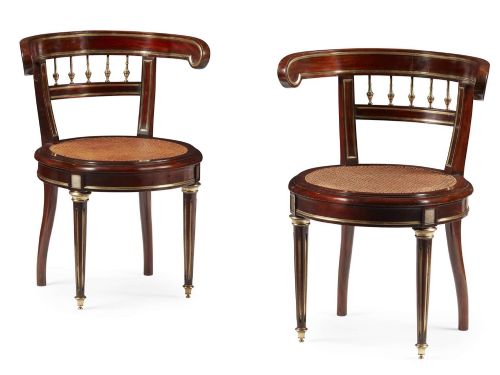
The form spans large salon suites, paired bergere armchairs, window seats, and individual prayer chairs. Walnut, mahogany, giltwood, and painted beech provide the primary structural frameworks for these traditional furnishings.
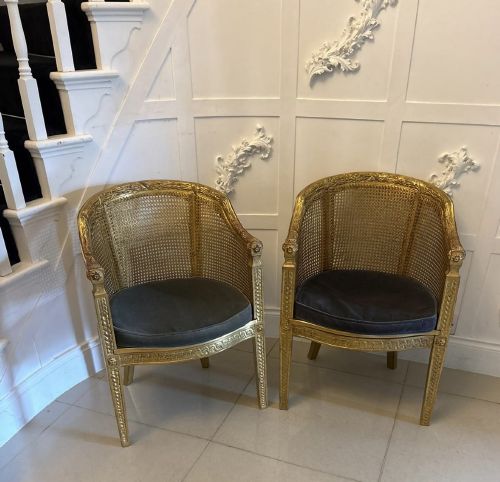
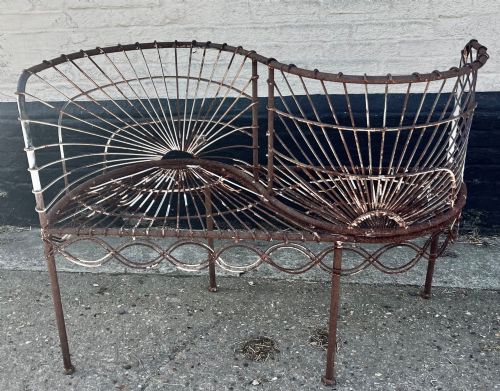
Makers and workshops constructed these items for formal parlours, intimate bedrooms, and garden settings. Buyers encounter both robust carved wooden frames and lighter caned seating options from various decades.
Materials and Construction
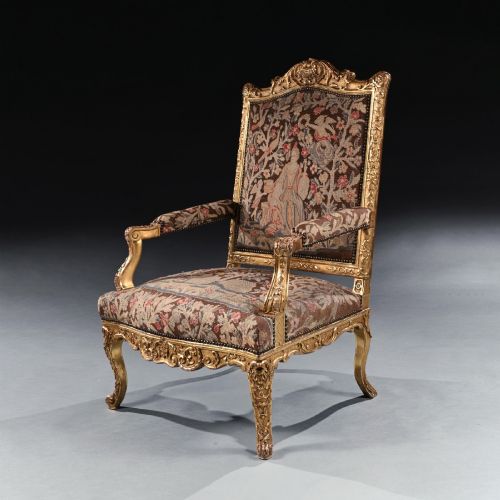
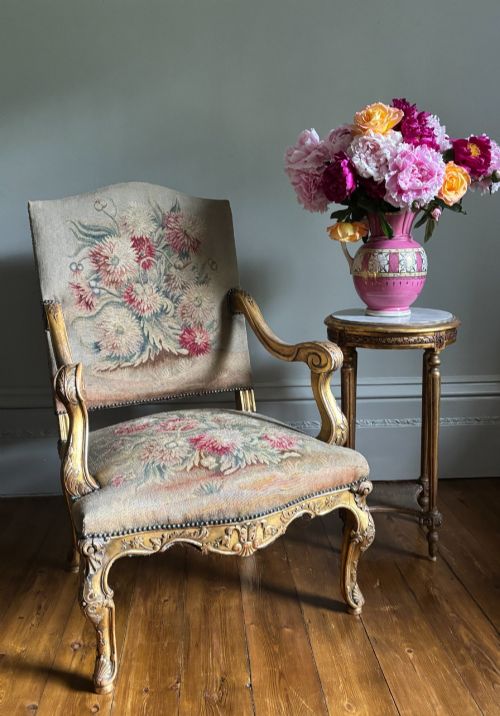
Craftsmen shaped solid timbers like walnut, mahogany, and oak through carving and joinery to build durable chair and sofa frames. Giltwood and parcel gilt finishes applied over gesso added decorative sheen to ceremonial and salon pieces.
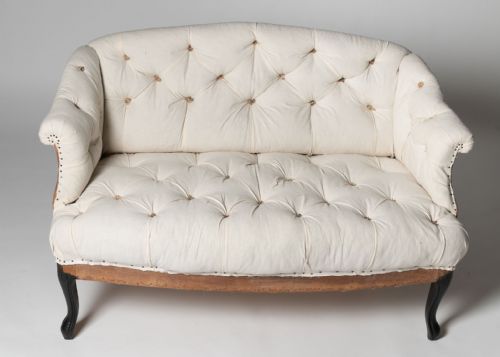
Upholstery relied on traditional stuffing methods inside buttoned silk, velvet, tapestry, and contemporary textiles like Colefax and Fowler silk. Split cane panels were woven into wooden frames for airy backrests and seats on bergere chairs and window stools.
French Style Seating Retail Price Guide 2026
Typical asking prices for french style seating among the pieces listed under this phrase on Sellingantiques today, from the lower quarter to the upper quarter. They describe what is for sale here now, not the wider market.
The inventory spans the nineteenth century up to the 1930s, encompassing Rococo Revival, Louis XVI, and Empire styles.
Evaluating the Pieces
Quality rests in the depth and crispness of the hand-carved ornamentation upon the wooden frames and gilt surfaces. Sharp leaf motifs, clean fluting, and precise joinery distinguish superior cabinet work from simpler output.
The integrity of the original frame structure and surviving surface finishes dictate the merit of each chair or sofa. Intact gilding, original paint layers, and tight cane work elevate a piece above altered examples.
LOIDRAULT FRERES PARIS·Codina
The French Style Seating Glossary
- Bergere
- An enclosed upholstered armchair with wooden sides and an integrated upholstered back. These seats often feature exposed carved wooden frames and loose down cushions.
- Fauteuil
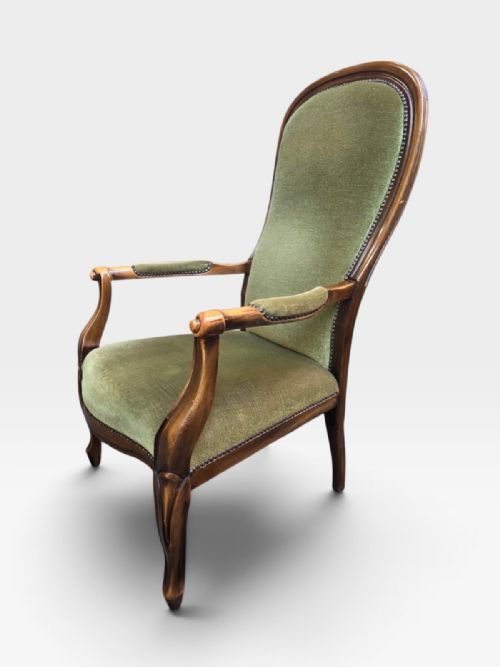
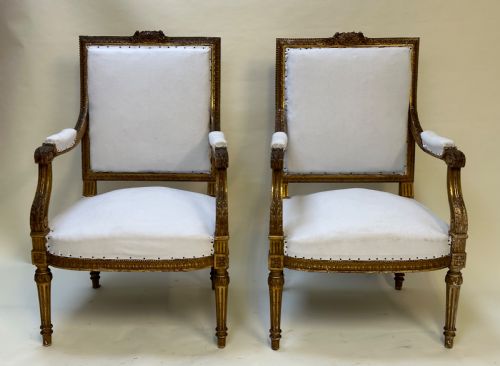
- An open-arm armchair with an exposed wooden frame originating in France. The padded armrests typically feature small upholstered elbow pads.
- Giltwood
- Timber coated with a thin layer of gold leaf over a prepared gesso ground. This treatment creates a brilliant reflective surface on formal salon seating.
- Canapé
- A traditional French settee or sofa featuring an upholstered back and seat supported by a carved wooden frame. These pieces often match larger salon suites.
- Prie Dieu
- A devotional chair designed for private prayer featuring a low seat and a high cushioned ledge for kneeling. Nineteenth-century examples often appear in walnut or mahogany.
French Style Seating: Frequently Asked Questions
What is a French style armchair?
A French style armchair is a historic seat featuring exposed carved wood, cabriole legs, and upholstered padding. These chairs reflect historical design periods such as Louis XV and the Empire style.
They function as decorative and practical seating within living rooms, bedrooms, and reading corners. Their sculptural wooden frames provide distinct visual character to an interior space.
How do I identify Louis XV style chairs?
Louis XV style chairs exhibit asymmetric curves, scrolling leaf motifs, and graceful cabriole legs. The woodwork avoids straight lines in favour of flowing organic shapes.
Makers utilised walnut, beech, and giltwood for these frames, often pairing them with open arms or fully upholstered bergere backs.
What is a caned window seat?
A caned window seat is a low bench featuring woven cane panels across the seat or backrest. These pieces were designed to sit beneath windows in bedrooms and hallways.
The woven cane provides a lightweight, flexible surface while introducing textural contrast against the solid giltwood or painted wooden frame.
How should I care for giltwood seating?
Giltwood seating requires protection from direct sunlight and excessive moisture to preserve the delicate gold leaf surface. Dust the carved wooden frames gently with a soft, dry cloth.
Avoid liquid cleaners and abrasive cloths, which can strip the thin metallic leaf from the underlying gesso and wood structure.