


French Style Mahogany Chest
A french style mahogany chest brings architectural presence and rich wood grain into a room, combining practical storage with continental elegance.
French Style Mahogany Chest
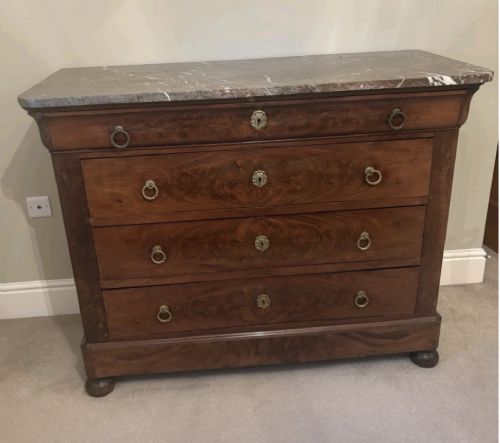
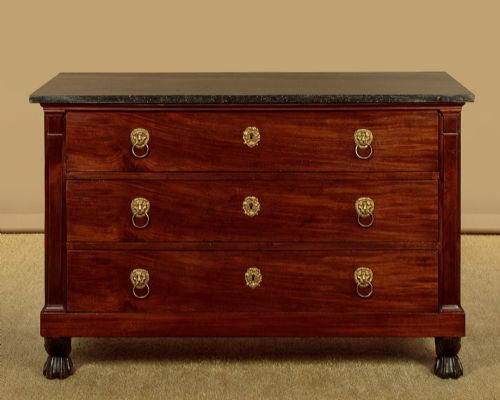
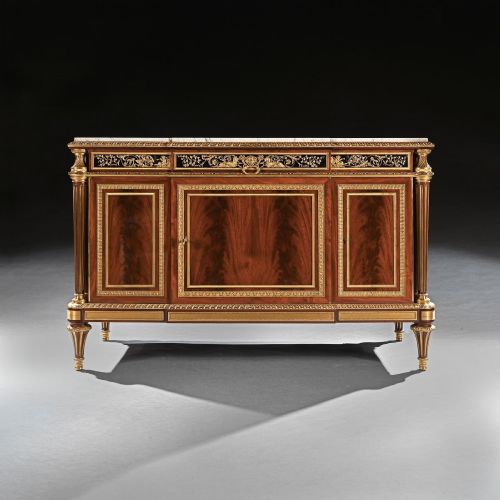
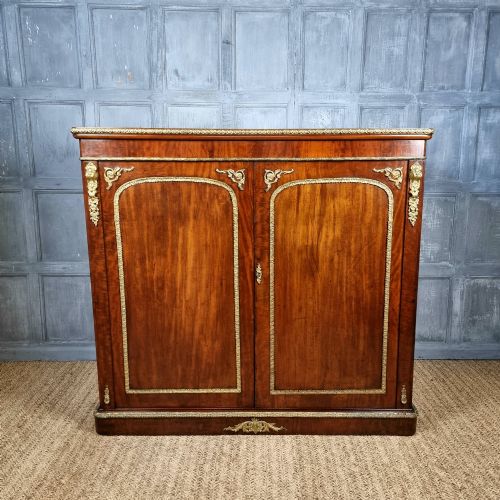
A french style mahogany chest encompasses commodes, tall chests of drawers, and bedside cabinets produced across the nineteenth and early twentieth centuries. These pieces draw on French Empire, Louis XVI, and Louis XV design idioms, translating continental formality into domestic storage.
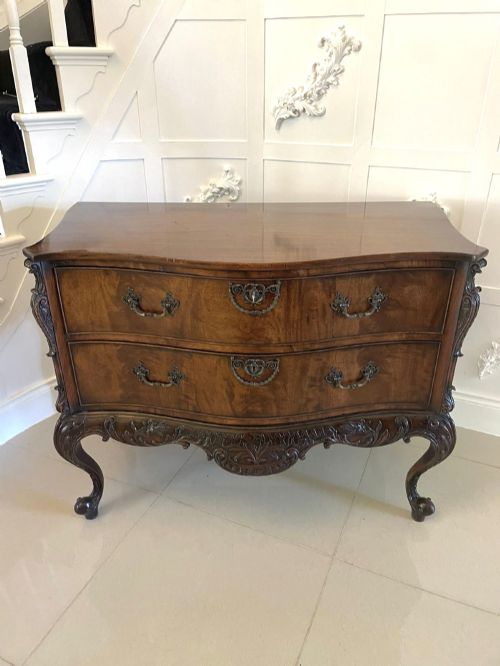
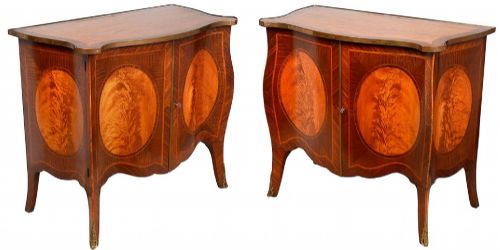
The versions most commonly met on this page date from the nineteenth century and the decades around nineteen twenty, often taking the form of a marble-topped commode or a serpentine chest. Makers working in England and France adapted these classical forms using figured and flame mahogany veneers.
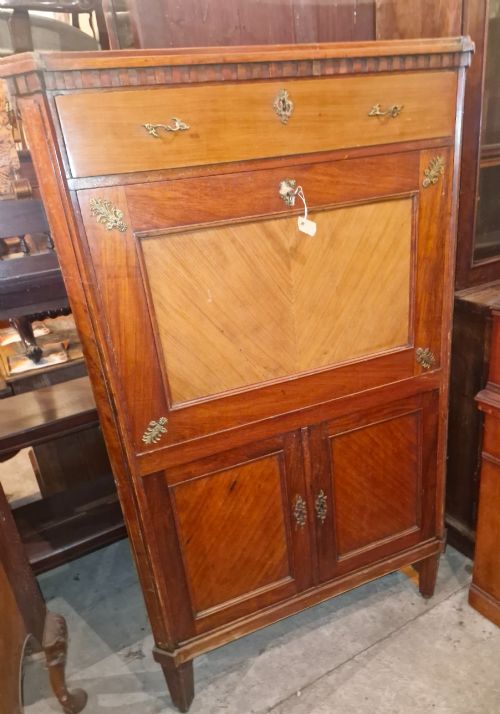
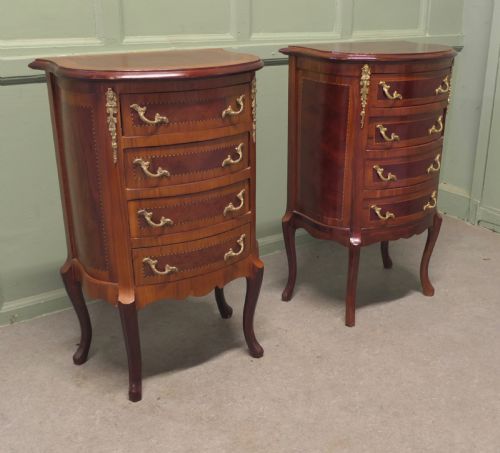
Storage formats vary from grand four-drawer commodes to miniature chests of drawers and bedside cabinets. Many incorporate specialised interiors such as secretaire fittings or drinks compartments behind their primary facades.
Materials and Construction
Cabinet makers constructed these carcasses from solid timber, applying flame mahogany veneer, figured mahogany, and occasionally walnut or parquetry to the visible surfaces. The choice of timber grain dictated the visual rhythm of the drawer fronts and side panels.
Mounts in ormolu, gilt bronze, and brass provide structural accent and decorative frame to the woodwork. These metal elements require precise casting and chasing to follow the contours of the mahogany framing.
Stone tops in grey and fossil marble sit directly upon the timber carcasses, adding weight and a cool tactile surface to the commodes and chests.
Listings feature mahogany, marble, brass, ormolu, and gilt bronze across nineteenth-century and early twentieth-century periods.
Standards of Execution
The standard of execution rests on the selection and matching of mahogany veneers across the facade, where symmetrical grain patterns denote careful timber preparation. Metal mounts cast with sharp detail and secured cleanly to the wood distinguish finer pieces from standard commercial production.
Structural integrity reveals itself in the drawer construction and the integration of heavy marble tops, which demand solid framing to support their weight without distortion. The crispness of carved mouldings and the precision of marquetry or parquetry work further divide basic utility furniture from ambitious cabinet work.
Henry Dasson·Gillows·Weisweiler·Jean-Henri Riesener
The French Style Mahogany Chest Glossary
- Commode
- A low chest of drawers or cabinet, typically standing on relatively tall legs and featuring decorative mounts. This continental storage form frequently incorporates a marble top.
- Ormolu
- Gilt bronze mounts applied to furniture for decorative effect. The technique involves coating cast bronze with a mercury and gold amalgam.
- Serpentine
- A curved furniture front characterised by a convex central section flanked by two concave sweeps. This undulating shape demands skilled woodworking.
- Parquetry
- Geometric wood inlay patterns forming mosaic designs across a surface. Cabinet makers use contrasting timbers to create these optical effects.
- Secretaire
- A desk fitted with a pull-down writing flap concealing small drawers and pigeonholes. These multifunctional interiors hide within standard chest or cabinet facades.
French Style Mahogany Chest: Frequently Asked Questions
How do I care for a marble top?
Clean the stone surface with a damp cloth and mild soap, avoiding acidic liquids that can etch polished marble.
Wax the surrounding mahogany woodwork separately while keeping polishes away from the stone.
Where should I place a commode?
These pieces suit reception rooms, hallways, and bedrooms where their decorative mounts and marble tops command visual attention.
Ensure placement avoids direct sunlight to protect the mahogany veneer from fading over time.
How do I distinguish Empire from Louis XVI style?
Empire pieces feature heavier architectural proportions, military-inspired motifs, and dense ormolu mounts reflecting nineteenth-century classical revival.
Louis XVI furniture relies on straighter lines, fluted columns, and restrained neoclassical ornamentation dating from the eighteenth century or later revivals.
Are these chests heavy to move?
The inclusion of solid mahogany timber and heavy marble slabs makes these chests significantly heavy during relocation.
Lifting requires removing the loose marble top first to reduce weight and protect the stone from accidental damage.