



French Style Ebonised Cabinet
A french style ebonised cabinet brings together dark timber, gilt mounts and marquetry to create a striking focal point in a reception room.
French Style Ebonised Cabinet
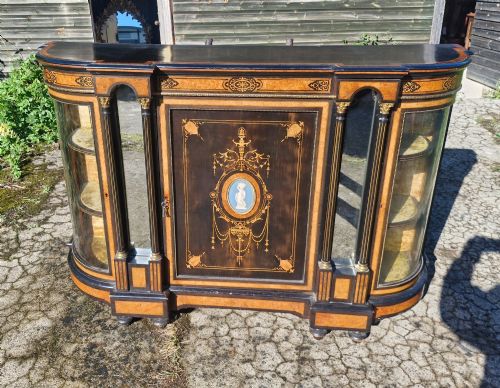
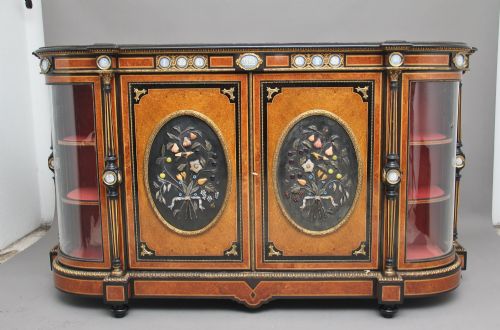
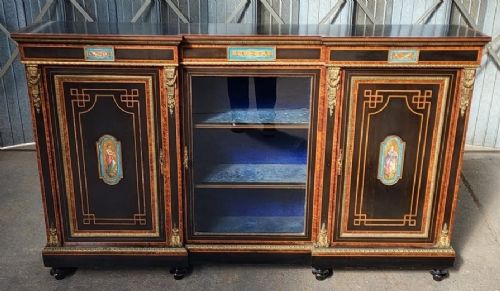
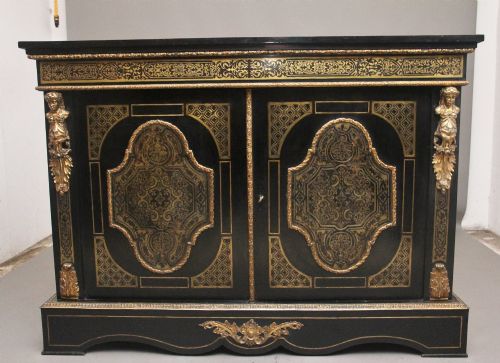
A french style ebonised cabinet typically presents a dark, polished wood finish contrasted with gleaming metal mounts. These pieces range from compact pier cabinets and side tables to large credenzas, sideboards and display vitrines.
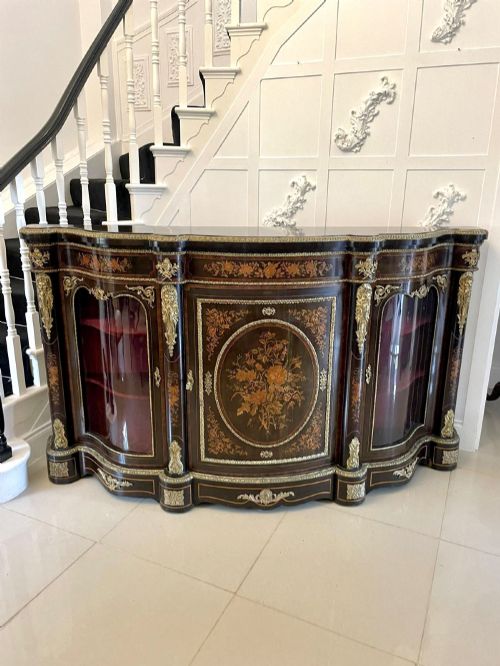
The selection on this page leans heavily towards Victorian and nineteenth century interpretations of French design, including Napoleon III, Empire and Louis XVI revival aesthetics. Buyers frequently encounter pieces incorporating glazed doors for display or marble tops set upon serpentine or demi-lune timber frames.
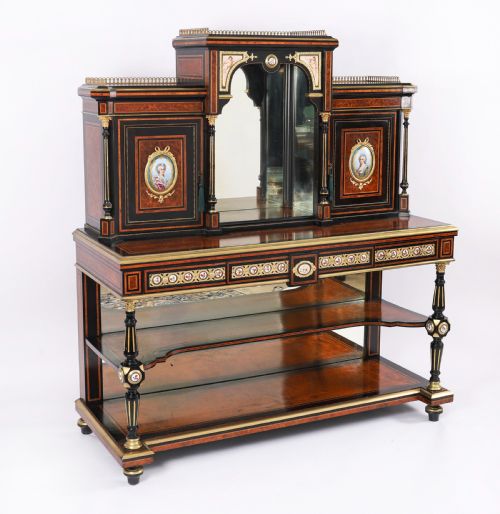
Makers and cabinetmakers of these periods utilised rich secondary timbers such as burr walnut, rosewood and amboyna beneath the dark ebonised surface. Ormolu, gilt-metal, brass and porcelain plaques frequently decorate the exterior, echoing fashionable Parisian salons of the epoch.
Materials and Construction Methods
Craftsmen achieved the signature black finish by staining or ebonising timber to imitate costly ebony, often applying stringing and brass inlay known as boulle work. Surfaces frequently incorporate floral marquetry panels alongside tortoiseshell and parcel-gilt details.
Mounts of ormolu and gilt bronze were cast and chased before being fixed to the corners, friezes and door frames. Heavy marble slabs, selected in white or variegated tones, were fitted directly to the summits of credenzas and side cabinets.
French Style Ebonised Cabinet Retail Price Guide 2026
Typical asking prices for french style ebonised cabinet among the pieces listed under this phrase on Sellingantiques today, from the lower quarter to the upper quarter. They describe what is for sale here now, not the wider market.
Common forms across this selection include display cabinets, credenzas, pier cabinets, sideboards and occasional tables.
Distinctions in Quality
Quality rests upon the crispness of the gilt-metal mounts and the precision of the brass inlay or floral marquetry. Finer examples display meticulous hand-chasing on the ormolu and seamless integration of porcelain plaques or pietra dura panels.
The choice of interior and secondary woods also marks the hierarchy of manufacture, alongside the structural integrity of serpentine or demi-lune carcases. Pieces retaining their original marble tops and unbroken glazed panels occupy the upper tier of the range.
The French Style Ebonised Cabinet Glossary
- Ebonised
- Wood treated with stain or polish to resemble solid ebony. This dark finish gained immense popularity during the Victorian and Napoleon III periods.
- Ormolu
- Gilded bronze mounts applied to furniture. The technique involves coating metal in a gold amalgam and heating it.
- Boulle
- Marquetry technique utilising brass and tortoiseshell inlaid in intricate patterns. Named after Parisian cabinetmaker André-Charles Boulle.
- Pier Cabinet
- A narrow display cabinet designed to stand against the wall space between windows. These pieces often feature glazed doors and velvet-lined interiors.
- Marquetry
- Decorative patterns formed by inserting thin veneers of wood and other materials into a wooden carcase. Floral motifs are common in nineteenth-century interpretations.
French Style Ebonised Cabinet: Frequently Asked Questions
What is a french style ebonised cabinet?
These items are nineteenth-century storage and display furniture finished in dark ebonised wood and decorated with gilt mounts, marquetry or porcelain. They reflect French aesthetic influences popular during the Victorian era.
Cabinets range from glazed vitrines and bookcase units to low credenzas and serpentine sideboards designed for drawing rooms and formal reception spaces.
How do I identify a nineteenth-century piece?
Examine the construction methods, timber choices and mounting details. Nineteenth-century examples often employ hand-chased ormolu, genuine tortoiseshell boulle work and heavy marble tops.
Styles span Napoleon III, Empire and Louis XVI revivals, frequently combining burr walnut or rosewood beneath the ebonised finish.
Where should I place a credenza in my home?
Credenzas and side cabinets suit principal reception rooms, dining spaces or wide hallways where their decorative fronts can be appreciated. Their flat tops provide space for lamps and decorative objects.
Ensure the room has adequate clearance for doors that swing open, particularly on serpentine or demi-lune shaped models.
How do I care for ebonised wood and ormolu?
Dust surfaces regularly with a soft, dry cloth and avoid commercial silicone polishes that build up over time. Keep timber pieces away from direct sunlight and heat sources to prevent warping.
Ormolu mounts require gentle cleaning without abrasive agents to preserve the original gilding.