

Ebonised Inlaid Cabinet
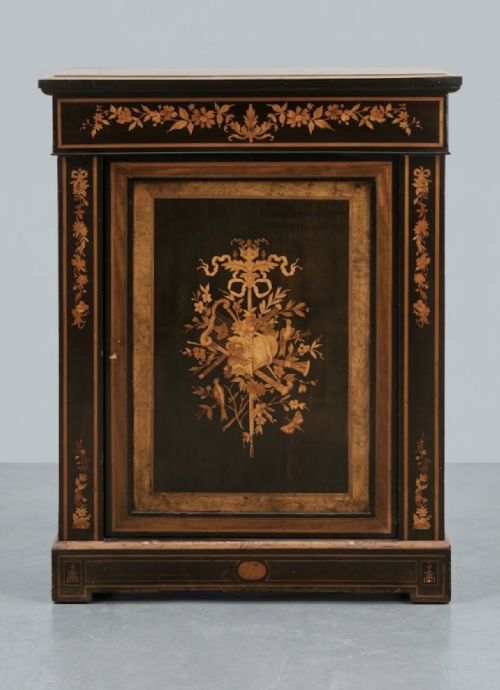
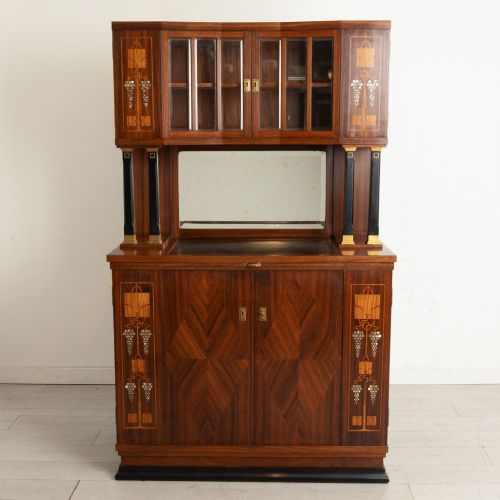
An ebonised inlaid cabinet brings dramatic dark timber surfaces and contrasting metal or floral decoration into a Victorian drawing room or nineteenth century salon.
Ebonised Inlaid Cabinet
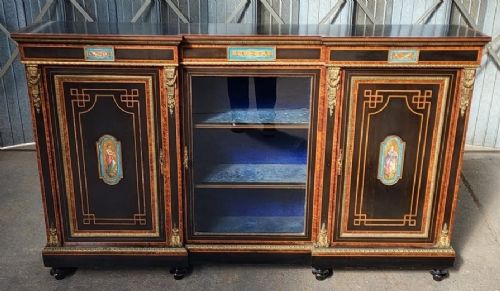
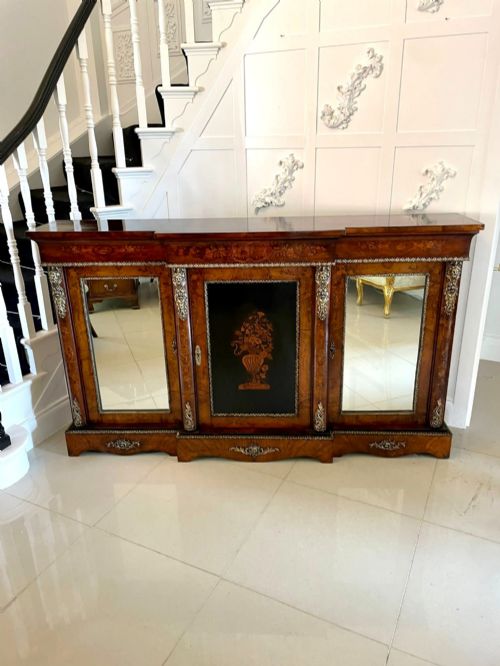
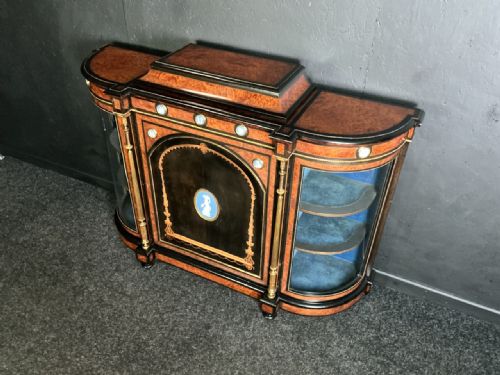
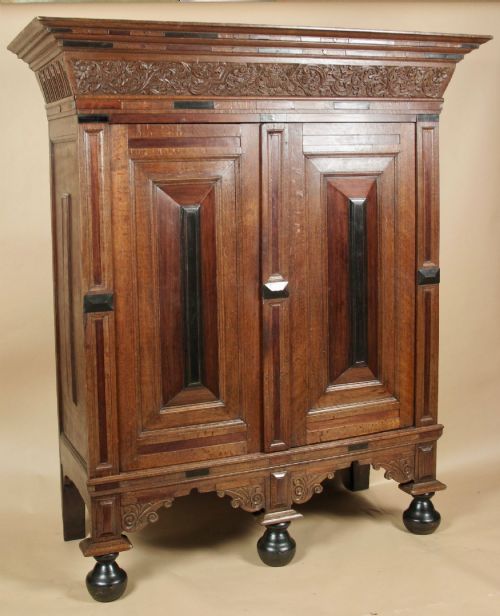
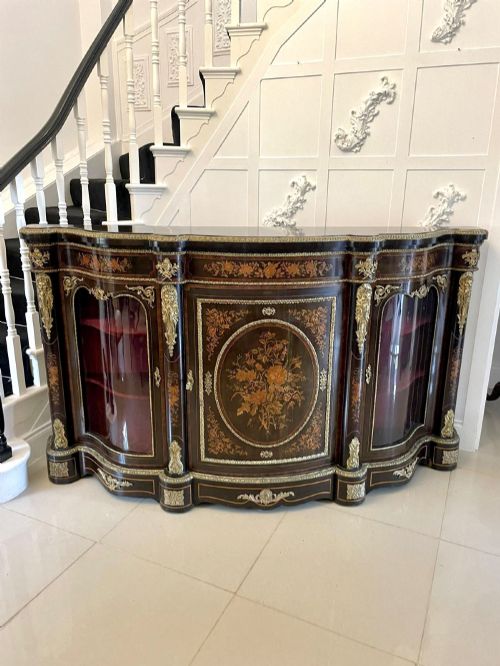
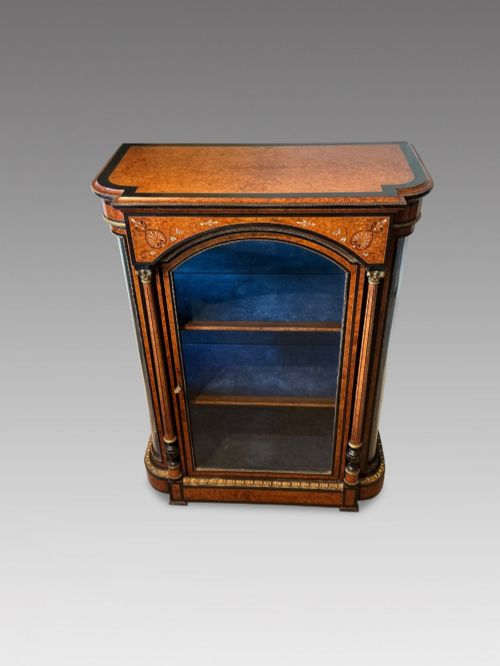
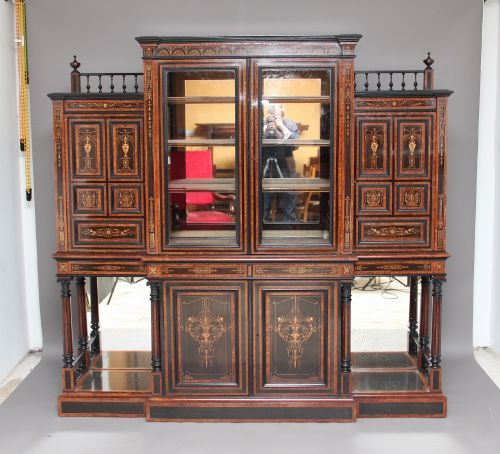
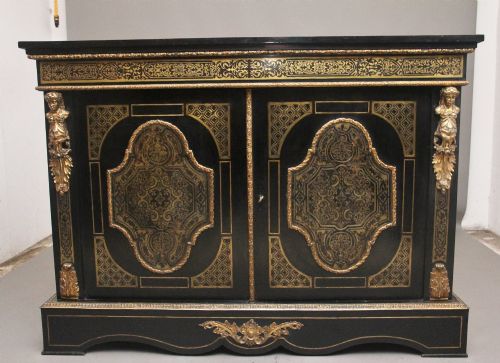
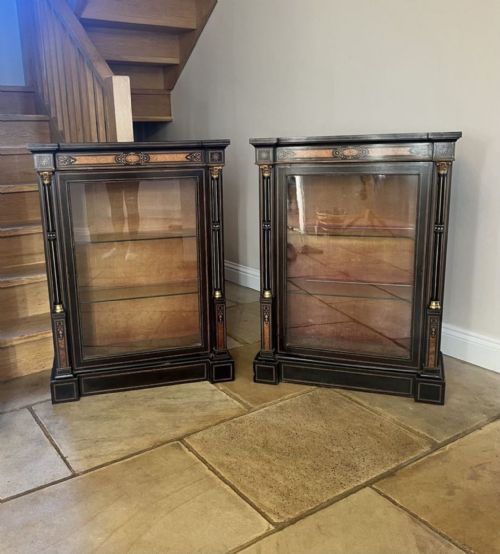
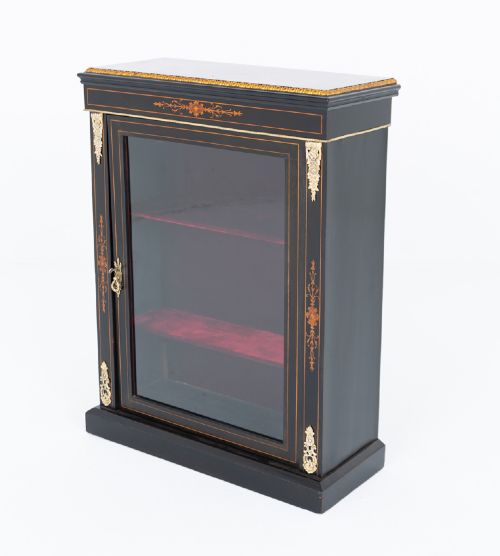
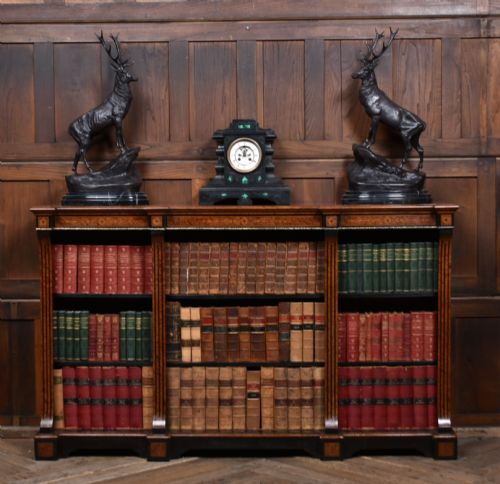
An ebonised inlaid cabinet encompasses a wide range of nineteenth century display furniture, from compact pier cabinets and side cabinets to grand breakfront bookcases and credenzas.
The majority of pieces encountered on this page originate from the Victorian period or French Napoleon III workshops, reflecting a transatlantic taste for heavily ornamented, dark-finished furniture.
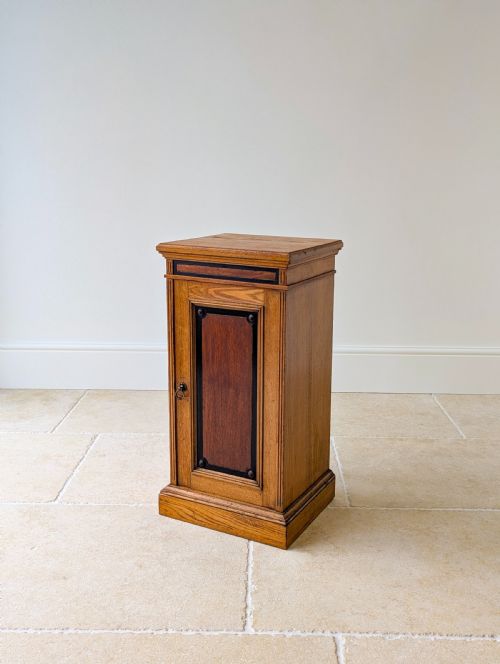
Forms vary from single-door wall-adjacent pier cabinets with mirrored backs to substantial three-door sideboards designed to anchor a formal dining room or parlour.
Materials and construction
Cabinet makers achieved the characteristic dark finish by staining fruitwoods or applying ebony veneers, creating a deep black ground that heightened the visual impact of metal mounts.
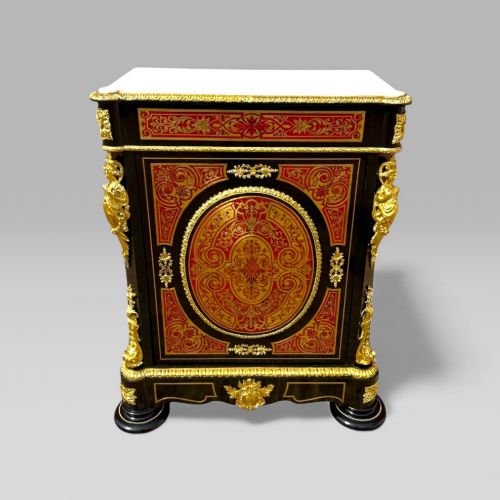
Inlay work relied on contrasting lighter timbers such as amboyna, burr walnut, and satinwood, frequently complemented by brass, tortoiseshell, and ormolu in boullework pieces.
Materials recorded across the inventory include tortoise shell, porcelain, ormolu, and various burr walnut veneers.
Assessing craftsmanship
Superior examples display crisp, fine marquetry where floral and geometric motifs sit flush within the darkened timber without gaps or heavy adhesive lines.
The choice of secondary timbers and the weight of ormolu or gilt-metal mounts distinguish standard production items from pieces bearing maker attributions.
Lamb of Manchester·August Ungethüm·Gillow
The Ebonised Inlaid Cabinet Glossary
- Ebonised
- Wood treated with stain or polish to imitate genuine ebony, producing a dense black finish popular during the nineteenth century.
- Marquetry
- Decorative patterns formed by inserting pieces of wood, ivory, or shell into a veneer-lined surface to create pictorial or geometric designs.
- Ormolu
- Gilt-bronze mounts applied to the corners, feet, and friezes of cabinets to provide structural accent and decorative richness.
- Pier cabinet
- A narrow display piece specifically designed to stand against the wall space between two windows.
- Boulle
- A style of marquetry utilising tortoiseshell and brass inlaid in contrasting patterns, named after the cabinet maker André-Charles Boulle.
Ebonised Inlaid Cabinet: Frequently Asked Questions
Where were these cabinets placed in a Victorian home?
These cabinets were predominantly positioned in formal reception rooms such as drawing rooms, libraries, and parlours. Pier cabinets specifically occupied the narrow wall spaces between large windows.
Larger credenzas and breakfront bookcases stood against primary interior walls to display collections of porcelain and decorative objects.
How do I care for ebonised wood and inlay?
Maintain ebonised surfaces by dusting with a soft, dry cloth and avoiding direct sunlight that can fade the dark finish. Protect intricate marquetry and tortoiseshell by keeping them away from excessive heat and fluctuating room humidity.
Apply specialised furniture wax sparingly only when the timber appears dry, buffing gently along the grain.
What is the difference between a credenza and a pier cabinet?
A credenza is a low, substantial sideboard or cabinet often featuring three doors and curved side sections designed for larger entertaining spaces. Pier cabinets are tall, slender, single-door display units built to fit narrower wall spans.
Both forms utilise ebonised finishes and inlaid details, but their proportions serve entirely different spatial requirements.
How can I distinguish French boullework from English marquetry?
French boullework relies heavily on cut brass and tortoiseshell arranged in intricate opposing sheets known as premiere-partie and contre-partie. English marquetry of the same era more frequently employs floral motifs rendered in woods like amboyna and burr walnut.
Cabinet construction techniques and secondary timber choices also help confirm the workshop origin.