


French Striking Shelf Clock
These French striking shelf clock pieces bring striking mechanical movement and period elegance to any room.
French Striking Shelf Clock
A french striking shelf clock is a mechanical timepiece designed to sit on a mantel, shelf or table while sounding the hours and sometimes the half-hours. You are looking at a selection spanning the Victorian era, the nineteenth century, and the Regency period.
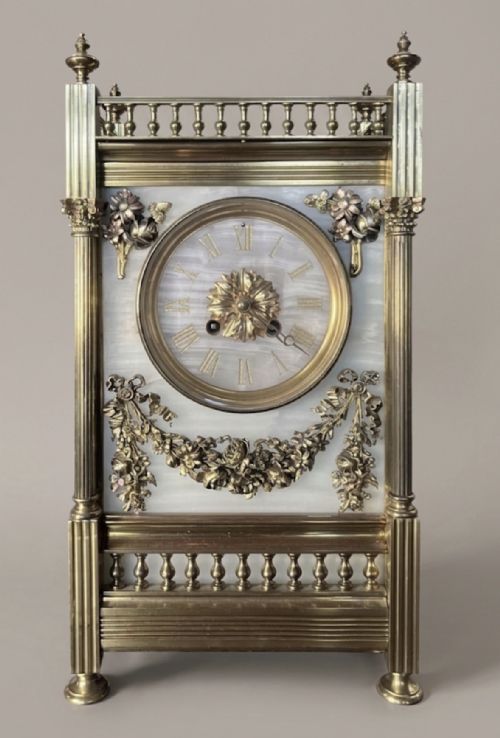
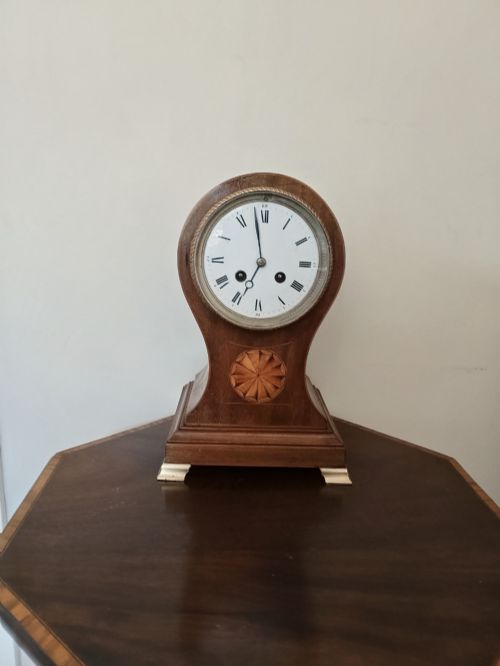
The versions you are most likely to meet on this page take the form of mantel clocks housed in materials such as marble, black slate, ebonised wood, mahogany, rosewood and ormolu bronze. Carriage clocks featuring gorge cases also appear among the offerings.
Makers and styles range from French Rococo Revival and Victorian Neoclassical to simple inlaid wooden cases and large marble architectural bodies. Each piece relies on an eight-day movement to measure time and strike bells or gongs.
Materials and construction methods
Clockmakers housed these movements in substantial enclosures of marble, slate, and cast ormolu bronze, alongside wooden cases finished with mahogany, rosewood, and marquetry inlay. Glass panels often protect the dial and allow a view of the escapement.
Enamel dials with Roman or Arabic numerals were fitted to display the time clearly, paired with delicate metal hands. Brass and gilt bronze components form the heavy mechanical movements inside, driving the striking trains.
Some carriage clocks come equipped to repeat the last hour on demand, perfect for checking the time in the dark.
Assessing quality in these clocks
Quality reveals itself in the weight and crispness of the cast bronze, ormolu, and marble cases, where sharper detail and heavier stone denote higher standards. Simpler wooden cases rely on precise marquetry, fine rosewood or mahogany grain, and clean inlay work.
The sophistication of the internal movement separates the standard pieces from the finer examples, particularly those with repeating carriage mechanisms or bell striking trains. The integration of enamel dials with clean numbering further indicates the tier of the piece.
Paul Garnier
The French Striking Shelf Clock Glossary
- Striking clock
- A timepiece that sounds bells or gongs to indicate the hours or fractions of hours automatically. This mechanism requires a secondary train of gears within the movement.
- Gorge case
- A stepped brass carriage clock housing with glazed panels on the top and sides. This form allows light to reach the escapement.
- Ormolu
- Gilded bronze created by applying a mercury and gold amalgam to cast bronze. This technique produces a bright metallic finish seen on French decorative pieces.
- Marquetry
- The art of applying pieces of veneer to a structure to form decorative patterns. Craftsmen use varied woods to create pictorial designs on clock cases.
- Ebonised wood
- Timber treated to resemble ebony through a staining and finishing process. This dark surface provides contrast against gilt mounts and enamel dials.
French Striking Shelf Clock: Frequently Asked Questions
What is a french striking shelf clock?
A french striking shelf clock is a mechanical timekeeper designed for domestic interiors that sounds the passing hours on a bell or gong.
These pieces span various nineteenth century periods and incorporate materials like marble, ormolu, and inlaid wood.
How do I wind the movement?
Winding involves inserting a key into the winding arbors on the enamel dial and turning it gently until resistance is felt.
Most movements listed run for eight days on a single wind, powering both the timekeeping and striking trains.
Where should I place a heavy marble clock?
Heavy marble and slate clocks require a sturdy, level surface such as a solid mantelpiece, sideboard, or sturdy shelf.
Ensuring a level base helps the pendulum swing evenly and keeps the striking mechanism functioning correctly.
How can I tell the period of a clock?
Dating relies on stylistic clues such as the use of Victorian Neoclassical motifs, Regency styling, or French Rococo Revival ornamentation.
Materials also provide guidance, with slate and heavy marble pointing to later Victorian manufacturing.