



French Spelter Statues Pair
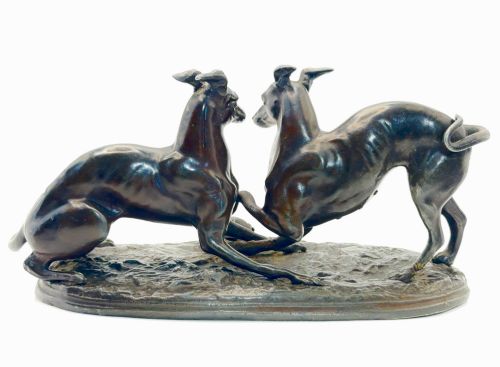
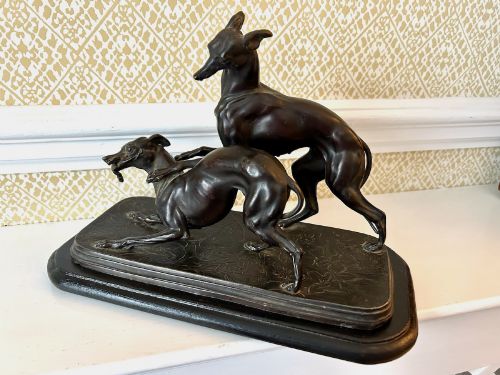
French spelter statues pair groupings bring figural presence and classic French design to a room.
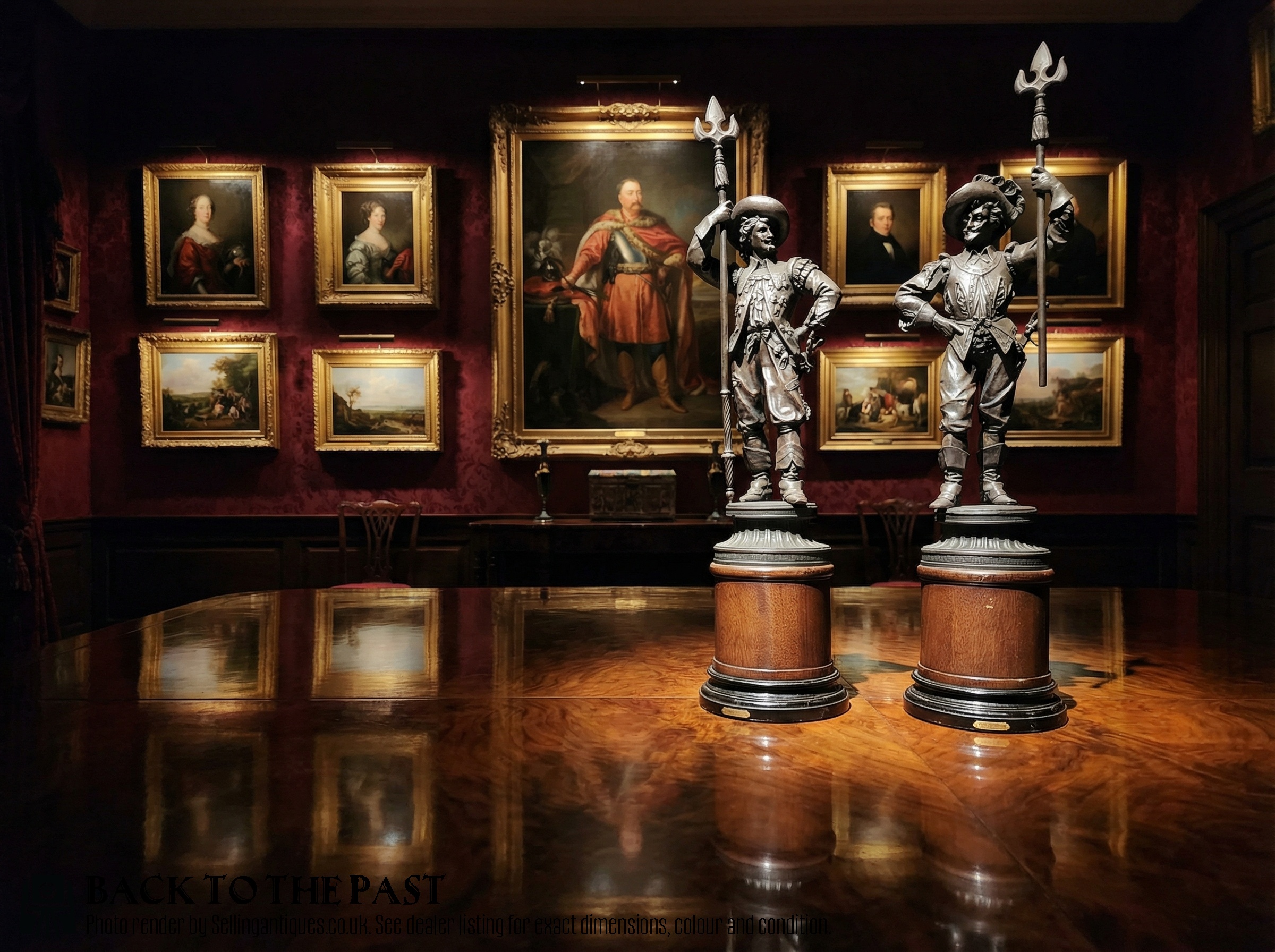
French Spelter Statues Pair
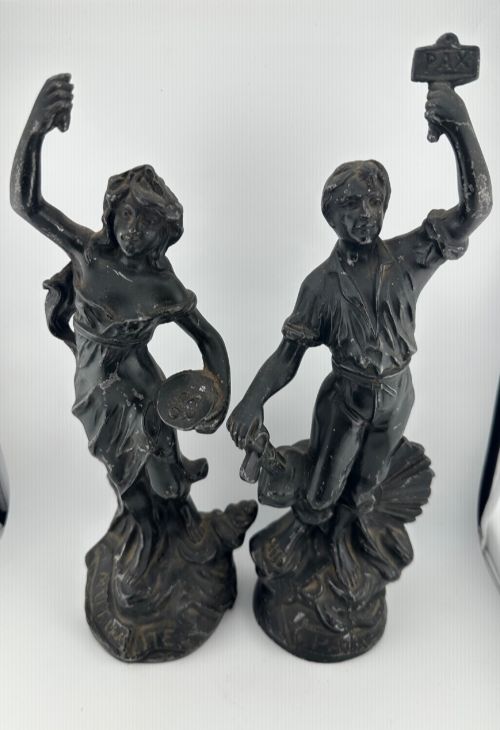
When you search for a french spelter statues pair, you encounter decorative figures fashioned in matching sets primarily from the nineteenth century. These objects frequently take the form of soldiers, cavaliers, harvesters, and mythological subjects designed for display on mantelpieces or as lamp bases.
The selections available here range from Victorian classical revival designs to art nouveau and renaissance revival pieces. Most examples originate from French workshops spanning the Victorian era through the turn of the twentieth century.
How they were made
These figures rely on zinc alloy casting, commonly known as spelter, which allowed founders to capture intricate details efficiently. Makers often applied bronzed or gilt metal finishes to mimic the appearance of more costly bronze castings.
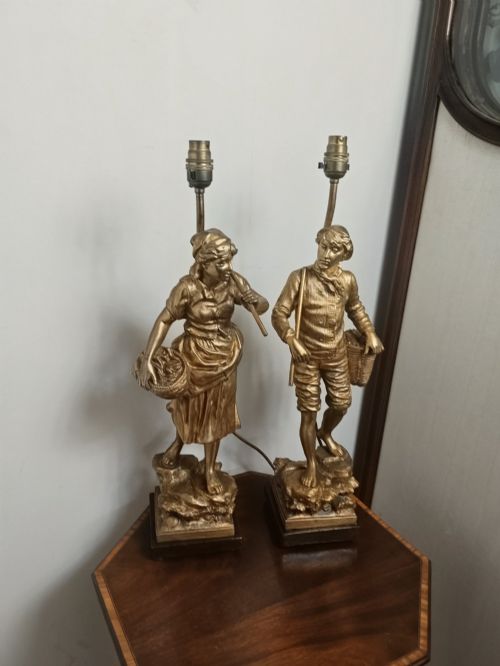
Many pairs incorporate complementary elements such as wood or alabaster bases to support the cast metal sculptures. Table lamps and candlesticks integrate functional hardware directly into the sculptural metalwork.
French Spelter Statues Pair Retail Price Guide 2026
Typical asking prices for french spelter statues pair among the pieces listed under this phrase on Sellingantiques today, from the lower quarter to the upper quarter. They describe what is for sale here now, not the wider market.
Materials documented across the current selection include zinc alloy, alabaster, wood, and applied gilt or bronzed finishes.
What varies in quality
The preservation of the original surface finish, whether gilt or bronzed, heavily influences the visual appeal of a pair. Integrated bases of alabaster or turned wood also reflect the original tier of manufacture.
E Rousseau
The French Spelter Statues Pair Glossary
- Spelter
- A zinc alloy commonly used as a cost-effective substitute for bronze in nineteenth-century decorative sculpture. It accepts patination and metallic paint finishes readily.
- Renaissance Revival
- A nineteenth-century design style drawing inspiration from sixteenth-century European art and architecture. It frequently appears on figural pieces depicting historical soldiers and cavaliers.
- Art Nouveau
- An international style of art and architecture prevalent around 1900 characterised by organic lines and natural forms. In metalwork, it manifests in flowing drapery and stylised botanical motifs.
- Gilt Metal
- Metal coated with a thin layer of gold paint or leaf to simulate solid gold or fire-gilt bronze. This finish brightens figural table lamps and decorative pairs.
French Spelter Statues Pair: Frequently Asked Questions
What are french spelter statues pair pieces made of?
These pieces are cast from zinc alloy, widely referred to as spelter in the antique trade. Makers often treated this metal with bronzed or gilt finishes to resemble traditional bronze.
Additional materials like wood and alabaster frequently appear in the supporting bases or associated mountings of these dual figures.
How were these statues used originally?
Such figures were created to ornament domestic interiors, often placed symmetrically upon mantelpieces in formal rooms. Some pairs were adapted as functional items like table lamps or candlesticks.
Their presence reflected popular historical themes, including renaissance soldiers, classical revivals, and agricultural harvesters.
How do I date a french spelter statues pair?
Dating relies on stylistic clues and manufacturing techniques associated with the nineteenth and early twentieth centuries. Victorian historicism and renaissance revival point to the mid-to-late nineteenth century, while flowing lines indicate turn-of-the-century work.
Examining the base construction and surface patination also helps narrow down the period of production.
Are these pieces solid bronze?
They are cast from spelter, which is a softer and lighter zinc-based alloy rather than copper-based bronze. This material allowed makers to produce detailed decorative figures at a lower cost during the Victorian era.
Applied surface coatings were deliberately used to give the zinc alloy the warm tone of genuine bronze or gold.