
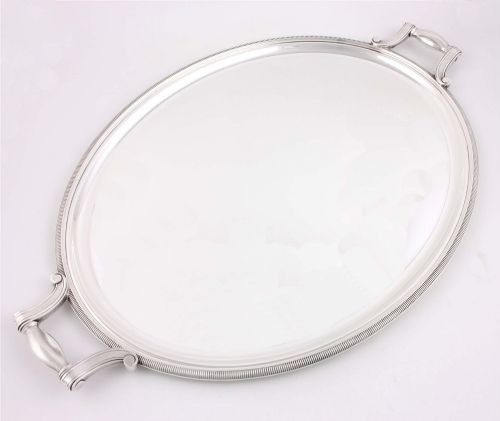


French Silver Plated Tray
A french silver plated tray brings everyday service and formal display together, anchored by decades of Gallic design from Art Deco geometric lines to ornate Rococo flourishes.
French Silver Plated Tray
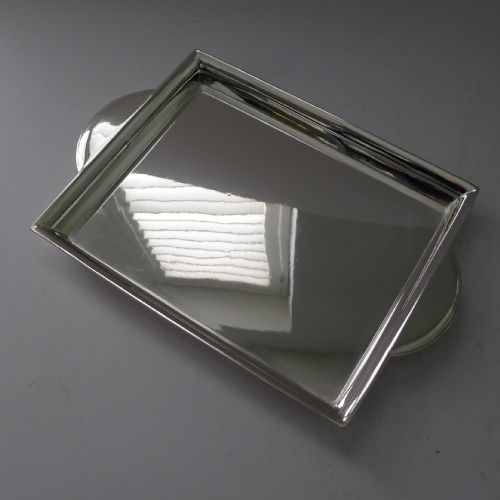
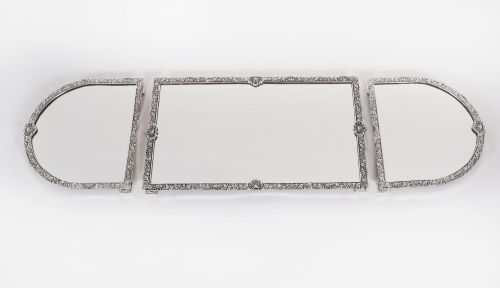
A french silver plated tray encompasses serving vessels, cocktail platters, side-board mirrors and bread baskets spanning the Edwardian era through the mid-twentieth century. The primary forms found here are large oval cocktail trays, twin-handled drinks platters, and smaller vide poche dishes created for domestic service and display.
Makers working in Paris produced these objects across distinct design movements, notably Art Deco, Art Nouveau, and French Classicism. The surviving pieces record a heavy concentration of twentieth-century production alongside late nineteenth-century examples.
Materials extend beyond standard plating to include base metal, pewter, glass and wood combinations. Buyers encounter functional items ranging from heavy sauce boats to expansive butler trays intended for hospitality.
Assessing Quality and Execution
The weight and gauge of the underlying base metal dictate the structural rigidity of a tray, separating substantial serving pieces from lighter decorative items. Thicker metal supports handles and raised rims under heavy loads without flexing.
The durability of the silver plating and the crispness of chased or engraved ornament define the upper tier of craftsmanship. Pieces bearing workshop marks from major Parisian houses display cleaner cast details and more uniform metal finishes across the surface.
Materials recorded across the inventory include silver plate, base metal, pewter, glass, and wood.
Christofle·Gallia·Brille·Maria Pergay·Victor Saglier·Orfèvrerie Claude Perrin·Saglier Freres
The French Silver Plated Tray Glossary
- Silver Plate
- A base metal object coated with a thin layer of pure silver. This technique allowed makers to produce durable tableware with the visual appeal of solid silver at a lower cost.
- Vide Poche
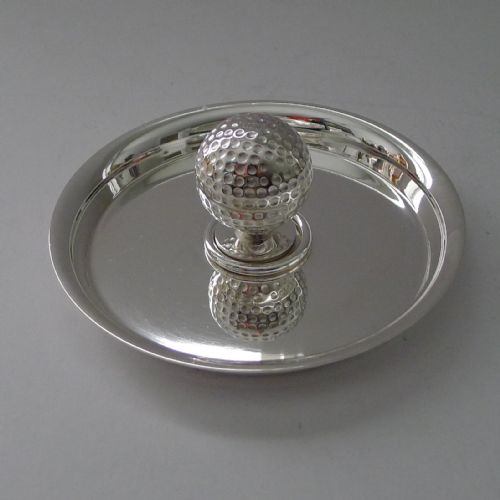
- A small dish or tray designed for emptying pockets of coins and keys. These items appear frequently among mid-century French metalware.
- Sauce Boat
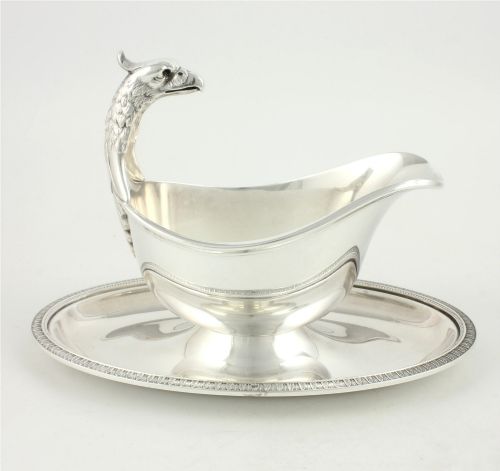
- A vessel with a lip and handle used for serving gravies or sauces. Examples include specialised spouted forms paired with integrated stands.
- Art Deco
- A design style dominant in the nineteen-twenties and thirties characterised by geometric shapes, stylised motifs and clean lines. This aesthetic strongly influences many twentieth-century trays in the archive.
- Art Nouveau
- An artistic movement from the late nineteenth and early twentieth centuries featuring flowing, organic lines inspired by natural forms. Trays from this period often display floral or figural motifs.
French Silver Plated Tray: Frequently Asked Questions
What were these trays used for?
These trays served domestic functions ranging from carrying cocktails and wine to holding bread, fruit, or visiting cards in a hallway. Larger oval formats accommodated heavy glassware and decanters during formal entertaining.
Smaller variants functioned as vanity trays, vide poche dishes, or sauce vessels during dining service. Their versatility meant they moved easily between formal reception rooms and private quarters.
How do I date a French silver plated tray?
Dating relies on stylistic markers such as geometric Art Deco angles, sinuous Art Nouveau curves, or classical revival motifs. Maker marks stamped into the metal often correspond to known operational periods of Parisian workshops.
Construction methods and accompanying materials like integrated glass or specific handle castings also help narrow down the decade of production between the late nineteenth and mid-twentieth centuries.
How do I care for silver plate?
Silver plate requires gentle cleaning with non-abrasive cloths and dedicated silver care products to prevent wearing through the thin metal layer. Regular dusting and avoidance of harsh chemical immersion preserve the finish.
Storing pieces away from damp environments prevents the base metal from reacting if the plating has thinned over decades of use.
Are these trays made of solid silver?
No, these pieces consist of a base metal, copper or pewter core covered in a layer of silver plate. This method provided the polished look of solid precious metal without the corresponding weight or cost.
Maker stamps on the underside usually indicate plating techniques rather than solid metal purity standards.