

French Serpentine Table
When you search for a French serpentine table, you find a fluid, curving line rooted in continental cabinet-making.
French Serpentine Table
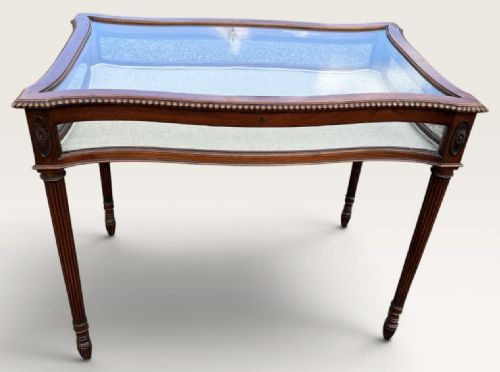
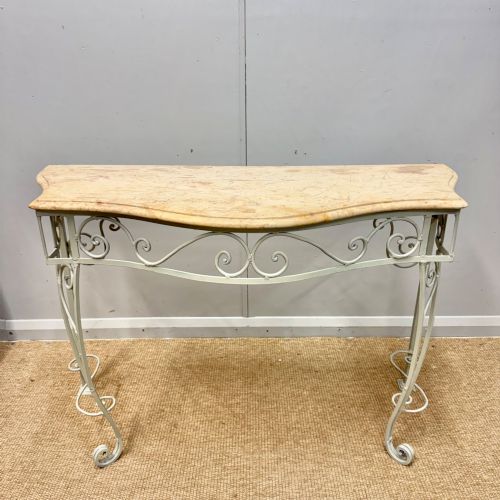
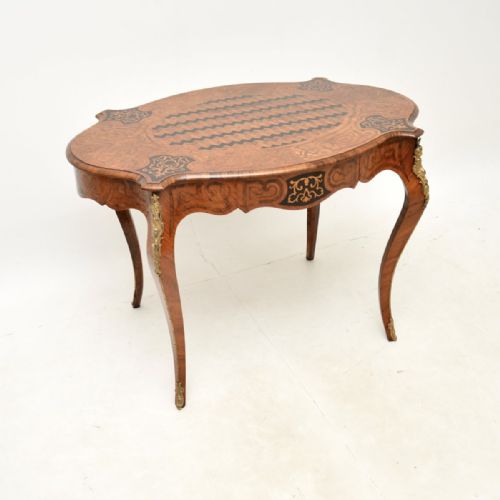
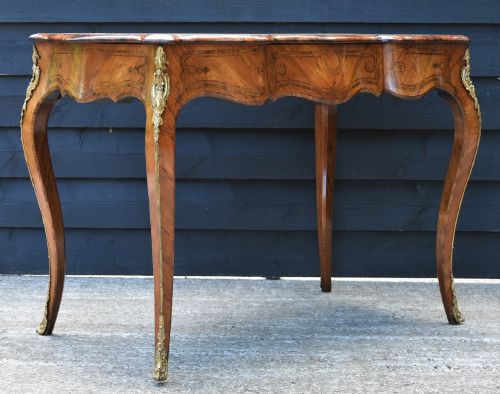
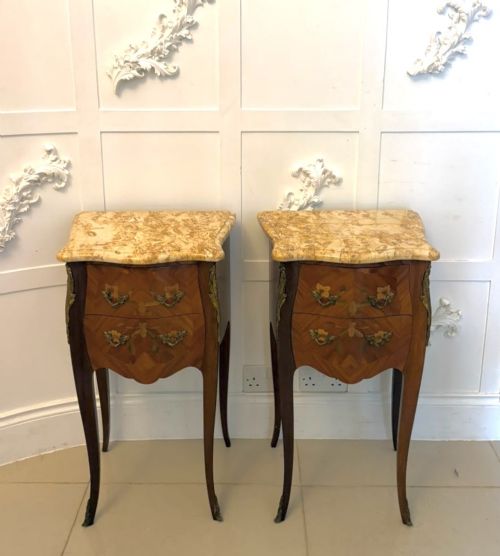
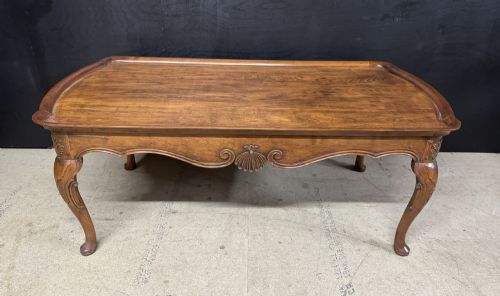
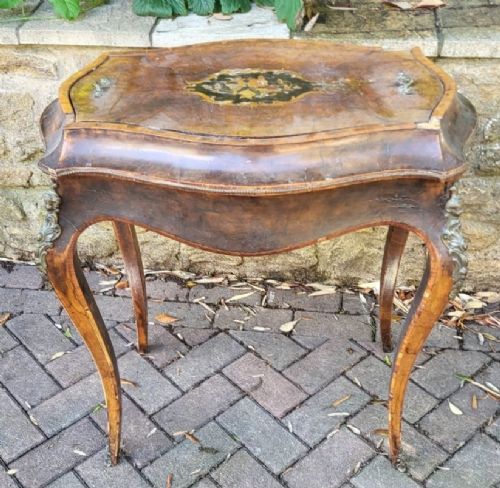
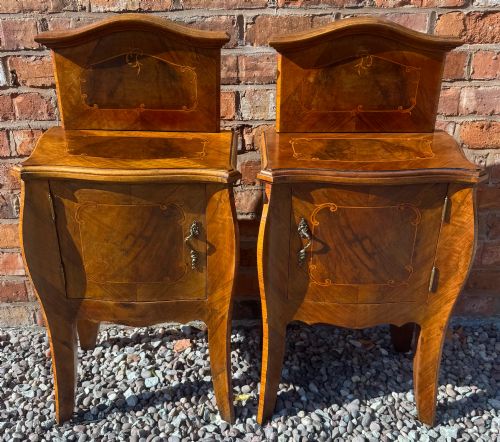
A French serpentine table displays a distinctive undulating front edge that curves inward and outward in a continuous, rhythmic line. These pieces appear primarily as console tables, card tables, and writing desks, often carrying the stylistic influence of the Louis XV Revival and Victorian Rococo periods.
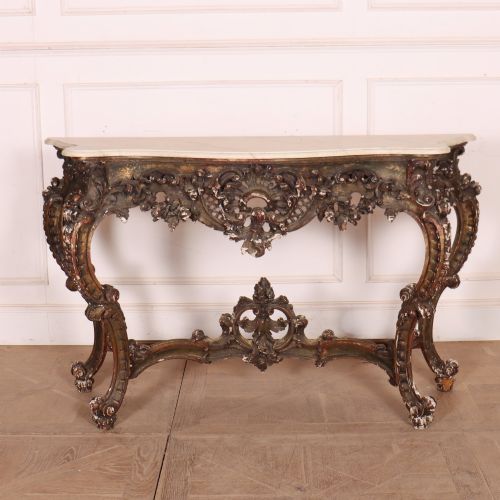
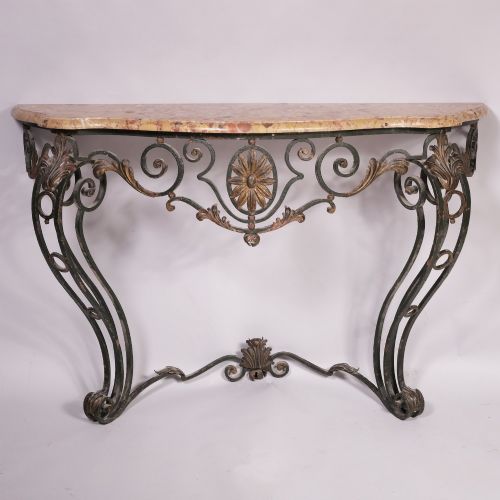
Console tables dominate the selection, frequently paired with heavy marble tops and resting against drawing room walls. Writing desks and bedside cabinets also take on the undulating contour, bringing softness to functional furniture.
Originating largely in the nineteenth century, these tables reflect continental craftsmanship adapted for domestic display. The curved silhouette demands careful joinery to maintain structural integrity along the winding timber edge.
Materials and construction
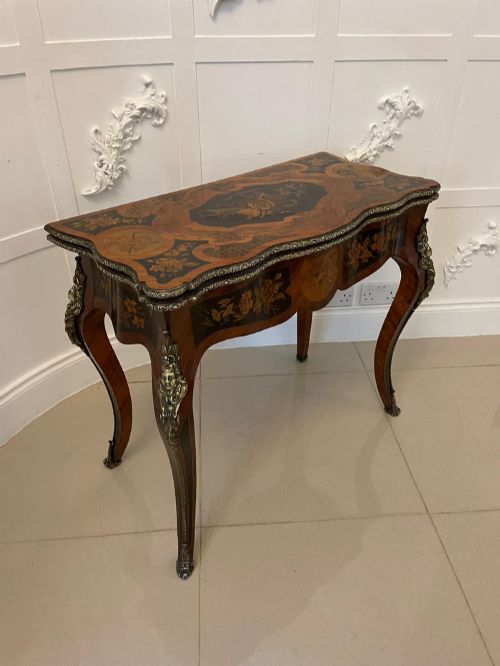
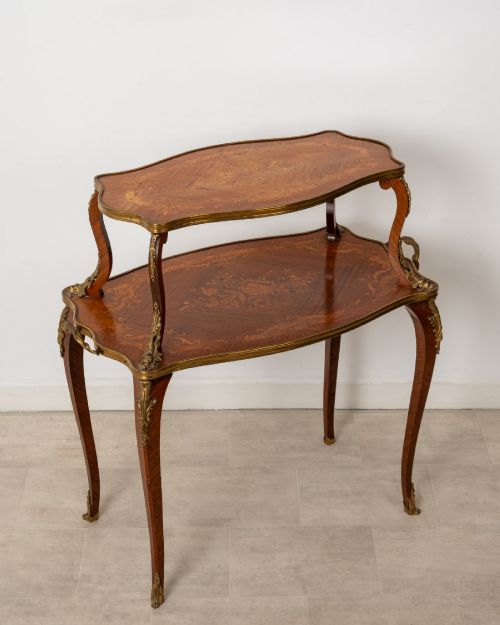
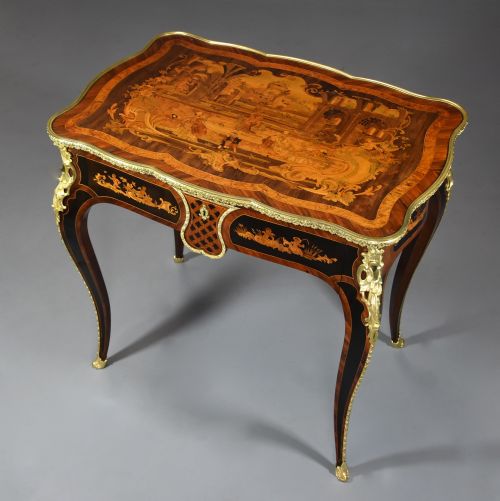
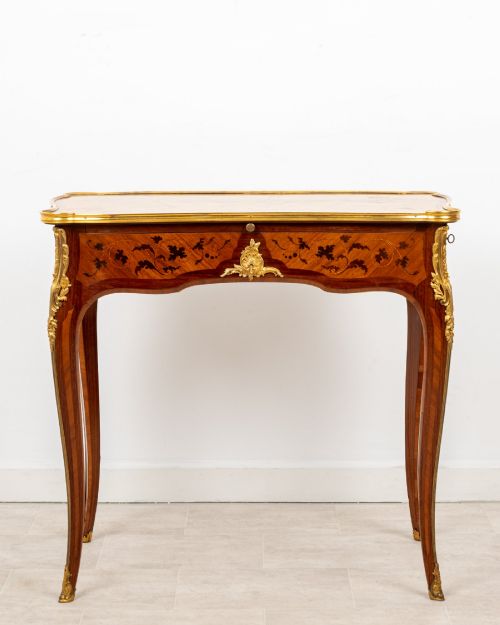
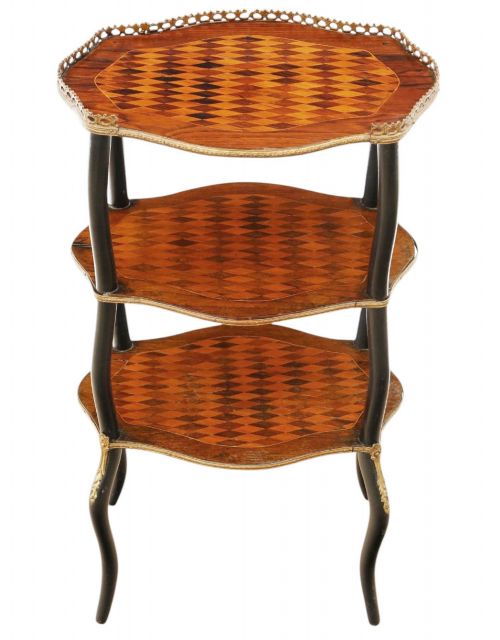
Cabinet-makers relied on dense hardwoods such as kingwood, walnut, and rosewood, sliced into fine veneers for elaborate marquetry and parquetry patterns. These timbers formed geometric or floral motifs across the shaped surfaces of the tabletop and drawers.
Cast ormolu mounts punctuated the corners and aprons, providing gilded brass highlights that contrasted with the dark wood grain. Heavy marble slabs, cut to follow the exact serpentine profile, capped many of the console and bedside tables.
The listings show nineteenth-century pieces employing kingwood, walnut, and marble, predominantly styled in the Louis XV Revival tradition.
Judging the execution
Quality rests in the precision of the veneer work and the fluidity of the carved line. Superior examples exhibit seamless matching of wood grains across tight curves, whereas lesser pieces show awkward joins or stiff proportions.
The weight and detail of the ormolu mounts signal the grade of the piece, with finely chased gilding separating standard workshop output from exhibition standards. The integration of the marble top into the wooden chassis further dictates the standard of manufacture.
Durand·E. Kahn·Maison Millet
The French Serpentine Table Glossary
- Serpentine
- A furniture contour featuring a double-curved edge that bends inward centrally and outward at the sides. This profile defines the silhouette of the tabletop and front apron.
- Ormolu
- Gilded bronze or brass applied as decorative mounts and feet on nineteenth-century furniture. It accentuates the structural lines of the piece.
- Marquetry
- The art of applying small pieces of veneer to a structure to form decorative patterns or pictures. Floral and geometric designs are common on these surfaces.
- Console table
- A table designed to stand against a wall, frequently secured to it and topped with marble. They served decorative functions in grand interiors.
- Boulle
- A style of marquetry using brass and tortoiseshell inlaid into dark woods. It appears on select decorative tables.
French Serpentine Table: Frequently Asked Questions
How do I care for a marble top?
Wipe the surface regularly with a soft, damp cloth and dry it immediately to prevent water marks. Avoid acidic cleaners or lemon juice, which etch polished stone.
Place felt pads beneath objects resting on the marble to prevent scratching. Periodic waxing with neutral stone polish helps maintain the sheen.
Were these tables used for dining?
Most serpentine tables served as decorative console pieces, card tables, or writing desks rather than dining furniture. Card tables featured fold-over tops designed for evening gaming.
Writing desks and console tables remained stationary against drawing room walls or within boudoirs. Their delicate veneered surfaces and marble tops were unsuited to heavy daily dining use.
How do I identify a revival piece?
Nineteenth-century revival pieces emulate earlier court styles, particularly Louis XV and Rococo aesthetics. Examine the secondary timbers and the construction methods beneath the veneer to date the core structure.
Can I place a lamp on the surface?
Lamps sit well on side tables and console tables, provided the base has protective pads. Ensure the weight remains moderate, especially on pieces with slender cabriole legs.
Route cords carefully behind the furniture to prevent accidental pulls that could destabilise the table. Avoid placing damp items or uncovered plant pots directly on the wood veneer.