
French Serpentine Chest Drawers
French serpentine chest drawers pieces combine curving, undulating drawer fronts with the refined proportions of continental cabinet-making, offering both sculptural presence and deep storage.
French Serpentine Chest Drawers
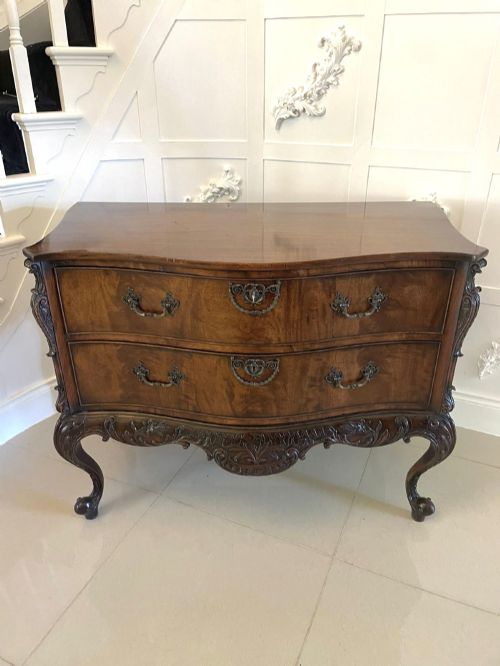
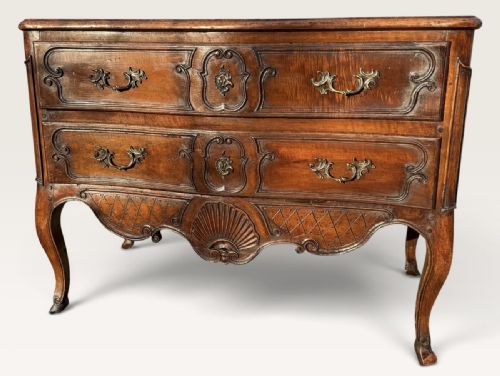
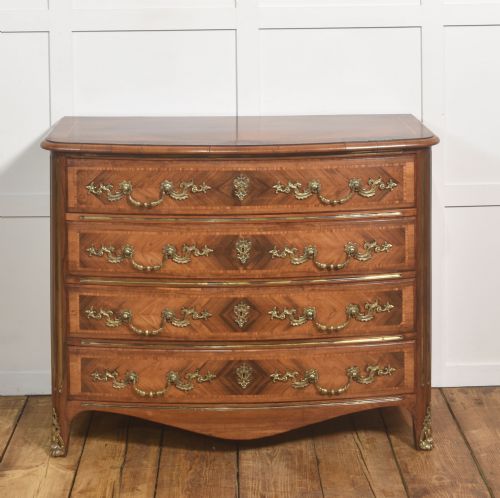
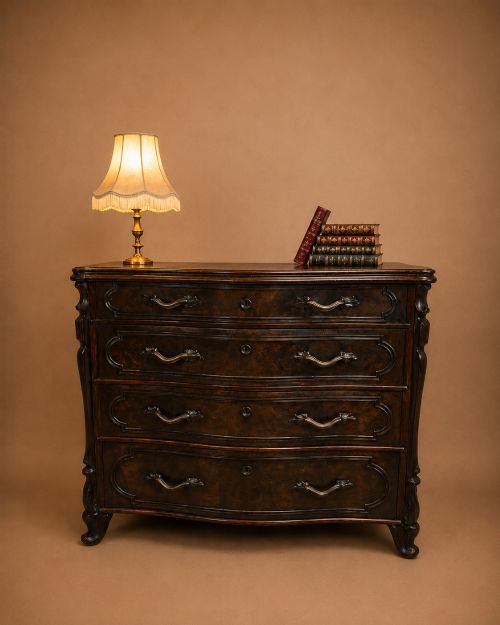
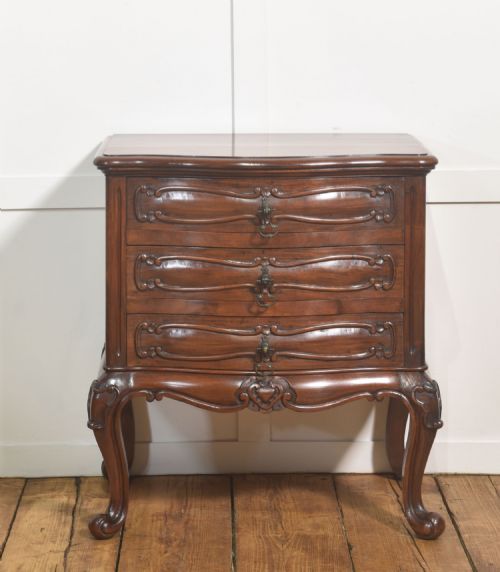
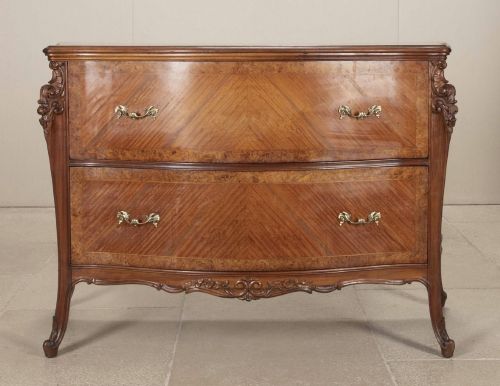
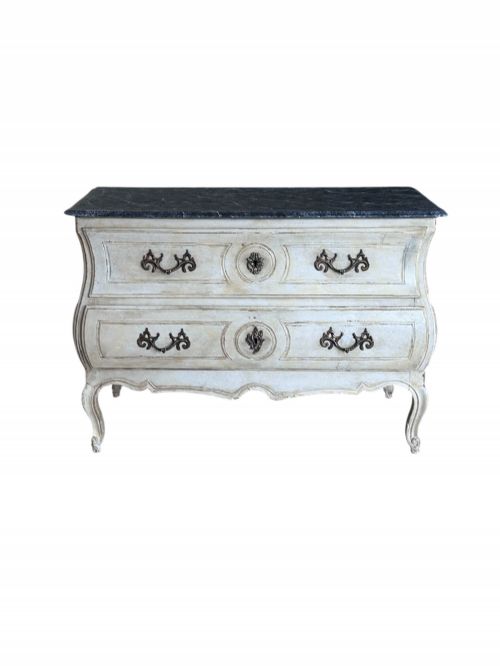
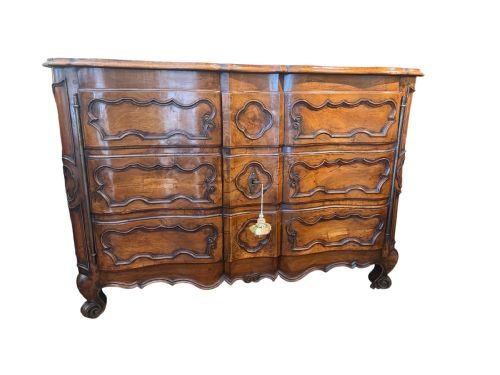
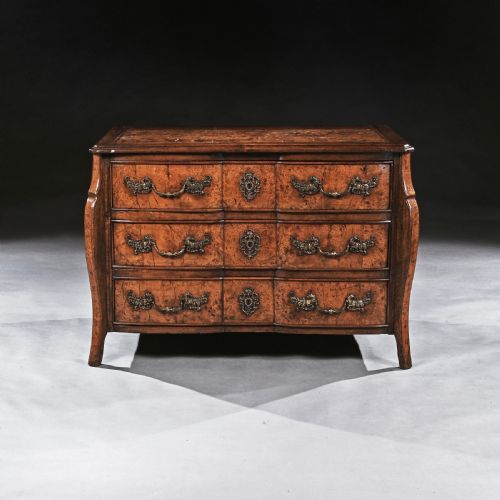
A french serpentine chest drawers brings a distinct undulating profile to domestic interiors, originating primarily as sophisticated commodes from provincial workshops and Parisian cabinet-makers. These pieces present a curving front that sweeps outward and inward, creating a dynamic silhouette distinct from flat-fronted furniture.
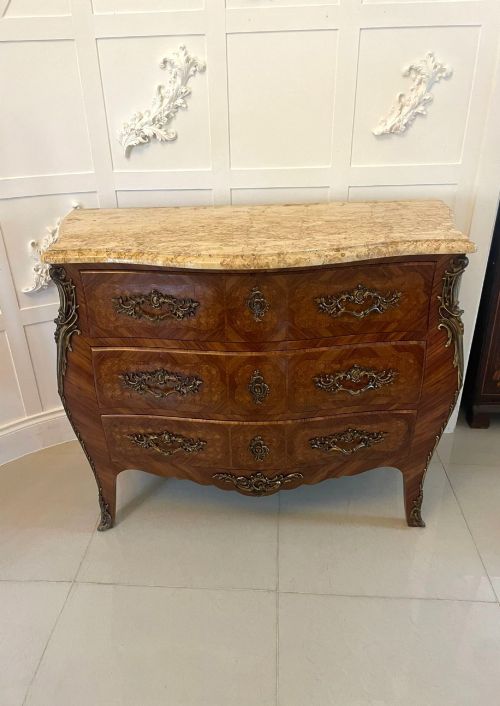
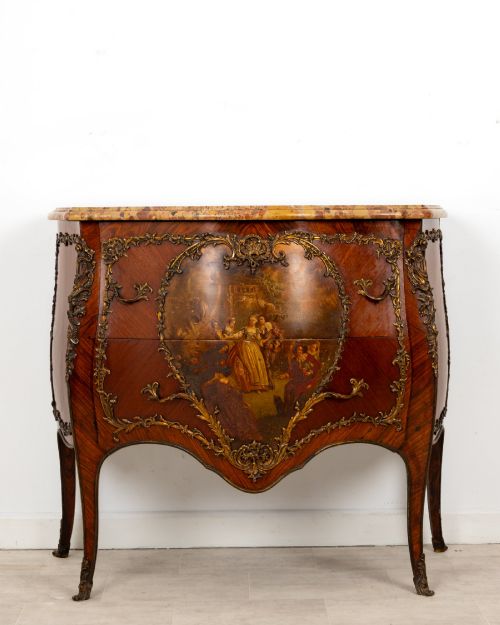
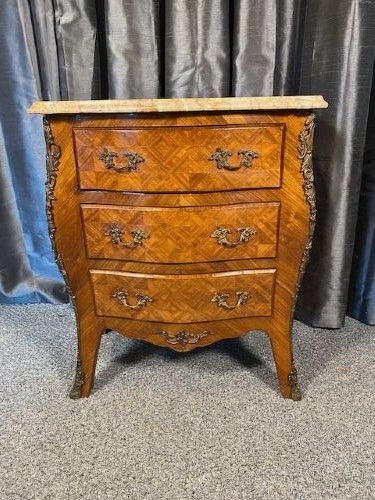
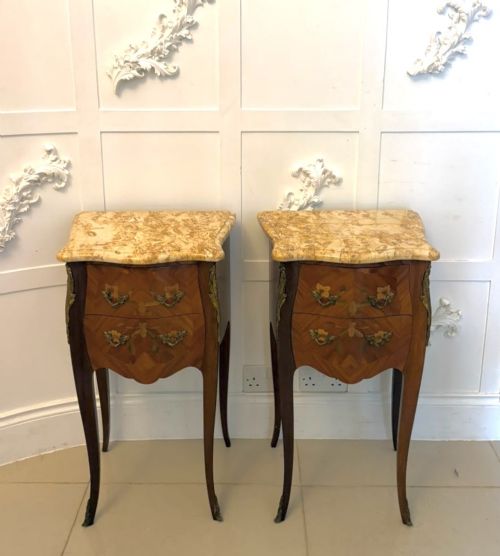
The version most commonly met on this page is the continental commode or chest, spanning the 18th and 19th centuries, often finished with distinctive wood veneers and shaped marble tops. Surviving examples range from walnut country pieces to highly decorative revival models in kingwood and mahogany.
How they were made
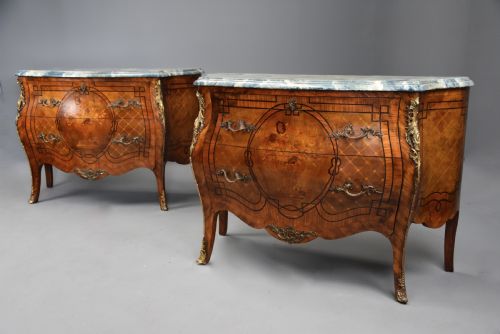
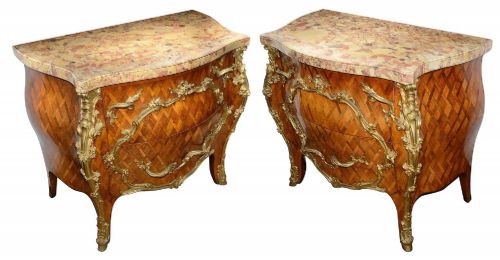
Construction relies on applying figured veneers such as kingwood, walnut, and mahogany over solid carcass woods like oak, allowing cabinet-makers to wrap complex curves without splitting. Marquetry and parquetry patterns add geometric or floral detailing across the undulating drawer fronts.
Metal mounts in ormolu, gilt-bronze, and brass accent the corners, handles, and apron, while shaped marble slabs are fitted precisely to the top contours of the commode.
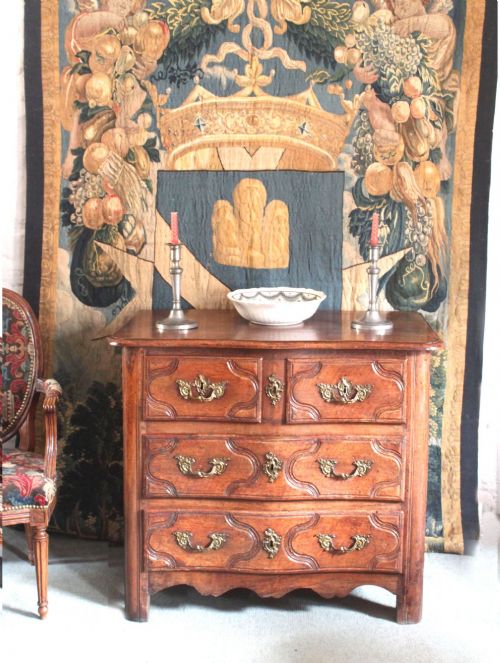
Listings feature 18th-century and 19th-century pieces employing walnut, oak, kingwood, and marble.
What varies in quality
Quality rests upon the fluency of the curving line in the wood and the precision with which the veneer follows the serpentine sweep of the drawer fronts. Superior pieces demonstrate crisp integration between the marble top, the bronze mounts, and the underlying carcass.
Finer examples retain original decorative panels, subtle marquetry, and well-executed parquetry, whereas later or lesser pieces rely on simpler painted finishes or heavier, less refined timber selection.
The French Serpentine Chest Drawers Glossary
- Serpentine
- A furniture front shaped with a central concave curve flanked by two convex sweeps, or vice versa. This undulating contour requires skilled timber shaping.
- Commode
- A low chest of drawers, particularly of French origin, often fitted with a marble top and decorative mounts. They function as both storage and display surfaces.
- Bombe
- A swollen, bulging outward curve on the sides and front of a chest or commode. This voluptuous form is characteristic of mid-18th-century continental design.
- Ormolu
- Gilt-bronze mounts applied to furniture edges, feet, and handles for decorative effect. The finish provides a rich metallic contrast against dark wood veneers.
- Marquetry
- Inlaid wood veneers arranged in pictorial or floral patterns across the surface. Artisans cut contrasting woods together to achieve tight, seamless joins.
French Serpentine Chest Drawers: Frequently Asked Questions
How do I identify an 18th-century piece?
Eighteenth-century examples typically display hand-cut dovetails, native timber linings such as oak or walnut, and patination developed through centuries of use.
Construction methods inside the drawer carcases and the absence of modern machine marks provide the clearest confirmation of period origin.
Are marble tops original to these chests?
Many commodes were designed specifically to receive heavy marble slabs, which were cut to match the exact serpentine contours of the wooden carcass.
When assessing a piece, check that the marble edge aligns smoothly with the wooden moulding beneath it without awkward overhangs.
Where were these chests used in a home?
Historically, these items served as principal storage furniture in bedrooms and salons, functioning as both linen presses and decorative side units.
Today, their proportional height and flat marble surfaces make them suitable for hallways, living rooms, and dining spaces.
What is the difference between provincial and Parisian pieces?
Provincial items often utilise local timbers like fruitwood, oak, or regional walnut with simpler carved details suited to country houses.
Parisian workshops favoured exotic veneers like kingwood, intricate marquetry, and gilt-bronze mounts intended for fashionable urban interiors.