





French Serpentine Card Table
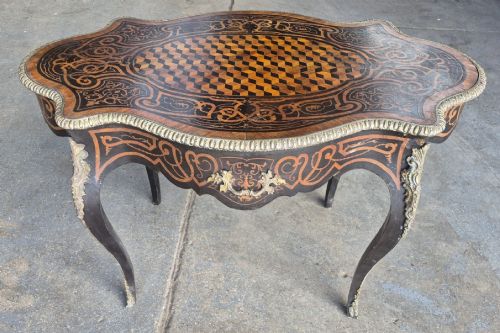
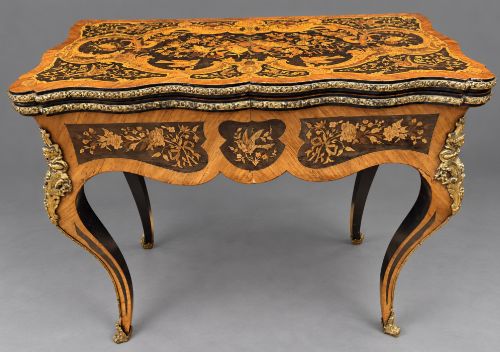
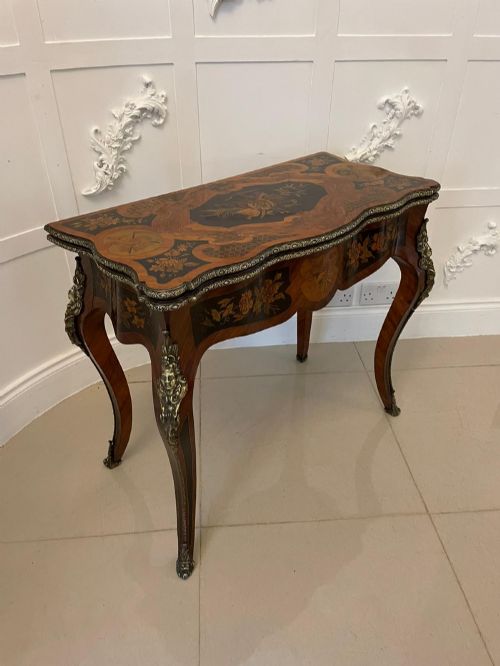
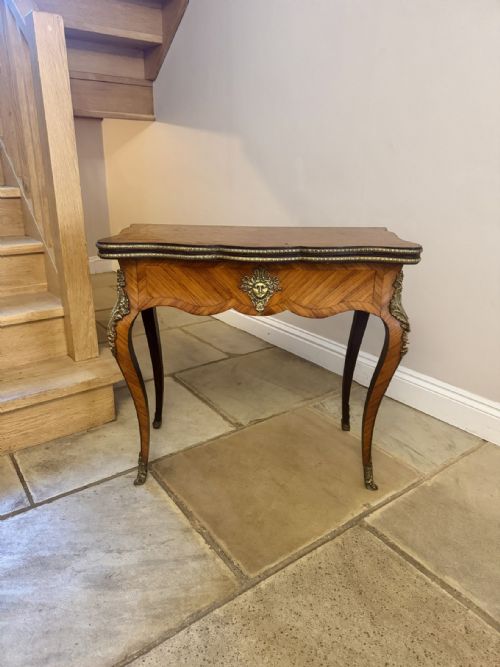
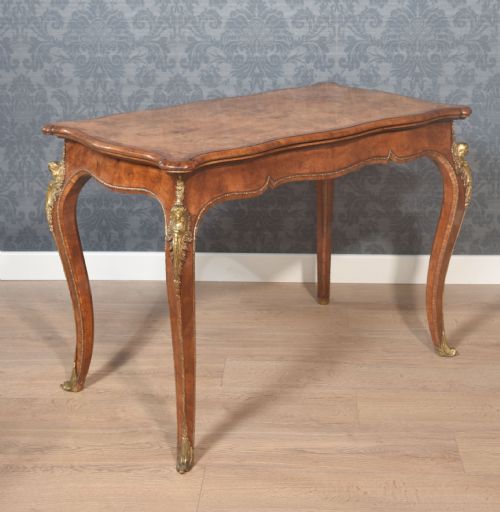
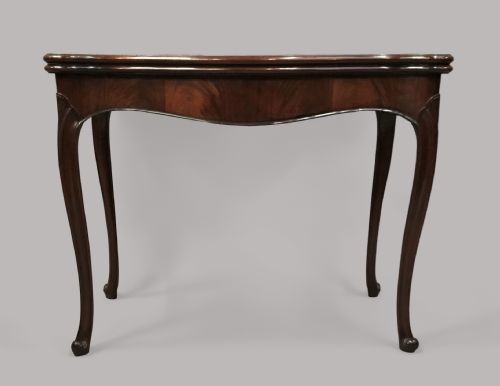
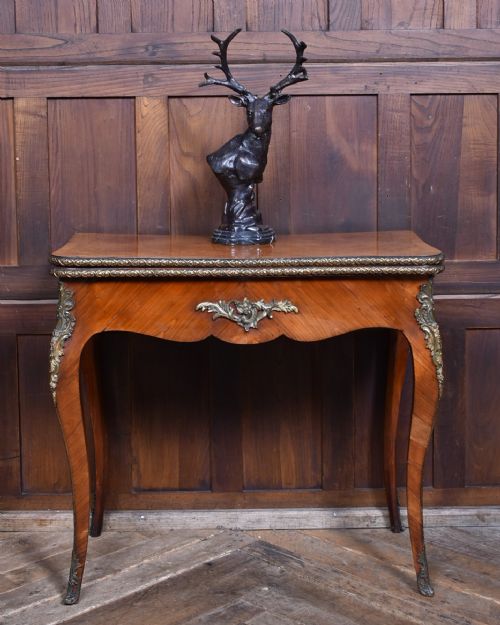
These pieces are french serpentine card table examples, prized for their sinuous curves and fold-over tops that transform a living space with Continental flair.
French Serpentine Card Table
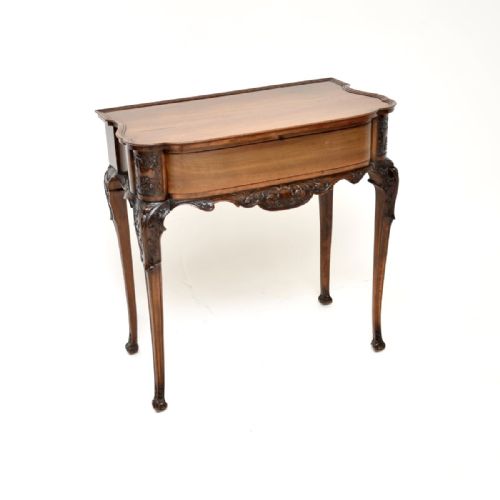
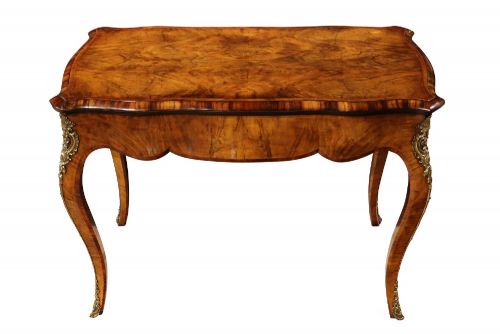
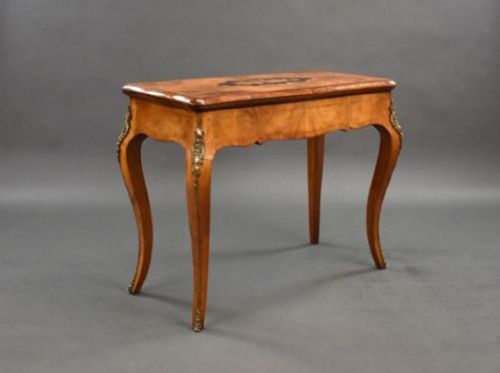
A french serpentine card table presents a distinctive undulating front and sides that lend movement to formal rooms. The pieces gathered here span Georgian, Victorian, and nineteenth-century periods, showing the enduring appeal of Continental design across British workshops.
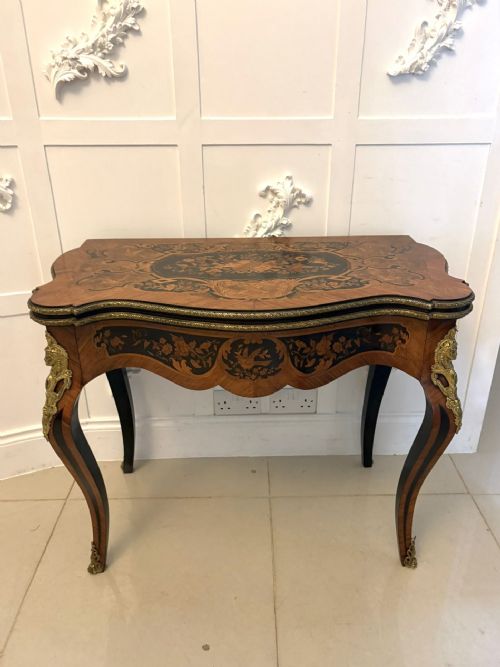
Most examples function as dual-purpose furniture, opening from a compact console or side table into a baize-lined surface for card games. Makers adopted Louis XV revival and Hepplewhite tastes, combining serpentine timber outlines with rich marquetry and gilt mounts.
Materials and construction
Cabinet makers utilised exotic timbers such as kingwood, walnut, and burr walnut as foundations for intricate marquetry inlay. Cross-banding frames these decorative veneers, while mahogany and rosewood appear in both Georgian and later iterations.
Gilt bronze or ormolu mounts accentuate the sweeping contours of the frame, complemented by subtle brass stringing. Boullework incorporating tortoiseshell and brass also surfaces, marking the more elaborate interpretations of the Louis XV style.
French Serpentine Card Table Retail Price Guide 2026
Typical asking prices for french serpentine card table among the pieces listed under this phrase on Sellingantiques today, from the lower quarter to the upper quarter. They describe what is for sale here now, not the wider market.
The listings span the eighteenth, nineteenth, and Victorian periods, incorporating walnut, mahogany, kingwood, and tortoiseshell.
Judging quality and craftsmanship
The distinction between standard production and exceptional work lies in the precision of the marquetry and the crispness of the ormolu mounts. Finer examples display seamless timber matching across the fold-over top and sophisticated handling of the serpentine curves.
Signatures from notable makers elevate a piece, reflecting superior workshop standards in the joinery of the folding mechanism and the depth of the timber polish.
Maison Millet·Edwards & Roberts·Henry Dasson
The French Serpentine Card Table Glossary
- Serpentine
- A furniture shape featuring a double-curved edge that curves inward in the centre and outward at the ends. This contour requires skilled woodworking to achieve fluid lines.
- Ormolu
- Gilded bronze mounts applied to furniture for decoration. High quality examples show sharp chiselling and a rich gold finish.
- Marquetry
- Decorative patterns formed by fitting together contrasting veneer pieces onto a structural carcase. It often depicts floral or geometric motifs on these tables.
- Boulle
- A form of marquetry using brass and tortoiseshell developed in France. It creates a striking metallic and dark contrast.
- Cross-banding
- A narrow strip of veneer laid around the border of a tabletop with the grain running perpendicular to the centre. This frames the main decorative panel.
French Serpentine Card Table: Frequently Asked Questions
How do I date a french serpentine card table?
Dating relies upon timber choices, secondary woods, and stylistic revival periods such as Louis XV or Georgian Hepplewhite tastes. Nineteenth-century interpretations often blend earlier Continental forms with Victorian manufacturing techniques.
Examining the construction methods inside the folding mechanism and the style of the ormolu mounts helps narrow the decade of production.
Were these tables used only for cards?
While designed primarily for evening entertainment like whist or quadrille, the fold-over top allowed them to function as side tables or console tables during the day. This versatility made them popular in formal reception rooms.
When closed, they displayed intricate marquetry or figured veneers against a wall.
How do I care for kingwood and walnut veneers?
These polished wood surfaces require stable indoor humidity away from direct sunlight to prevent the veneer from lifting or fading. Regular dusting with a dry, soft cloth maintains the lustre without moisture damage.
Avoid placing hot or damp items directly onto the polished top to protect the historic finish.
What is the difference between Louis XV and Louis XVI styles?
Louis XV style favours asymmetrical curves, sweeping serpentine shapes, and exuberant rococo ormolu mounts. Louis XVI style introduces a return to neoclassical straight lines, symmetry, and tapered legs.
Both French aesthetics influenced British cabinet makers throughout the nineteenth century.