


French Secretaire Desk
A french secretaire desk combines a private drop-down writing surface with concealed drawers, answering the timeless need for discreet correspondence.
French Secretaire Desk
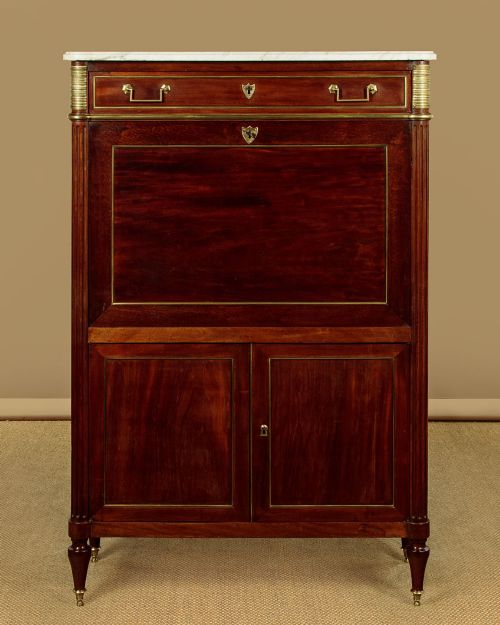
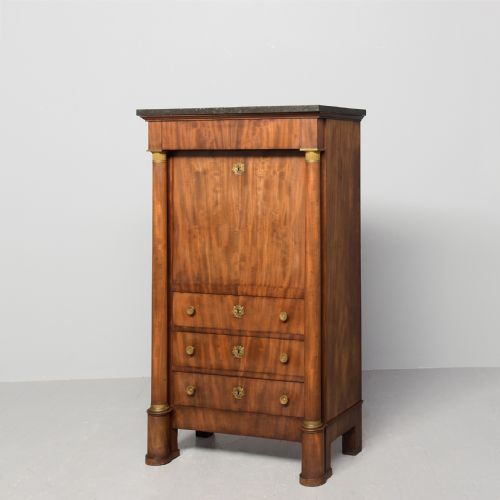
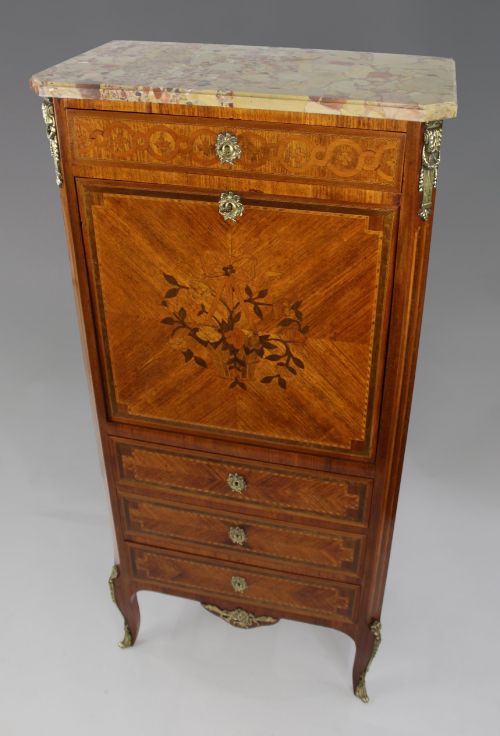
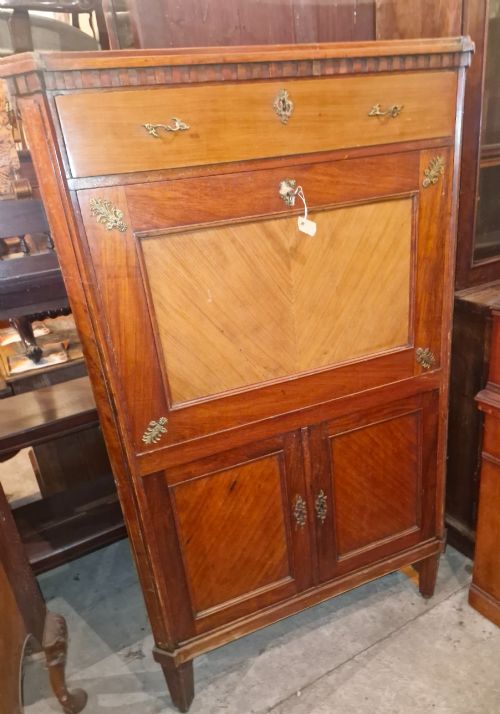
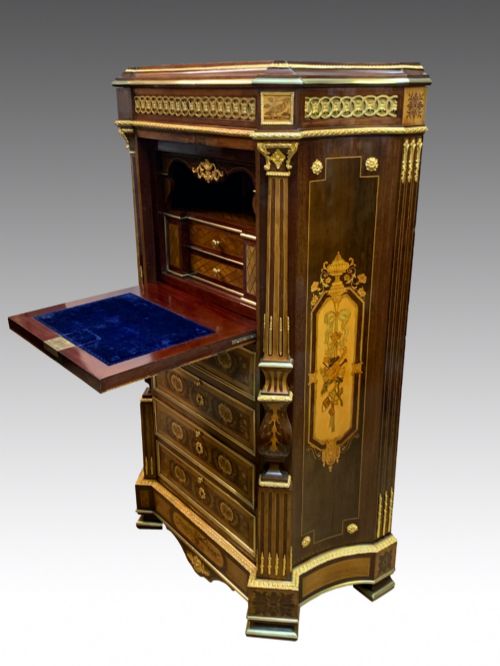
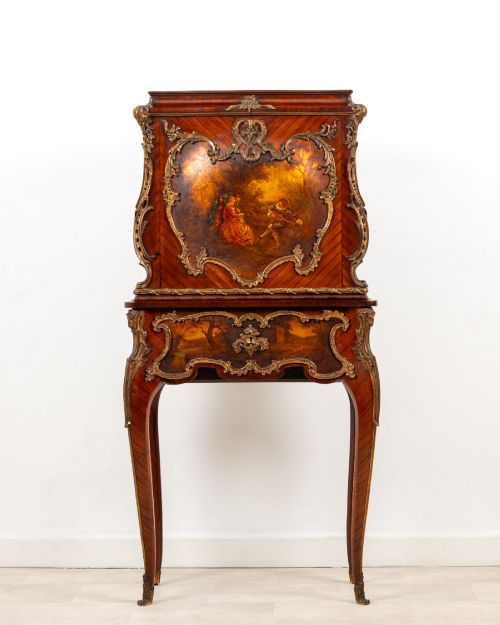
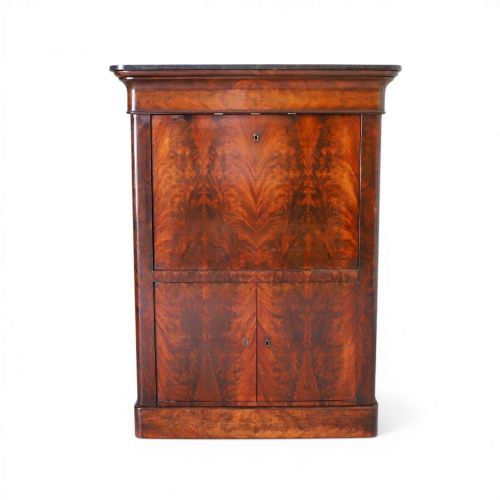
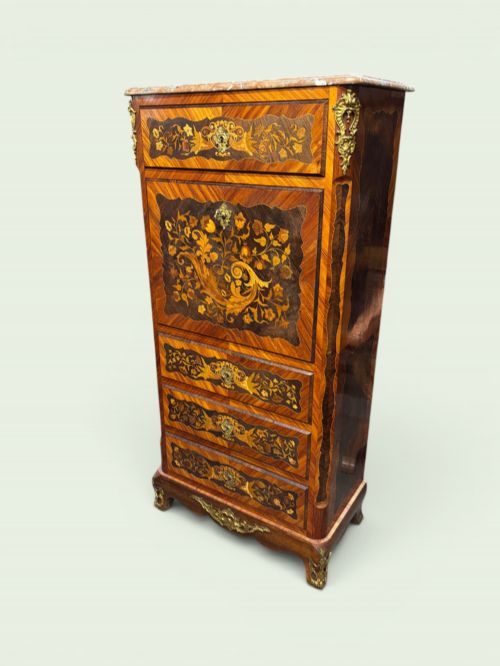
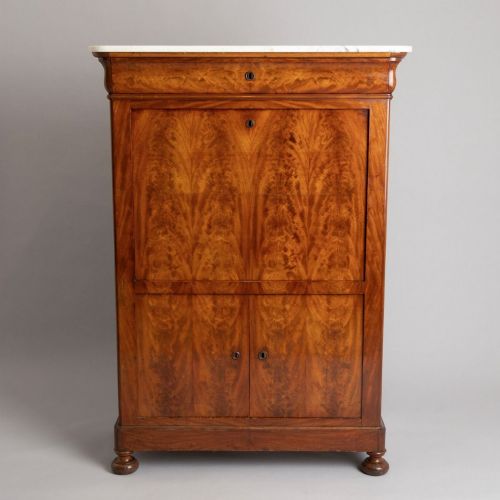
A french secretaire desk is primarily defined by a fall-front writing flap that conceals an internal arrangement of small compartments and hidden drawers. The most common iteration met here is the tall secretaire a abattant, standing upright with a marble top and a vertical stack of lower drawers beneath the writing surface.
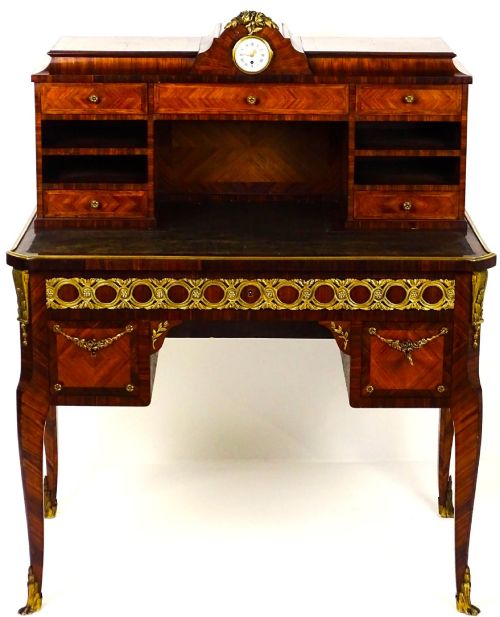
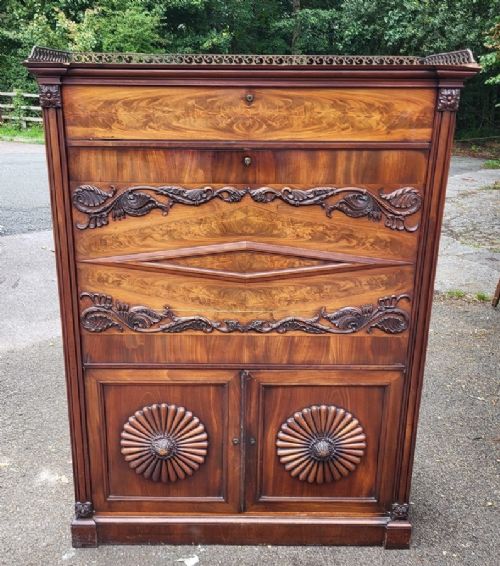
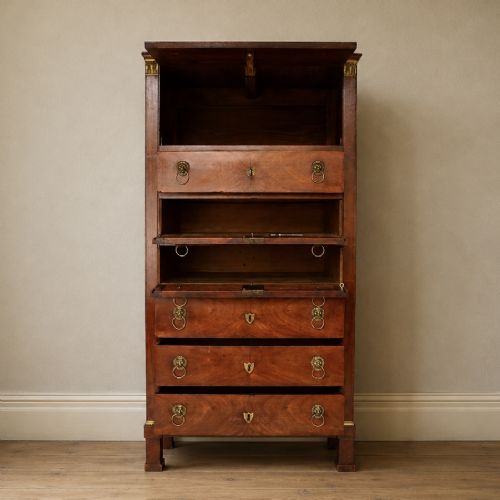
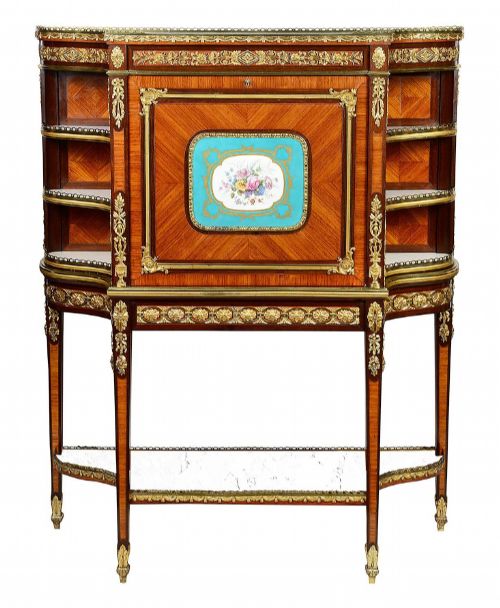
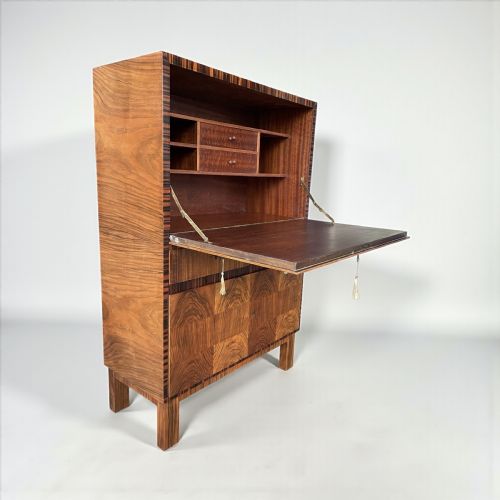
Beyond the upright abattant, the selection encompasses slope-front escritoires, cylinder desks, and compact writing cabinets originating from the eighteenth century through the Art Deco period. These forms range from austere Empire mahogany models to elaborate Louis XV and Louis XVI revival pieces covered in marquetry and gilt metal mounts.
Cabinetmakers designed these pieces for residential salons and private chambers, providing both a formal display surface and a locked compartment for paper goods. They bridge the gap between heavy case furniture and dedicated writing tables.
How they were made
Cabinetmakers built the carcase using structural timbers like mahogany, walnut, and oak, then applied decorative veneers such as kingwood, rosewood, and flame mahogany to visible exterior surfaces. Marquetry and parquetry patterns utilised contrasting grain directions and exotic woods to create geometric designs or pictorial scenes.
Cast ormolu and brass mounts edge the marble tops, frame drawer fronts, and protect vulnerable corners, while inset marble slabs provide a durable, cool surface on top of the cabinet. Vernis Martin finishes introduced layered translucent varnishes over painted decorations, mimicking oriental lacquer work popular in high-end Parisian workshops.
Several pharmacy cabinets found a second life storing letters rather than pills, proving that even medical furniture appreciates a good secret drawer.
What varies in quality
The sophistication of the internal compartment distinguishes standard production from exceptional cabinetmaking, visible in the depth of secret drawers, the complexity of pigeonhole arrangements, and the precision of the hinge mechanisms. Crispness in the chasing of ormolu mounts and the exactness of individual parquetry tesserae indicate the skill of the atelier.
The choice of primary timbers and the selection of veneer figures - particularly matched flame mahogany or symmetrical rosewood - determine the visual impact of the piece. Originality of components, including the marble top, locks, and keys, maintains the integrity of the original construction.
Paul Sormani·Maison Krieger
The French Secretaire Desk Glossary
- Secrétaire à abattant
- A tall, upright cabinet featuring a vertical drop-front writing flap that conceals internal compartments. This form dominates the nineteenth-century selections.
- Ormolu
- Gilt bronze mounts applied to furniture for decorative accent and edge protection. Makers chased these metal elements by hand after casting.
- Marquetry
- The art of applying decorative veneer pieces to a carcase to form pictorial designs or geometric patterns. Different wood species provide natural colour variations.
- Vernis Martin
- A simulated oriental lacquer finish developed in eighteenth-century France using multiple layers of transparent varnish. It appears on specialised cabinet panels.
- Escritoire
- A designated writing desk or cabinet designed for correspondence. The term encompasses both slope-front and fall-front writing furniture.
- Parquetry
- A geometric mosaic of wood veneer arranged in repeating patterns such as cubes or chequers. It differs from marquetry through its strict geometric layout.
French Secretaire Desk: Frequently Asked Questions
What is a secretaire a abattant?
A secretaire a abattant is an upright cabinet featuring a hinged fall-front panel that pulls down to serve as a writing desk. Inside, it houses an arrangement of small drawers and pigeonholes for stationery.
When closed, the heavy front panel locks vertically, concealing the workspace entirely and presenting the appearance of a standard tall chest or decorative cabinet.
How do I spot secret drawers?
Secret drawers often hide behind movable partitions, false backs within the pigeonholes, or beneath sliding floor panels inside the main writing compartment. Pressing a hidden spring or removing a dummy pilaster usually releases the mechanism.
Cabinetmakers incorporated these compartments to secure valuable documents, currency, and private correspondence from prying eyes.
Are marble tops original?
Marble tops on nineteenth-century pieces are typically original to the design, serving both as a decorative element and a heavy, stable counterweight to the pull-down writing flap. The underside of the stone often bears pencil markings or workshop numbers corresponding to the wooden carcase.
Replacements generally lack the accumulated wear, edge profiling, and precise fit of period marble slabs.
Where were these desks used?
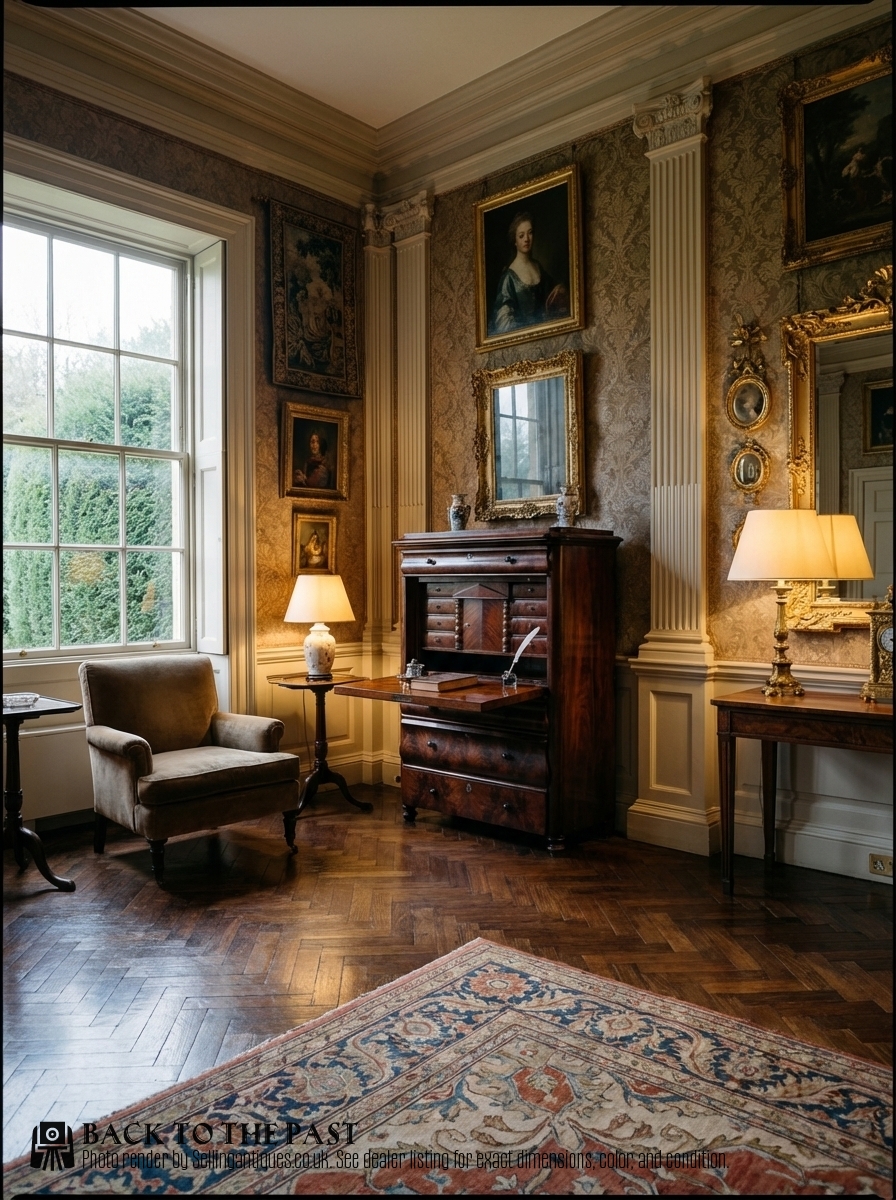
These desks served primarily in private studies, boudoirs, and formal drawing rooms of European residences. Their upright profile allowed them to occupy minimal floor space while offering substantial storage for writing materials.
The inclusion of a lockable fall-front made them essential furniture for managing personal accounts and correspondence in shared household spaces.