







French Satinwood Table
A French satinwood table brings pale, lustrous timber and refined continental design into a room, offering both practical surface space and distinct period charm.
French Satinwood Table
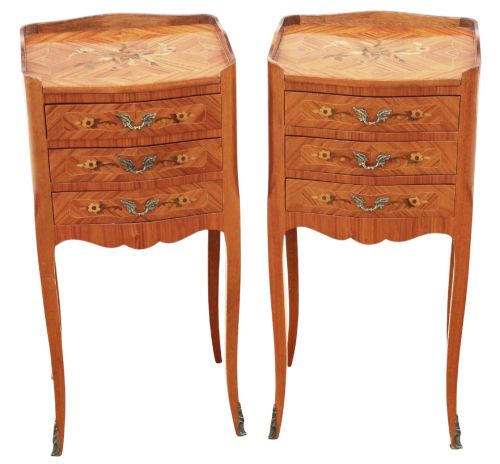
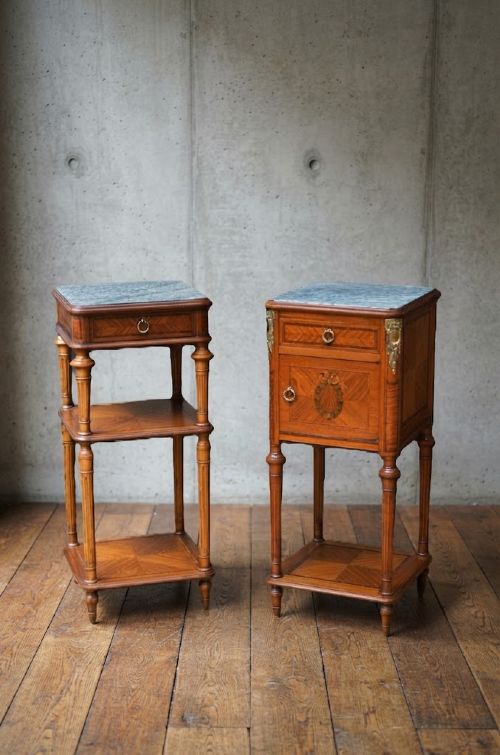
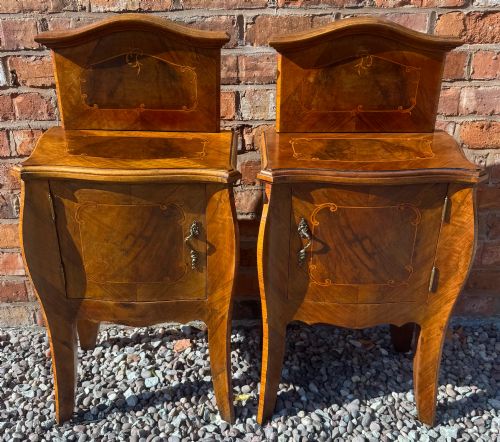
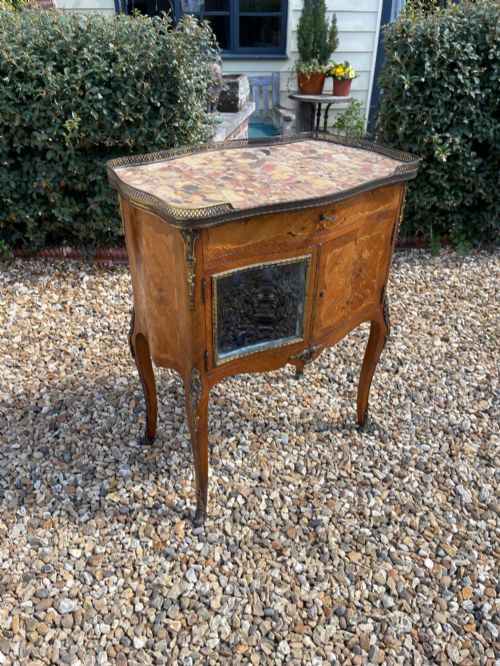
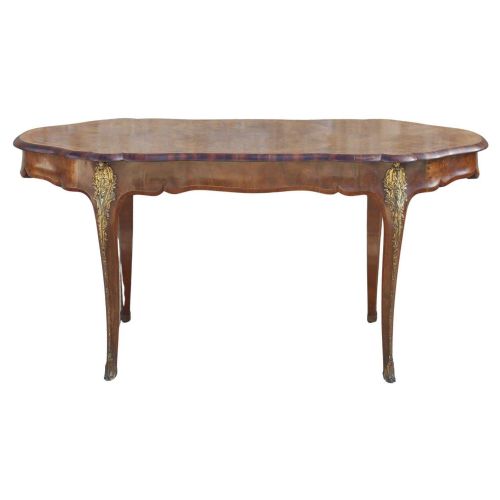
A French satinwood table encompasses a variety of refined forms, ranging from compact bedside cabinets and lamp tables to expansive console tables and writing desks. When searching for a French satinwood table, buyers frequently encounter 19th-century revival pieces influenced by Louis XV and Louis XVI styles, alongside smaller occasional tables and nightstands.
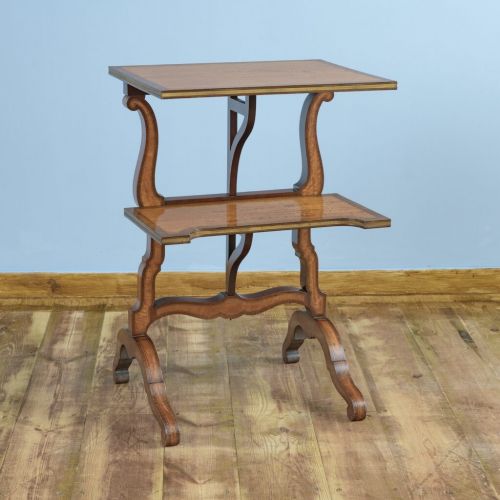
The selection ranges from demi-lune console tables with decorative tops to folding tea tables, guéridons, and intricately inlaid marquetry or parquetry surfaces. These items reflect the enduring appeal of continental cabinet-making traditions adapted for domestic interiors across the Victorian era and into the early twentieth century.
Makers and workshops often utilised satinwood alongside contrasting timbers like rosewood, mahogany, and kingwood to create geometric patterns and floral motifs. Whether selecting a small bedside cabinet or a grander writing desk, collectors are drawn to the luminous grain and the careful integration of brass and ormolu mounts.
Materials and Construction
Cabinet-makers relied on the distinctive blonde sheen of satinwood as a primary veneer, frequently contrasting it with darker exotic woods such as rosewood, mahogany, walnut, and kingwood to achieve striking marquetry and parquetry patterns.
Structural embellishments often included chased ormolu mounts, brass banding, and inset marble tops, particularly on console tables, bedside cabinets, and commodes produced during the nineteenth century.
Joinery techniques combined solid carcases with finely cut veneers applied to tabletops, drawer fronts, and friezes, sometimes complemented by hand-painted floral details or porcelain plaques.
Evaluating Craftsmanship and Finish
Quality rests upon the precision of the marquetry and parquetry work, where the tightness of the veneer joints and the harmonious choice of contrasting timbers distinguish superior cabinet-making from simpler production.
The refinement of the cast bronze or ormolu mounts provides a strong indicator of standard, as finely chased and gilded details reflect workshop expertise compared to softer, mass-produced metalwork.
The integrity of the structural frame, the subtlety of shaped serpentine or demi-lune carcases, and the preservation of the original polished surface all determine the distinction of an individual piece.
Maison Giroux·Donald Ross·Edwards and Roberts·DECAUX & MAOUS
The French Satinwood Table Glossary
- Satinwood
- A hard, durable timber with a natural golden lustre and a smooth, chatoyant grain used extensively for fine veneer and inlay.
- Marquetry
- The art of applying decorative pieces of veneer to a structure to form intricate pictorial or geometric designs.
- Parquetry
- A geometric mosaic of wood pieces used for decorative floors and furniture surfaces, creating repeating patterns like cubes or chequers.
- Ormolu
- Gilded bronze mounts and decorative hardware applied to furniture, popular in French neoclassical and revival cabinet-making.
- Demi-lune
- A half-moon or semicircular shape commonly found in the design of console tables and small side tables.
French Satinwood Table: Frequently Asked Questions
How do I identify a French satinwood table?
Look for the characteristic golden-yellow sheen of the satinwood veneer, often combined with contrasting exotic timbers and detailed marquetry or parquetry. Many examples also feature classical ormolu mounts and styling inspired by Louis XVI aesthetics.
Examination of the secondary woods used in the drawer linings and carcase construction can further help confirm the continental origin and nineteenth-century date of manufacture.
Where were these tables placed in period homes?
Smaller tables such as lamp tables, bedside cabinets, and occasional tables were positioned in sitting rooms and bedrooms to hold lighting, books, or decorative objects. Larger console tables and writing desks served as focal points in drawing rooms or private studies.
Their decorative marquetry tops and polished finishes were intended to catch the light and display the refined taste of the owner.
How do I care for satinwood furniture?
Protect the polished wooden surface by keeping the piece away from direct sunlight and maintaining stable humidity levels in the room to prevent the veneer from drying or cracking. Dust gently with a soft, dry cloth and avoid harsh chemical cleaners or polishes.
Using coasters and mats will protect the delicate marquetry and polished top from moisture and heat damage during everyday use.
What is the difference between Louis XV and Louis XVI styles?
Louis XV style furniture is characterised by flowing serpentine lines, asymmetrical rococo curves, and cabriole legs. In contrast, Louis XVI style reflects a shift towards neoclassical symmetry, featuring straight tapered legs, fluted columns, and geometric restraint.
Both styles influenced nineteenth-century cabinet-makers who produced revival pieces incorporating satinwood veneers and ormolu mounts.