
French Round Centre Table
A french round centre table anchors a room with circular grace, offering a surface that draws people together.
French Round Centre Table
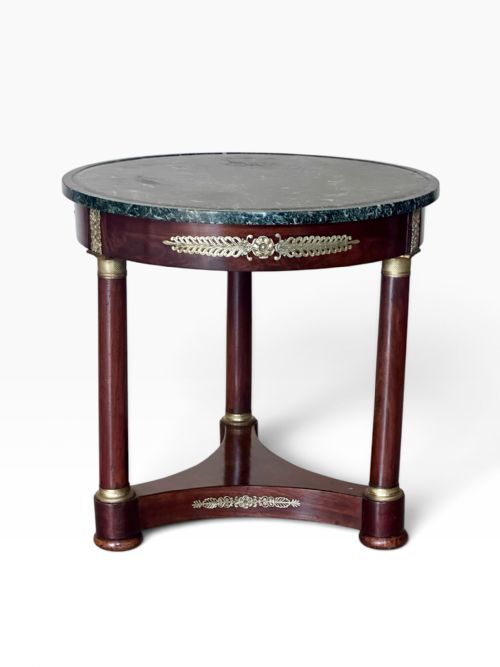
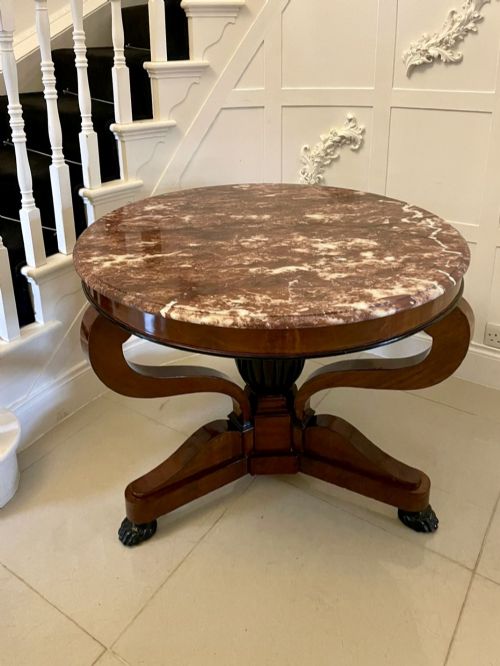
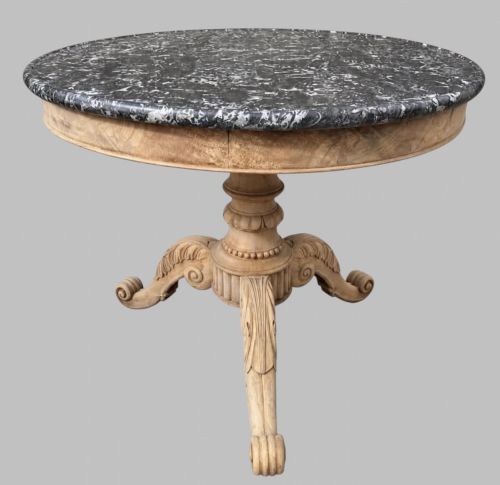
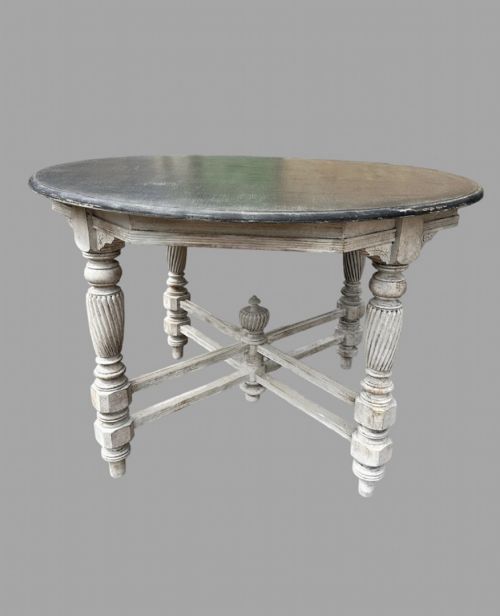
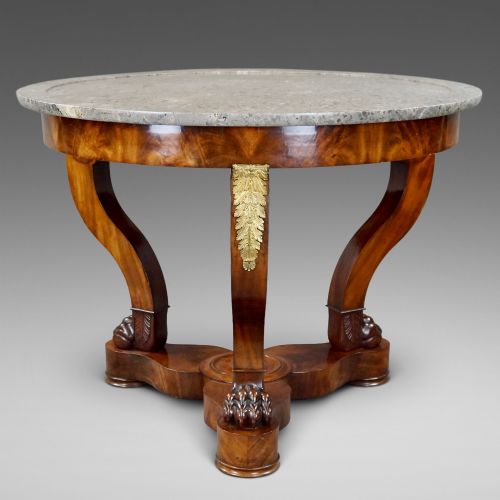
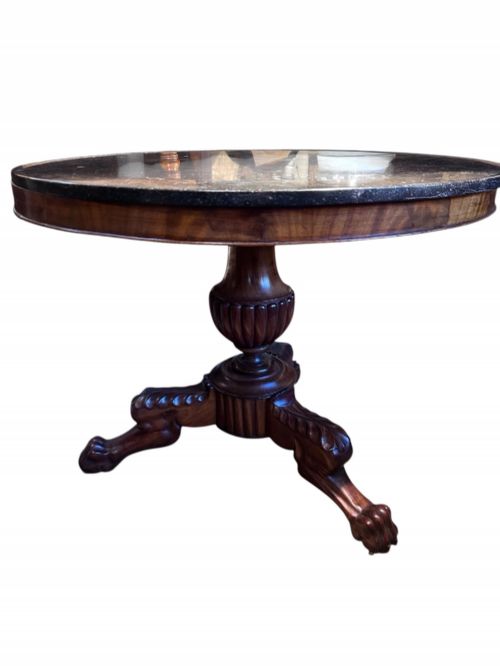
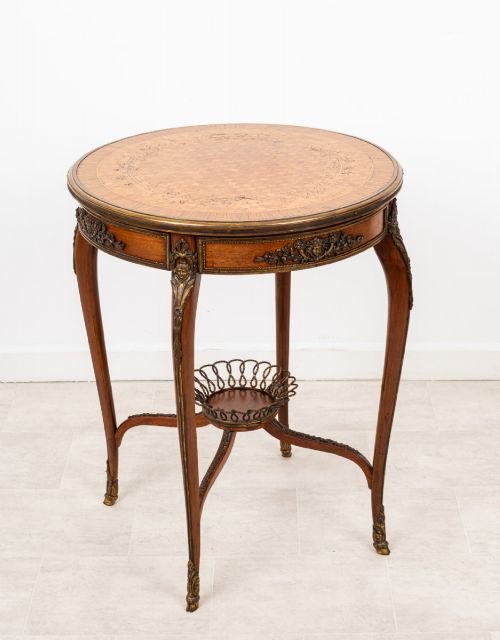
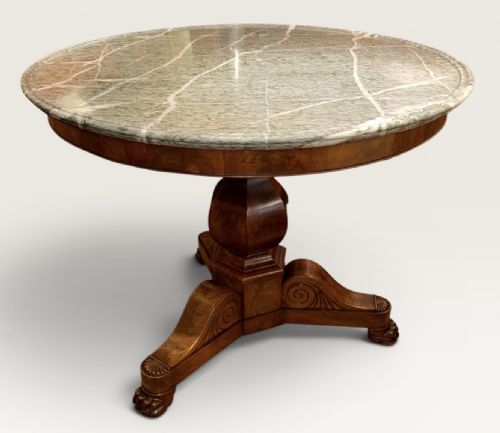
When you search for a french round centre table, you encounter circular freestanding pieces designed to stand in the middle of a room rather than against a wall. The listings here comprise nineteenth-century specimens alongside twentieth-century iterations, spanning forms from classical pedestal guéridons to low coffee tables.
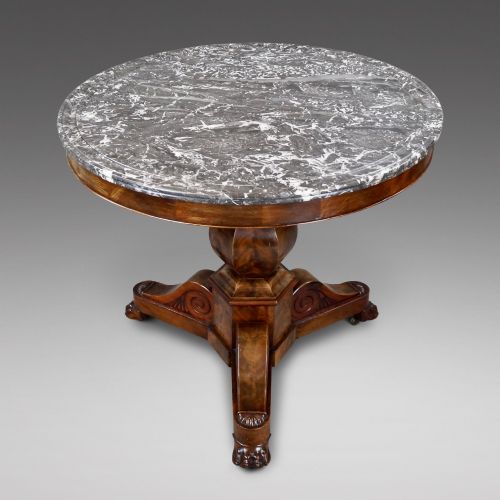
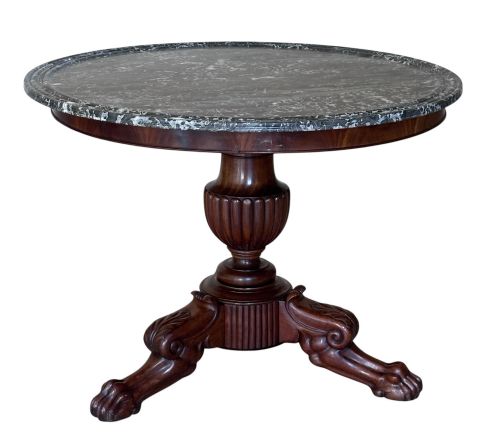
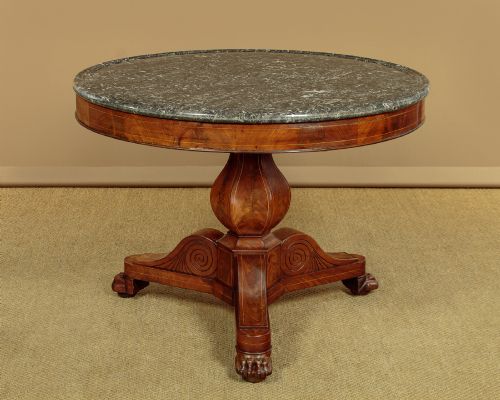
The most common incarnation on this page is the traditional guéridon, a round pedestal table frequently topped with white marble and edged with brass or ormolu mounts. These pieces emerge from periods including the French Empire, Louis Philippe, and Art Deco, utilising timbers such as mahogany, walnut, and kingwood.
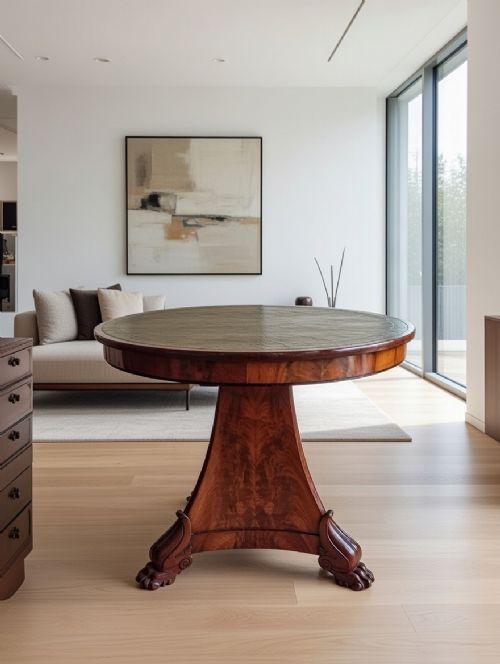
Makers and designers influenced regional aesthetics across France, producing provincial elm drop-leaf variations alongside highly finished Parisian pieces. Buyers select these tables for halls, drawing rooms, and studies where a circular footprint softens linear architectural spaces.
How they were made
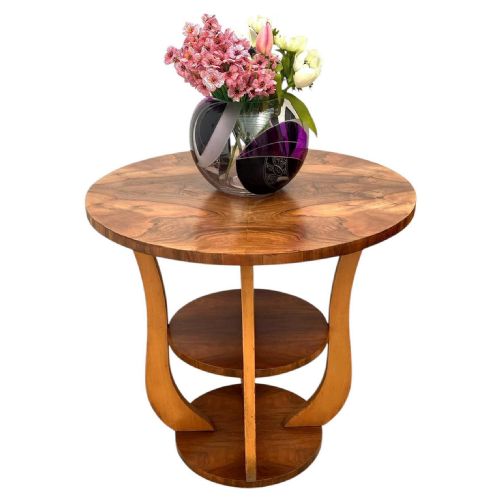
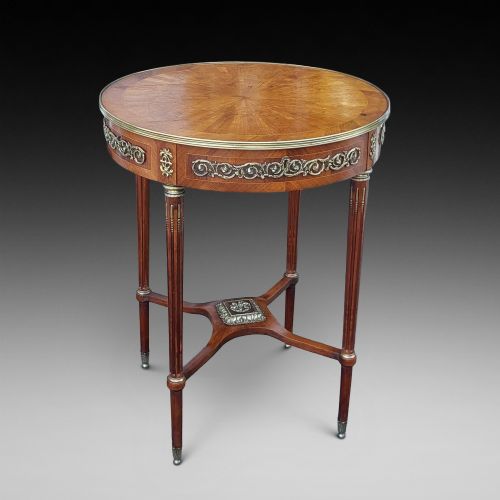
Cabinetmakers constructed these tables using dense timbers like mahogany, walnut, and flame mahogany over sturdy carcases, frequently applying veneers of kingwood or burr elm to create figured surfaces. Tops were balanced on central pillars or tripod pedestal bases, sometimes incorporating tilt mechanisms or three-tier wooden tiers.
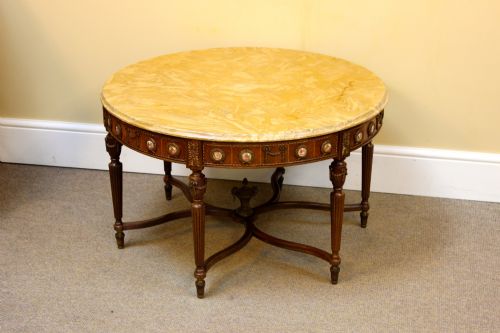
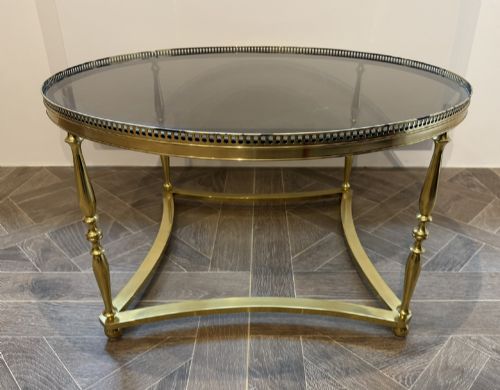
Many examples integrate heavy slabs of inset marble, secured within wooden rims or encircled by cast brass galleries and ormolu mounts. Detail work relied on hand-carved walnut, painted finishes, bronze mounts, and occasionally leather surface insets.
Listings feature periods from the nineteenth-century Empire era through to 1930s Art Deco, employing marble, mahogany, and ormolu.
What varies in quality
Quality reveals itself in the crispness of the bronze or ormolu casting and the selection of timber veneers, where highly figured flame mahogany or book-matched kingwood indicates superior workshop output. The weight and integration of the marble top, along with the stability of the central pedestal base, separate standard production from exceptional pieces.
Subtleties of execution, such as hand-carved rams heads on Empire columns or fine marquetry work, distinguish ambitious Parisian commissions from simpler provincial variants.
The French Round Centre Table Glossary
- Guéridon
- A small French round table supported by a central column or pedestal. This form originated in the seventeenth century and remained popular through the nineteenth century.
- Ormolu
- Gilt bronze mounts applied to furniture edges and legs. This technique involves coating cast bronze in gold amalgam.
- Kingwood
- A dense, richly figured Brazilian timber utilised for decorative veneers in cabinetmaking. It displays dark violet and brown tones.
- Marquetry
- Inlaid wood pieces arranged to form decorative patterns on furniture surfaces. Craftsmen assemble contrasting veneers to create pictorial or geometric designs.
French Round Centre Table: Frequently Asked Questions
Where should I place a round centre table?
These tables suit the middle of entrance halls or drawing rooms, functioning as focal points beneath chandeliers. They provide accessible surfaces from all sides.
Ensure adequate clearance around the perimeter for movement, as their circular shape encourages circulation in open spaces.
How do I care for a marble top?
Wipe marble surfaces with a damp cloth and mild soap, avoiding acidic cleaners that etch the stone. Use coasters to protect polished finishes from liquids.
Waxing wooden bases periodically preserves the timber without affecting stone components.
What is the difference between an Empire and a Louis Philippe table?
Empire tables display neoclassical motifs, often featuring heavy pillar supports, bronze mounts, and classical symbols like rams heads. They date from the early nineteenth century.
Louis Philippe examples exhibit simpler, more restrained curves with subdued veneers and minimal ornamentation, reflecting a domestic mid-century style.
Can these tables be used as coffee tables?
Certain lower twentieth-century variations function well as coffee tables in modern reception rooms. Nineteenth-century guéridons stand taller, suiting display purposes or occasional seating areas.
Check height dimensions against surrounding seating before positioning.