


French Romantic Bronze Sculpture
French romantic bronze sculpture brings nineteenth-century casting directly into a room, offering tactile presence and rich patination.
French Romantic Bronze Sculpture
These pieces encompass nineteenth-century French casting traditions, ranging from figural allegories and mythological subjects to animalier studies. Buyers searching for french romantic bronze sculpture encounter works spanning the mid to late nineteenth century, reflecting the dominant aesthetic movements of the era.
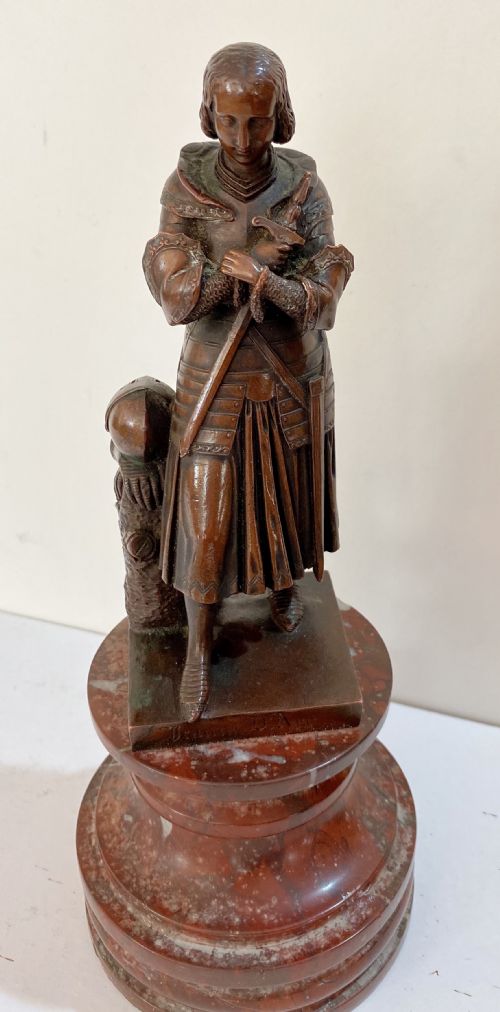
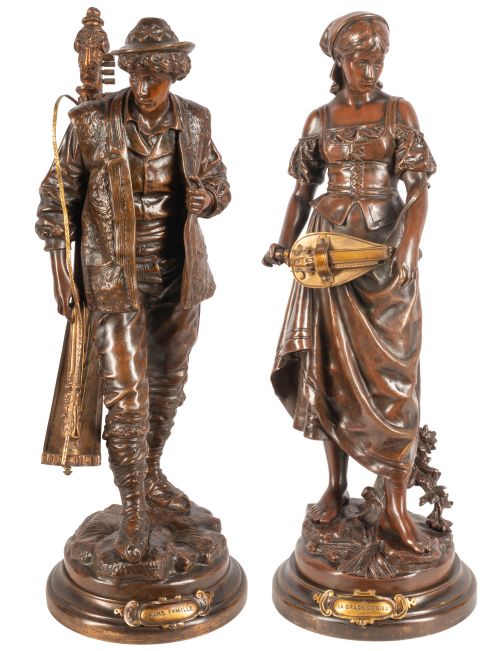
Figural subjects dominate the selection, portraying historical, allegorical, and romantic themes executed with characteristic nineteenth-century detailing. These sculptures translate literary and cultural motifs into durable metal forms intended for interior display.
How they were made
Foundries utilised traditional bronze casting methods, shaping metal into complex figural and animal compositions. The resulting forms received careful finishing to define drapery, musculature, and facial expressions.
Makers applied patination ranging from dark surfaces to polychrome and parcel-gilt treatments, altering the visual texture of the metal. Many pieces incorporate marble elements to provide structural contrast and a stable base for the bronze figure.
Surface details rely on precise chasing and engraving executed after the casting process. Artisans enhanced the sculptural narrative by highlighting specific areas with gilding or painted polychrome details.
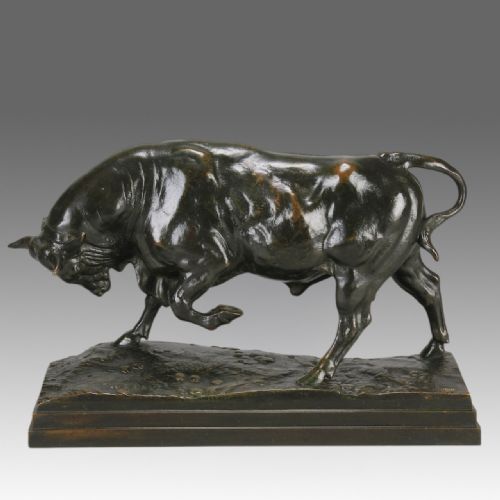
Cherubs occasionally share shelf space with fierce bulls and romantic dancers, proving nineteenth-century sculptors catered to every possible mood.
What varies in quality
The nuance and depth of the patination contribute significantly to a piece's visual impact. Skilled application of dark patina, polychrome, or parcel-gilt highlights the sculptural contours rather than masking the underlying bronze surface.
Integration with supporting elements like marble bases dictates the overall cohesion of the object. Superior works demonstrate careful thought in how the bronze interacts with its secondary materials and mounting hardware.
Antoine Louis Barye·Auguste Moreau·Louis Auguste Moreau·Arthur Waagen·Charles Cumberworth·Jean Jacques Pradier·Salmson·J C De Blezer
The French Romantic Bronze Sculpture Glossary
- Animalier
- A nineteenth-century artistic focus on the realistic portrayal of animals, particularly predators and game. Sculptors in this tradition studied anatomy meticulously.
- Patinated Bronze
- Bronze treated with chemical solutions to produce a specific surface colour and tone. This finish protects the metal and defines the visual mood of the sculpture.
- Parcel-Gilt
- A technique where selective areas of the bronze receive a thin layer of gold leaf or gilding. This highlights specific details against a darker patinated background.
- Polychrome
- The application of multiple colours to the surface of a sculpture. In nineteenth-century works, this often enhanced the naturalism of skin tones and garments.
- Neoclassical
- An artistic style drawing inspiration from the classical art and culture of ancient Greece and Rome. It emphasises restraint, proportion, and mythological subject matter.
French Romantic Bronze Sculpture: Frequently Asked Questions
What defines nineteenth-century French bronze sculpture?
These works reflect the technical skill and artistic styles popular in France during the 1800s. They capture historical, mythological, and animal subjects in cast metal.
Foundries used various patination techniques and materials like marble to complete each piece. The focus remained on expressive human and animal forms.
How were these bronzes displayed originally?
Sculptures of this scale were designed for interior placement on tables, mantels, or pedestals. They served as decorative focal points within nineteenth-century domestic spaces.
The inclusion of marble bases provided stability and elevated the artwork above surface levels.
How do I distinguish animalier pieces from other figures?
Animalier works concentrate specifically on the naturalistic behaviour and anatomy of animals. Artists studied subjects like stags, bulls, and predators in motion.
Other figural pieces focus on human narratives, allegories, or portraits rather than wildlife.
What is the role of patination on these sculptures?
Patina refers to the surface treatment applied to the bronze through chemical means. It alters the raw metal colour to shades of dark brown, black, or green.
Different patinas protect the bronze while accentuating the sculptural contours and fine details.