


French Rococo Revival Chairs
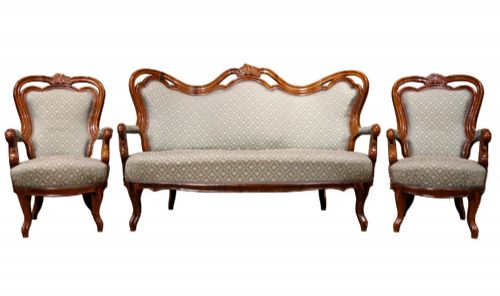
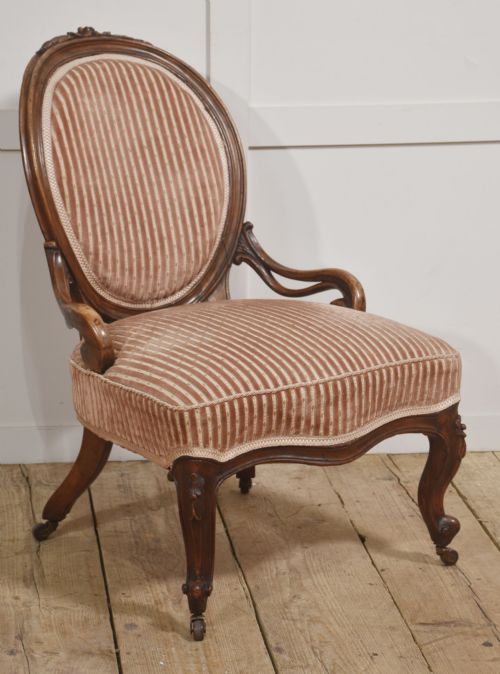
French rococo revival chairs bring flamboyant curves and rich carved walnut into a room, offering both decorative presence and classic nineteenth century seating.
French Rococo Revival Chairs
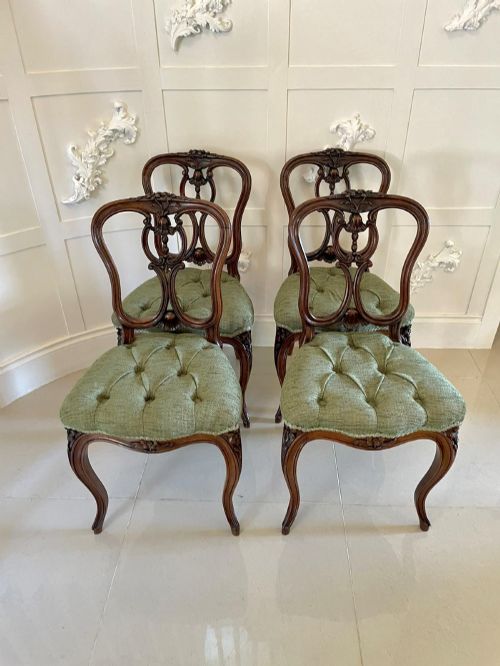
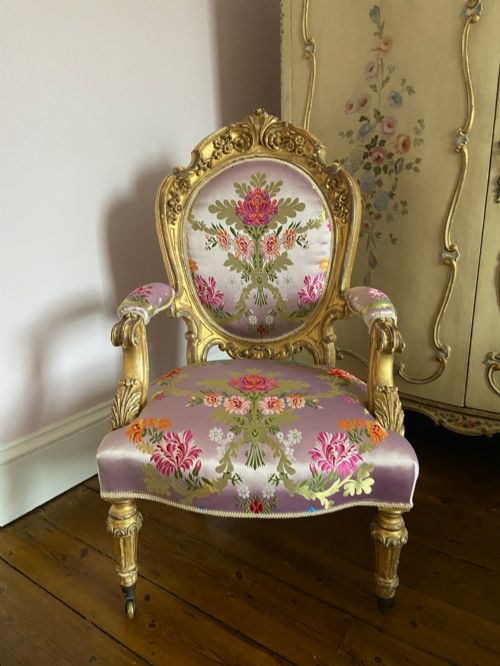
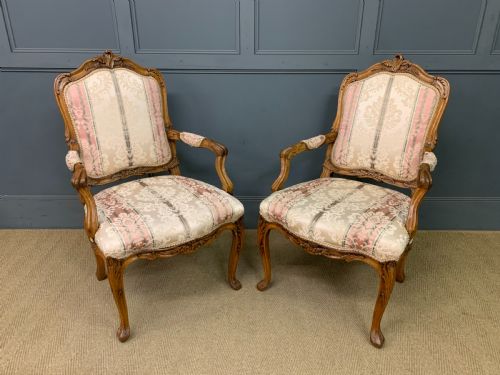
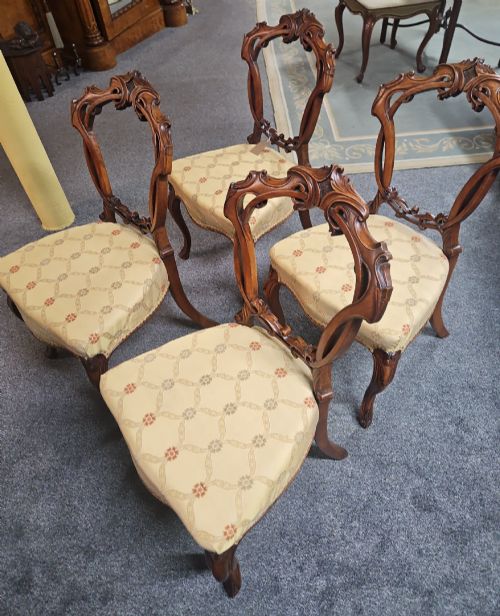
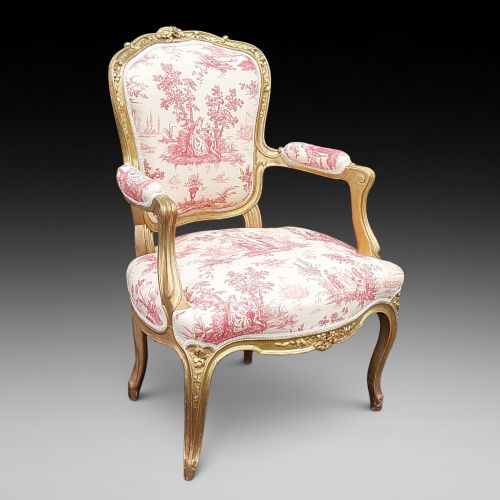
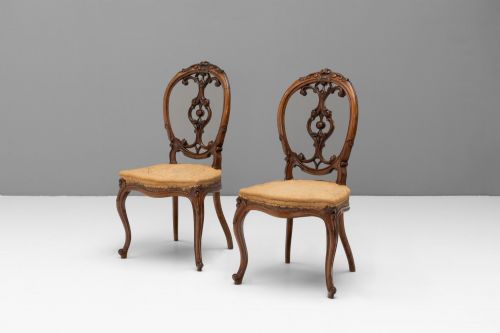
French rococo revival chairs draw upon eighteenth century continental design, emerging in forms such as open armchairs, side chairs, and salon suites during the nineteenth century. These seating pieces appear frequently in walnut and giltwood, often carrying the characteristic carved decoration associated with the style.
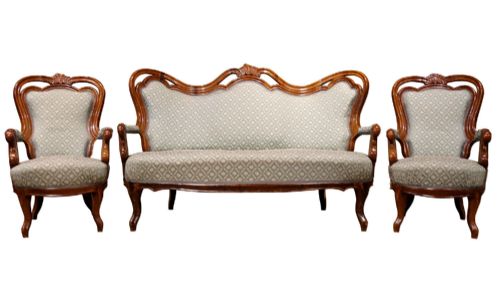
Buyers encounter various interpretations, from nineteenth century Victorian examples to pieces bearing specific Louis Quinze influences. The selection spans single armchairs to matched sets of dining chairs and multi-piece salon suites.
How they were made
Craftsmen built these chairs primarily using solid walnut and giltwood frames, shaping the timber with fluid hand carving. Structural integrity relied on traditional joinery methods suited to supporting elaborate curvilinear forms.
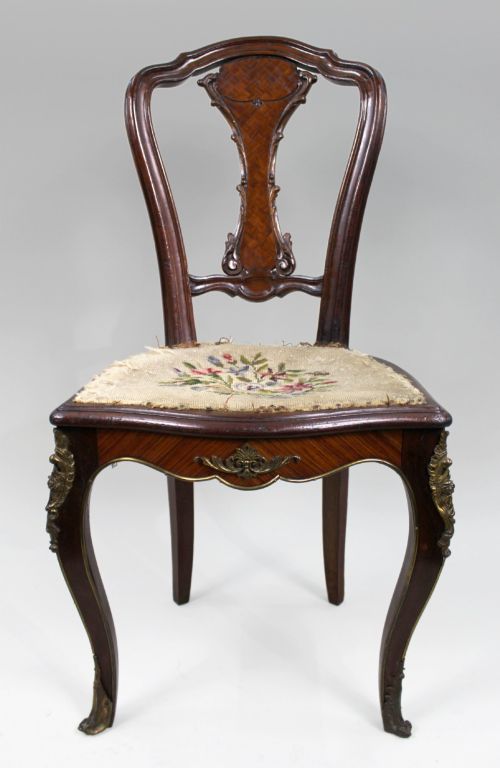
Upholstery completed the pieces, utilising materials like velvet, silk, and patterned textiles secured over supportive internal padding. Decorative elements such as ormolu mounts and parquetry occasionally supplemented the carved wooden surfaces.
Listings show these chairs primarily in walnut and giltwood, spanning the nineteenth century up to the nineteen-thirties.
What varies in quality
The refinement of the carving dictates much of the visual distinction, separating sharply defined floral motifs and crisp moulding from softer, less expressive execution. Wood selection also plays a role, with dense walnut and rich gilt surfaces holding detail more successfully over time.
Proportion and structural balance determine the overall success of each frame, influencing how comfortably the chair sits within a room. Original upholstery materials and surviving decorative mounts further separate standard examples from finer works.
Morison & Co of Edinburgh
The French Rococo Revival Chairs Glossary
- Cabriole leg
- A furniture leg that curves outward at the knee and tapers inward toward the foot, mimicking animal limbs. This form appears frequently on eighteenth century and revival seating.
- Ormolu
- Gilt bronze ornamentation applied to furniture and decorative objects. Craftsmen cast and chased these metal mounts to accent wood and gilt surfaces.
- Fauteuil
- An open-arm armchair with upholstered back and seat, typically featuring exposed wooden arms. These chairs originated in France during the seventeenth century.
- Parquetry
- Geometric wood mosaic work used for decorative surfaces on tables and chairs. Artisans fitted contrasting wood veneers together to create patterned designs.
- Bergere
- An enclosed upholstered armchair with solid wooden sides and a loose seat cushion. This comfortable seating form gained popularity during the French rococo period.
French Rococo Revival Chairs: Frequently Asked Questions
How do I identify french rococo revival chairs?
Look for characteristic serpentine lines, cabriole legs, and elaborate carved floral ornamentation across the walnut or giltwood frame. These details reflect the revival of eighteenth century French design trends during the nineteenth century.
Examine the construction methods and materials used in the frame to understand the manufacturing period. Examining secondary woods and carving depth helps distinguish genuine nineteenth century examples from later interpretations.
Where should I place these chairs?
These seating pieces suit drawing rooms, bedrooms, and reception spaces where their decorative carved forms act as focal points. Pairs of armchairs or side chairs work effectively flanking a fireplace or console table.
Ensure the scale matches surrounding furniture, as nineteenth century salon pieces often feature compact proportions. Placing them away from direct sunlight protects delicate silk or velvet upholstery fabrics.
Are these chairs comfortable for daily use?
Many open armchairs and salon seats offer supportive padded upholstery, though comfort varies depending on the specific frame shape and cushioning depth. Upholstered models generally provide a more relaxed seat than carved wooden side chairs.
Consider the seat height and back angle when selecting pieces intended for regular seating rather than decorative display. Professional reupholstery can improve internal support while preserving the historic wooden frame.
How do I care for antique giltwood?
Dust gilt surfaces gently with a soft, dry brush to prevent damage to the delicate gold leaf application. Avoid liquid cleaning products and moisture, which can degrade the underlying gesso and wood.
Keep these pieces in stable environmental conditions away from extreme temperature fluctuations and direct heat sources. Careful handling prevents chipping along the prominent carved edges.