





French Rococo Pendulum Clock
A french rococo pendulum clock brings lively asymmetric curves and gleaming ormolu into a room, driven by intricate brass movements.
French Rococo Pendulum Clock
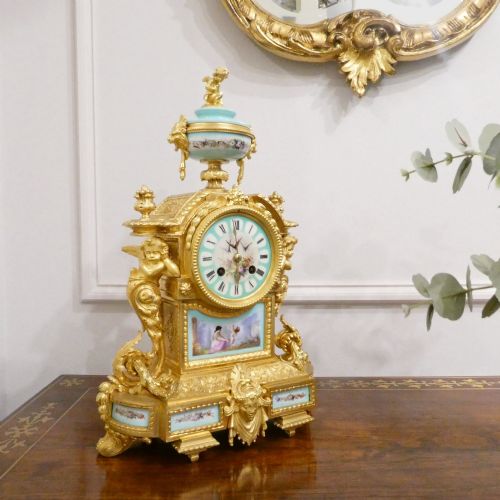
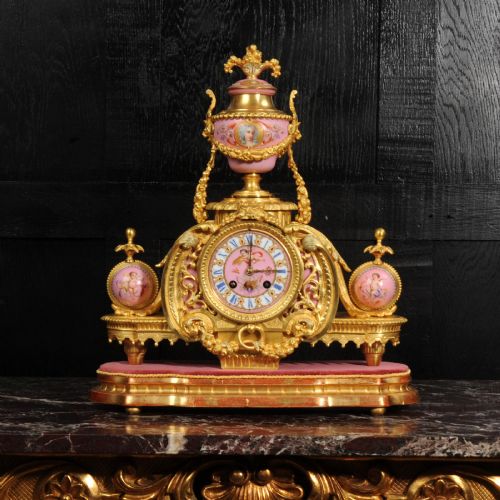
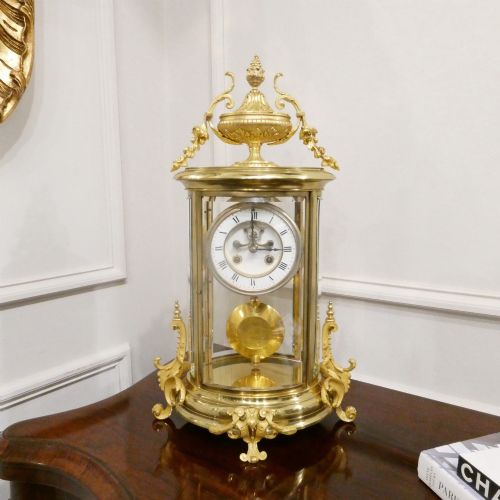
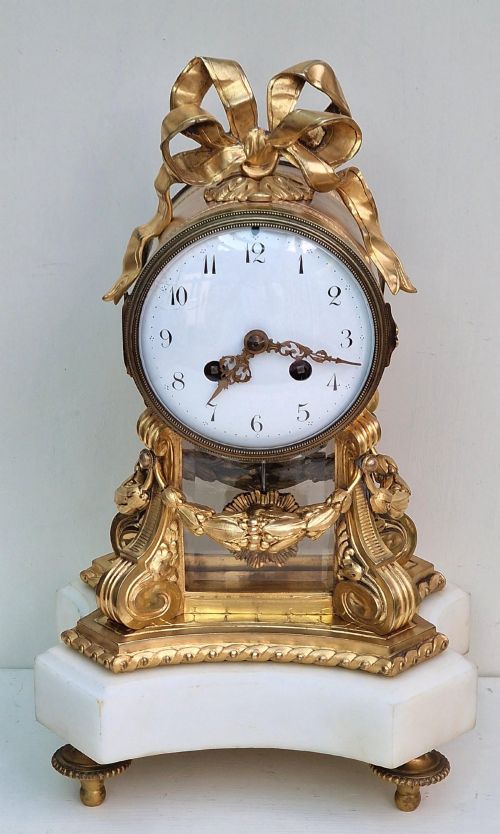
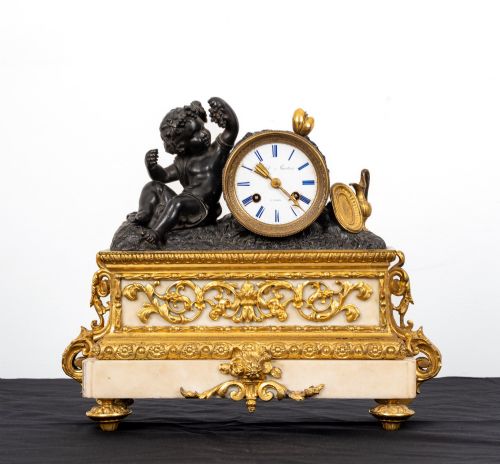
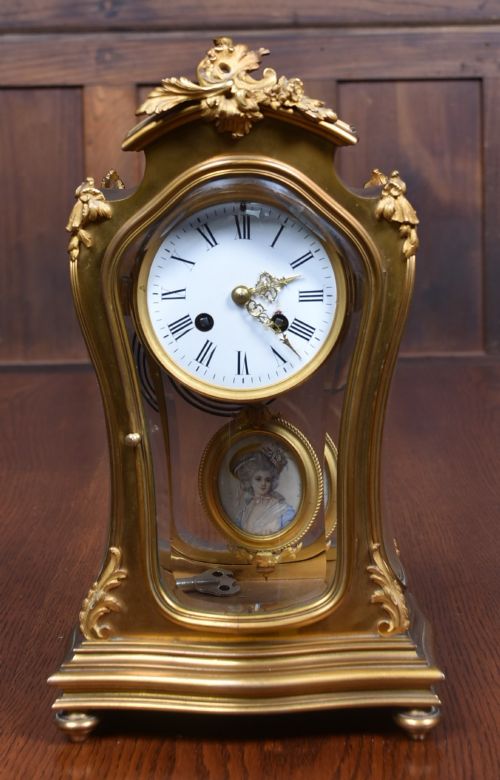
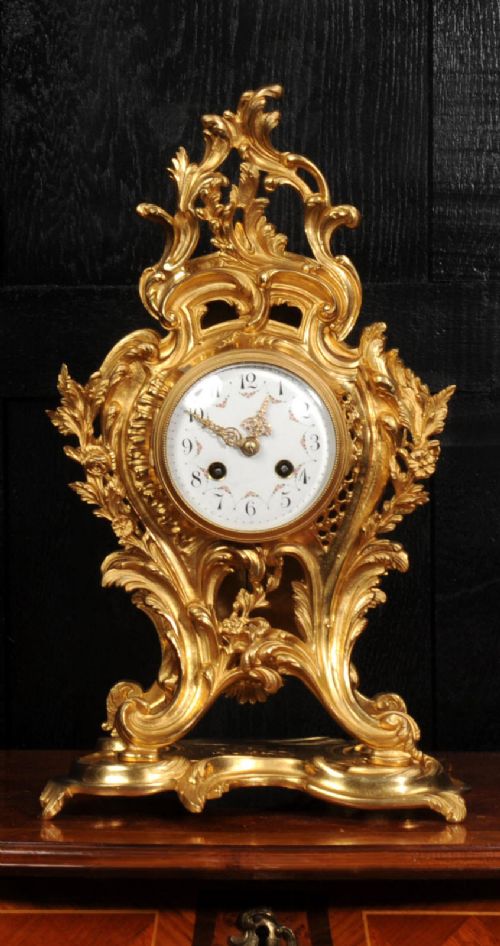
A french rococo pendulum clock is principally found as a mantel clock or wall-mounted cartel clock, dating predominantly from the nineteenth century. These pieces display the characteristic asymmetric scrolls, foliage and shell motifs of the revival styles alongside classical Louis XV and Louis XVI influences.
Mantel clocks dominate the selection, often taking architectural or figural forms incorporating porcelain panels and marble bases. Wall-hanging cartel clocks appear less frequently, offering an alternative silhouette with elaborate gilt frames housing the visible pendulum.
The objects stem from French workshops and prominent makers working during the Victorian era and the later decades of the nineteenth century. Buyers encounter everything from compact porcelain-mounted pieces to large figural bronzes featuring allegorical subjects like Cupid.
How they were made
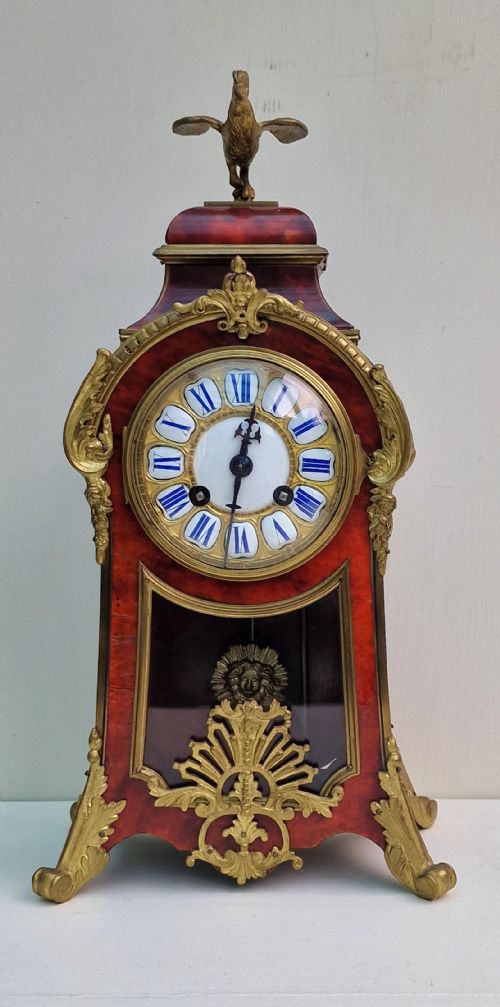
Makers fashioned the striking cases from gilt bronze, brass and ormolu, frequently casting intricate rococo motifs in high relief. These metal housings were often combined with white marble bases, glass panels or rich tortoiseshell veneers.
Dials commonly incorporate individually painted enamel cartouches for numerals, sometimes paired with Sèvres porcelain panels decorated with figures or floral scenes. The internal mechanisms rely on brass gear trains driven by a pendulum and regulated by an escapement.
Listings feature materials including gilt bronze, ormolu, enamel, porcelain, tortoiseshell, marble, glass and brass.
What varies in quality
The refinement of the cast bronze and ormolu decoration separates standard production from exceptional pieces. Superior examples exhibit crisp, deeply chased surface details on the scrolls and foliage rather than softened, shallow casting.
The reputation of the movement maker heavily influences distinction, with signed mechanisms by established French makers commanding greater regard. Furthermore, the integration of hand-painted porcelain panels and signed miniature dials elevates the overall execution.
Achille Brocot·Samuel Marti·Siffel and Cartier·Delettrez·Japy Frères·Henri Marc·Le Roy and Fils·Phillipe H. Mourey·Emile Colin
The French Rococo Pendulum Clock Glossary
- Ormolu
- Gilt bronze produced by applying a mercury-gilding process to a bronze base. This technique creates a durable, warm golden finish characteristic of nineteenth-century decorative objects.
- Cartel clock
- A wall-mounted clock enclosed in an ornate frame made of wood, brass or gilt bronze. These pieces hang directly on a wall rather than resting on a mantel or shelf.
- Escapement
- The internal mechanism that controls the release of power from the gear train to the pendulum. It maintains the swing of the pendulum while translating wheel rotation into measured time.
- Cartouche
- A small enamelled plaque or panel bearing a single numeral on the clock face. These individual pieces are fitted into the main dial assembly.
French Rococo Pendulum Clock: Frequently Asked Questions
How do I wind the clock?
Most models use a winding key inserted into small arbors on the enamel dial to tension the internal springs. Care must be taken not to over-wind the mechanism.
Pendulum clocks also require a level surface and careful beat adjustment to keep accurate time over an eight-day period.
Where should I place a cartel clock?
Cartel clocks require a secure wall fixing capable of supporting the combined weight of the metal frame and movement. They hang best at eye level to allow easy viewing of the dial and pendulum.
Avoid exterior walls subject to dampness or direct sunlight that might affect the gilt finish and internal brass components.
How do I identify a revival style?
French rococo revival pieces from the nineteenth century draw heavily on eighteenth-century Louis XV and Louis XVI motifs. Look for characteristic shellwork, C-scrolls and asymmetrical foliage cast in ormolu.
Nineteenth-century movements and construction methods usually distinguish these revival pieces from earlier eighteenth-century originals.