

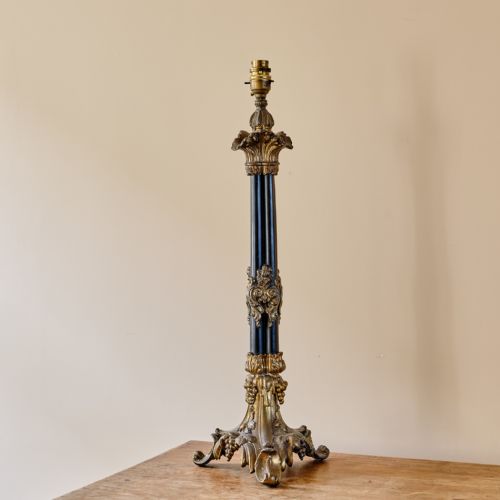


French Rococo Desk Lamp
These french rococo desk lamp designs bring flamboyant cast metalwork and figurative bronze charm to a writing desk.
French Rococo Desk Lamp
A french rococo desk lamp provides focused illumination while introducing ornate historical character to an interior space. Buyers searching this phrase encounter lighting fixtures configured from table lamps, converted lamp bases, and candelabra forms.
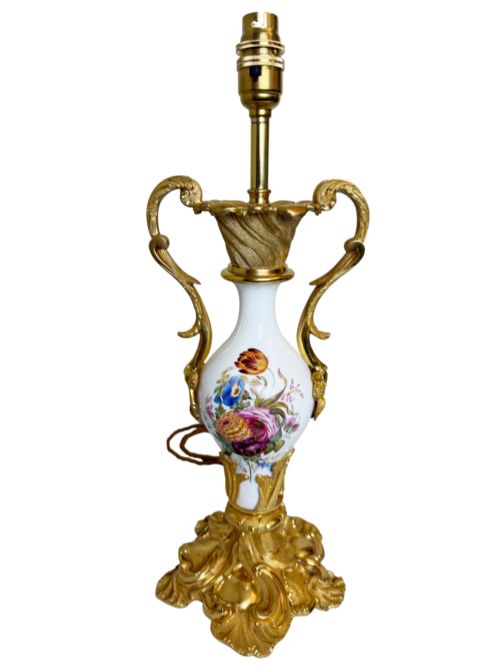
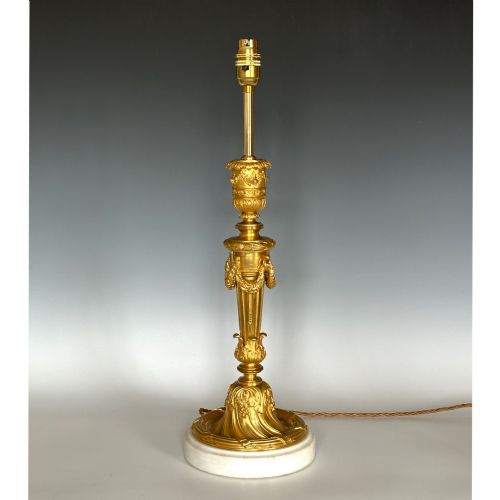
The selections span the nineteenth century and the early twentieth century, taking shape through revival movements such as Rococo Revival, Louis XV Style, and French Empire. Ormolu, gilt bronze, and brass dominate the physical evidence, frequently paired with marble bases or porcelain elements.
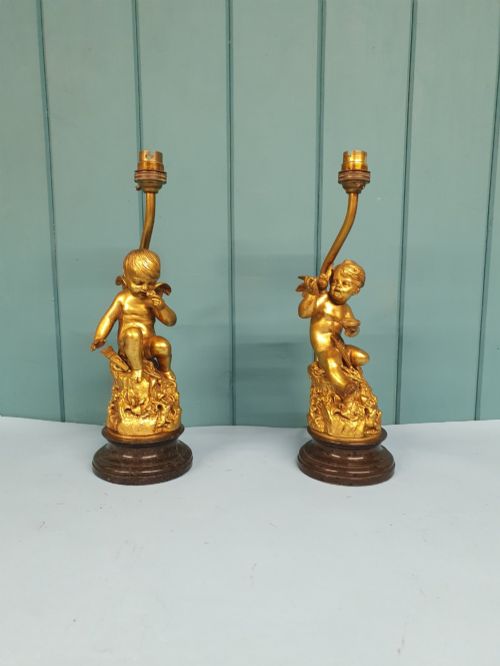
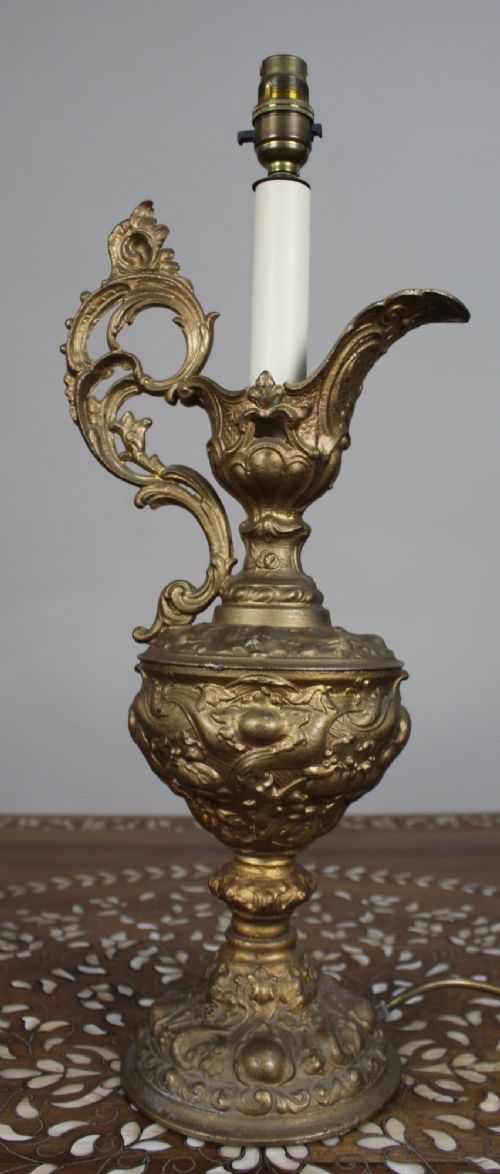
Figurative motifs remain common, featuring cherubs and putti alongside naturalistic floral designs and ewer shapes. Surviving examples range from petite nineteenth-century desk pieces to monumental matched pairs.
How they were made
Metalworking techniques dictate the construction of these pieces, relying on cast bronze, brass, and gilt metal. Artisans shaped ormolu and gilt bronze mounts to encase porcelain bodies, blue glass vessels, or marble columns.
Surface finishing involved careful gilding and patination to accentuate high-relief scrolling foliage and asymmetrical rococo curves. Many bases incorporate structural marble plinths to provide stability for heavy cast metal statuary and candelabra arms.
Plump winged cherubs moonlight as structural support crew for heavy nineteenth-century illumination.
What varies in quality
Material integration also marks the distinction, as seen in the seamless union between glazed porcelain bodies or cut glass elements and their cast metal mounts. Original gilding preservation and harmonious patination indicate superior historic care.
The French Rococo Desk Lamp Glossary
- Ormolu
- A metallic technique involving the application of finely ground high-carat gold to a bronze object. This process creates a rich, durable golden surface finish characteristic of fine continental metalwork.
- Rococo Revival
- A nineteenth-century artistic movement that emulates the asymmetrical curves, scrolls, and naturalistic motifs of the eighteenth-century French Louis XV style. It manifests heavily in ornamental furniture and decorative lighting.
- Putto
- A plump, winged child figure frequently depicted in classical and revival art. These figures appear as sculptural supports or decorative motifs on cast bronze lamp bases.
- Ewer
- A large jug with a wide spout and elaborate handle, historically used for water but adapted in these listings as a sculptural lamp body.
- Paris ware
- A term applied to porcelain produced by various independent nineteenth-century factories in and around Paris. These ceramics often feature hand-painted details and gilt accents suited for luxury mountings.
French Rococo Desk Lamp: Frequently Asked Questions
What periods do these lamps come from?
The inventory spans the nineteenth century through the early twentieth century, encompassing Victorian and Edwardian production dates alongside specific decades like the 1850s, 1870s, 1880s, 1890s, and 1920s.
Stylistic influences point heavily toward Louis XV revivals and French chateau aesthetics, reflecting historical design revivals popular across those eras.
How were these lighting fixtures used originally?
These pieces served as functional illumination for reading, writing, and administrative tasks in private studies and grand parlours. Many started as candlesticks, candelabra, or bronze statuary before later conversion into electrified table lamps.
Their heavy cast metal bases and decorative figures provided both stability and visual status on prominent side tables and desks.
Are these lamps sold as pairs?
The selection includes both individual statement pieces and matched pairs of lamp bases or candelabra. Single items often feature sculptural figures like cherubs or ewer bodies designed for solo placement.
Matched pairs typically originate from larger salons or mantle settings where symmetrical arrangement was traditional.
What materials are most common?
Gilt bronze, brass, and ormolu form the primary structural and decorative components across the collection. These metals are frequently combined with marble plinths, porcelain bodies, and coloured glass elements.
Fabric shades and crystal drops also appear on specific table chandeliers and lamp assemblies.