


French Rococo Credenza
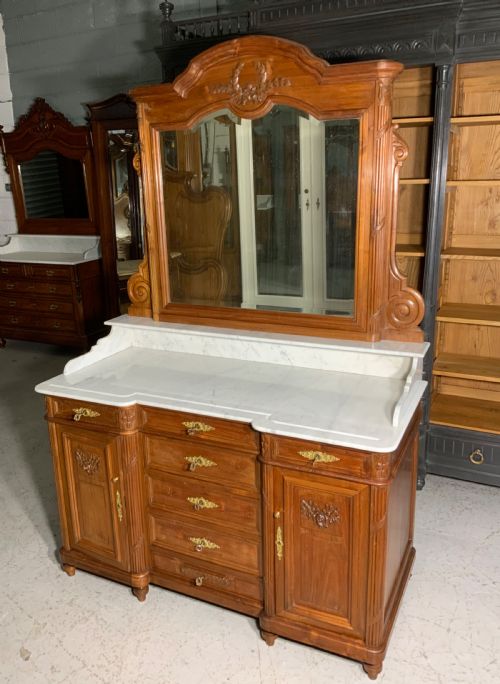
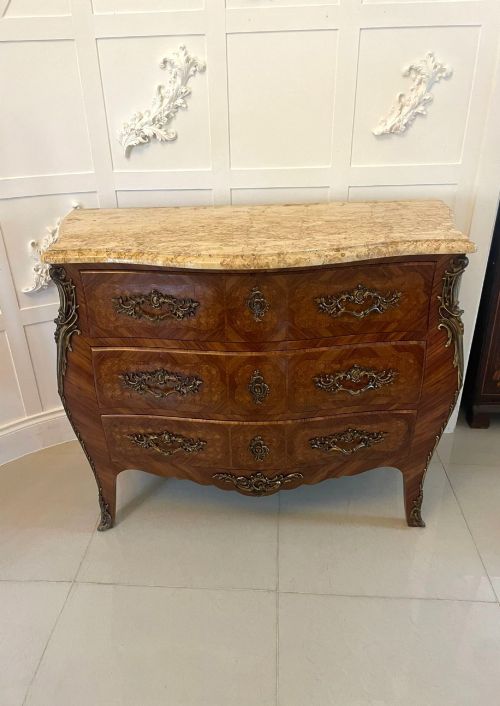
When you look for a french rococo credenza, you are hunting for curvilinear nineteenth-century statement furniture finished with marble and metal mounts.
French Rococo Credenza
The french rococo credenza encompasses ornate nineteenth-century storage pieces, commodes, and side cabinets linked by revival styles. Most examples date from the nineteenth century into the early twentieth century, showing Louis XV revival aesthetics and serpentine forms.
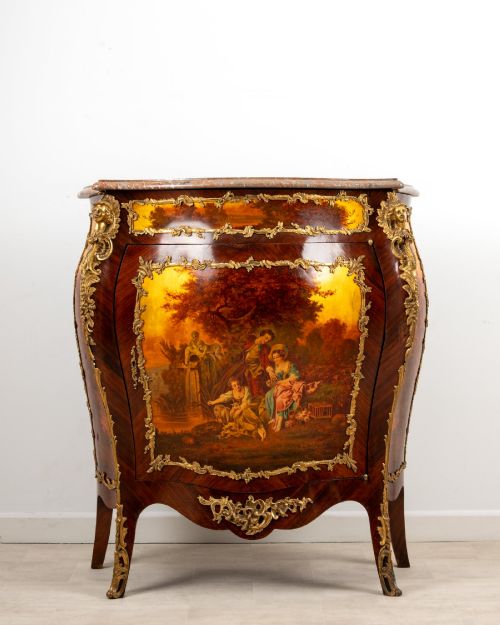
Makers utilised rich hardwoods including walnut, kingwood, mahogany, and rosewood for foundational structures. These surfaces often carry intricate marquetry or parquetry patterns alongside painted panels.
Marble tops in various shades sit above embellished doors and drawers. Ormolu mounts accentuate the corners and borders of these cabinets, echoing eighteenth-century court furniture.
Construction and materials
Cabinet makers built these pieces using solid timbers like oak and walnut, veneering them with exotic woods such as kingwood and mahogany. Tops were frequently fitted with heavy marble slabs shaped to follow the serpentine contours of the carcass.
Cast ormolu mounts, chased brass, and occasionally silver fittings were applied to vulnerable corners and aprons. Surface decoration also involved marquetry inlay, parquetry geometric patterns, and hand-painted Vernis Martin panels.
Listings feature items dated across the nineteenth and early twentieth centuries, constructed from mahogany, walnut, kingwood, and marble.
Assessing quality and execution
Superior pieces display exceptional crispness in the casting and chasing of their ormolu mounts, whereas lesser examples show softer, flatter metalwork. The precision of the wood marquetry and the choice of dense, highly figured timbers like burr walnut or kingwood separate high-end workshop production from standard commercial output.
The integration of the marble top to the wooden base indicates the standard of manufacture. Well-made credenzas feature heavy marble cut and polished to match the exact bombé or serpentine curves of the cabinet underneath.
The French Rococo Credenza Glossary
- Ormolu
- Gilded bronze or brass mounts applied to furniture. This technique provides metallic highlights that contrast with dark timber veneers.
- Bombé
- A swelling, outward-curving convex shape characteristic of commodes and side cabinets. This contour requires advanced woodworking skill to veneer accurately.
- Marquetry
- Decorative patterns formed by fitting together thin slices of various coloured woods. These designs often depict floral motifs or geometric arrangements across cabinet doors.
- Vernis Martin
- A simulated Japanese lacquer finish developed in France. Artisans applied multiple translucent coats of varnish over painted scenes.
- Parquetry
- Geometric wood mosaic work used for tabletops and cabinet fronts. Small blocks of timber create repeating patterns like squares or chevrons.
French Rococo Credenza: Frequently Asked Questions
What is a french rococo credenza?
A french rococo credenza is an ornate nineteenth-century cabinet or sideboard styled after earlier French court furniture. These pieces feature curved lines, decorative mounts, and wood veneers.
They function as display surfaces and storage units within a reception room or hallway. Their distinct appearance relies on revival styles originating from the reign of Louis XV.
How do I identify the period?
Dating relies upon examining the construction methods, secondary woods, and wear patterns beneath the carcass. Nineteenth-century revival pieces often combine machine-cut elements with hand finishing.
Stylistic markers also help distinguish original eighteenth-century work from nineteenth-century revivals. Ormolu casting styles and veneer thicknesses shift noticeably between these eras.
Where should I place it?
These cabinets suit principal reception rooms, dining spaces, or entrance halls where their decorative front panels remain visible. Their heavy marble tops require stable, level flooring.
Avoid positioning them in direct sunlight to protect sensitive wood veneers and painted panels from fading. Adequate clearance allows doors and drawers to open without obstruction.
How do I care for marble tops?
Marble surfaces require regular dusting with a soft, dry cloth to prevent abrasion from grit. Avoid placing acidic liquids directly onto the stone to prevent staining.
Protective wax can be applied sparingly to maintain the polish of the marble. Lifting rather than sliding objects across the top prevents scratching the surface.