




French Ribbon Wall Lights
French ribbon wall lights bring refined metalwork and classical motifs into a room, offering warm illumination paired with decorative grace.
French Ribbon Wall Lights
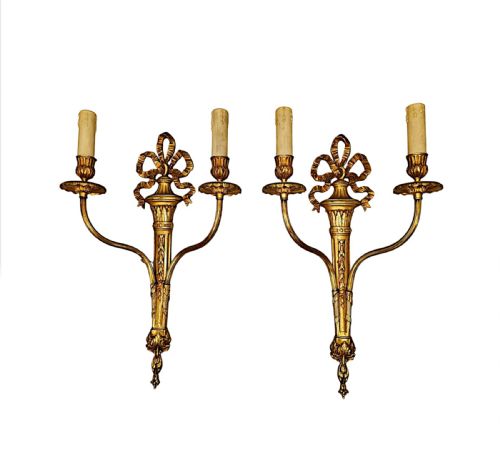
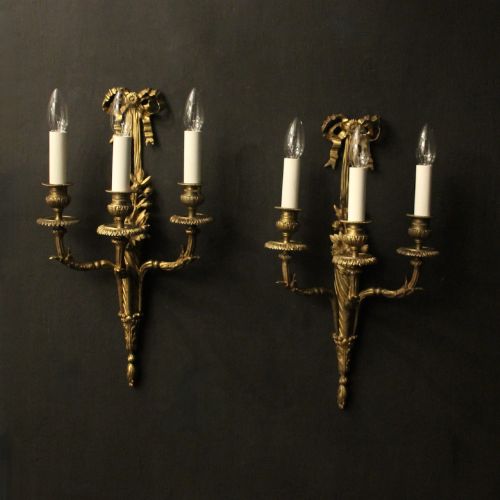
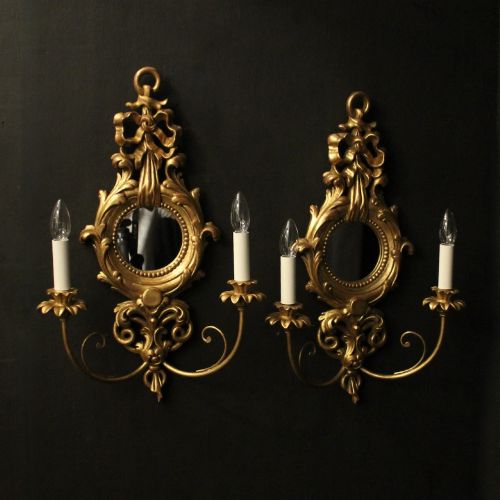
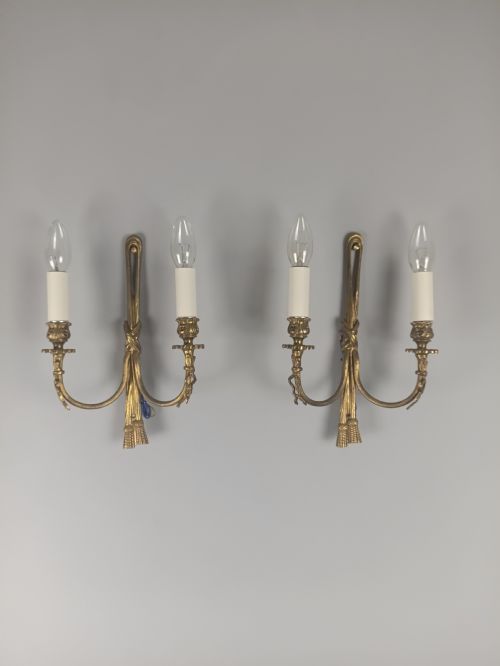
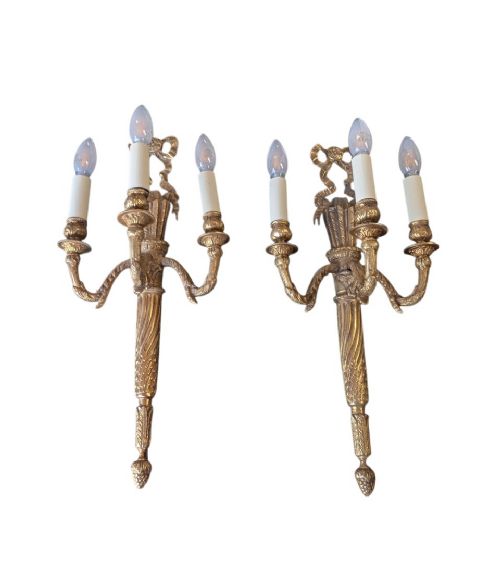
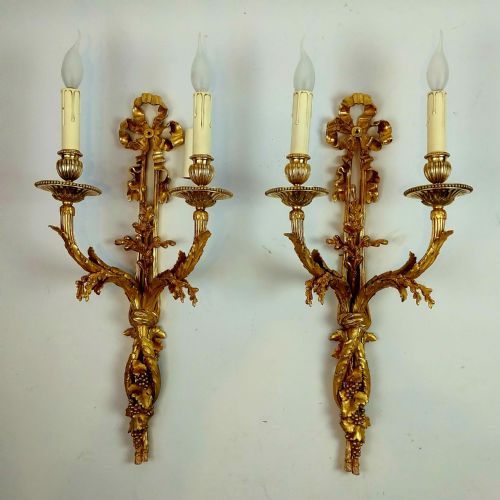
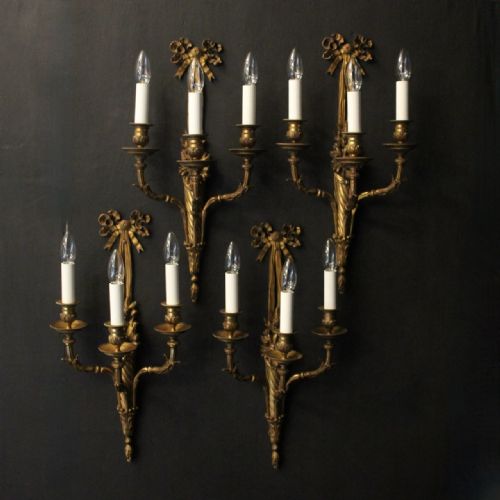
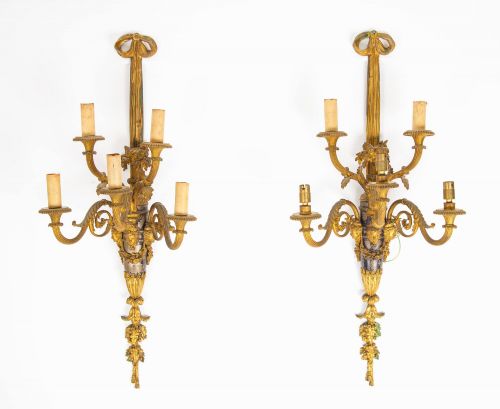
French ribbon wall lights are decorative fixtures designed to mount directly onto interior walls, most frequently encountered in pairs dating from the nineteenth and early twentieth centuries. These pieces typically take the form of wall sconces, girandoles, or wall mirrors featuring prominent ribbon bows from which the arms or backplates suspend. When searching for French ribbon wall lights, a buyer examines items rooted in classical design vocabularies, including Louis XVI and Neoclassical revival styles.
The objects appearing across the listings span various configurations, from twin-arm variants to larger settings carrying three, four, or five lights. Materials range from cast bronze and ormolu to gilt brass, giltwood, and silvered finishes. Such fixtures served historically to bounce candlelight or gaslight around formal salons and drawing rooms using polished metal backplates and glass components.
Materials and construction
These fixtures rely heavily on cast metals such as bronze, brass, and ormolu, which allowed artisans to model crisp details like knotted ribbons, acanthus leaves, and beaded swags. Molten metal was poured into intricate moulds before undergoing chasselling and hand-finishing, then receiving layers of gold leaf or gilt treatment to enrich the surface texture.
Giltwood and carved wood alternatives appear alongside metal forms, shaped from timber bases before being coated in gesso and gilded. Glass elements and toleware components occasionally supplement the primary structure, while older wiring adaptations reflect modern safety updates applied to surviving antique frames.
Every ribbon knot is permanently tied in metal or wood, capturing a soft textile bow in rigid, unyielding splendour for eternity.
Quality variations
Quality in these wall lights rests upon the crispness of the casting and the depth of the hand-chiselling evident across the metal surface. Superior examples display sharp definition in the folds of the ribbon and the delicate rendering of foliate motifs, whereas lesser pieces show softer contours from worn moulds.
The integrity of the original gilding or ormolu surface defines the upper tier of pieces, distinguishing patinas achieved through time from heavy repainting. Heavier gauge metalwork and balanced multi-arm configurations further separate standard decorative items from master-grade commissions.
Henri Vian·Maison Baguès
The French Ribbon Wall Lights Glossary
- Ormolu
- Gilded bronze produced by applying a mercury and gold amalgam to a bronze object before heating. This technique creates a durable, deep golden surface characteristic of fine nineteenth-century French lighting.
- Girandole
- A branched wall light or sconce, often incorporating a mirror backplate to reflect and amplify the candlelight. These fixtures were prized in formal period interiors for increasing ambient illumination.
- Louis XVI Style
- An eighteenth-century classical design idiom revived extensively during the nineteenth century. It is defined by symmetry, straight lines, urns, swags, and prominent ribbon motifs.
- Toleware
- Painted or enamelled sheet metal objects popular in decorative arts. It provides contrasting colour and texture when integrated into gilded or bronze wall sconces.
- Appliqué
- A flat wall-mounted decorative fixture or sconce secured directly to the vertical surface. The term often describes wall lights designed to sit flush against wood paneling or plaster.
French Ribbon Wall Lights: Frequently Asked Questions
How were French ribbon wall lights originally lit?
These fixtures were constructed to hold candles in their sockets, utilising the polished metal backplates and glass elements to cast a warm glow across the surrounding walls.
Most surviving examples have since been rewired for electricity to suit contemporary homes while preserving the original structural frames.
What rooms suit these wall lights best?
They find a natural home in living rooms, formal dining spaces, and hallways where symmetrical pairs can flank a mirror, fireplace, or doorway.
Their decorative ribbon tops introduce a softer, ornamental touch that complements traditional and eclectic modern interiors alike.
How do I distinguish nineteenth-century pieces from later revivals?
Nineteenth-century pieces generally exhibit heavier cast bronze or brass frames with hand-chased surface details that show authentic wear within the gilding.
Later twentieth-century revivals often utilise lighter metal gauges and cleaner casting methods without the same depth of patination.
Are these wall lights sold as singles or pairs?
The vast majority of listings present these items as matched pairs or larger sets, reflecting their original architectural use in balanced interior schemes.
Single sconces appear less frequently, usually originating from larger dispersed sets or girandole groupings.