
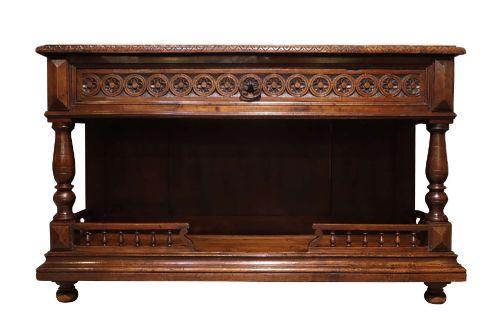
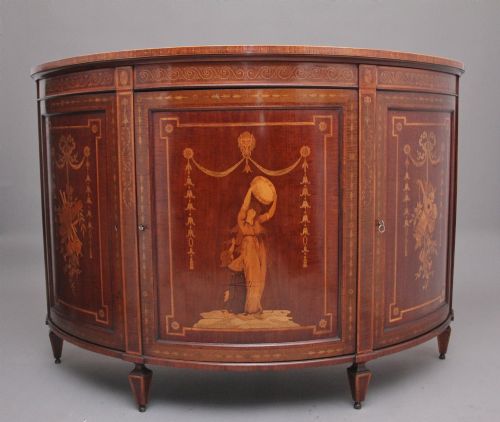
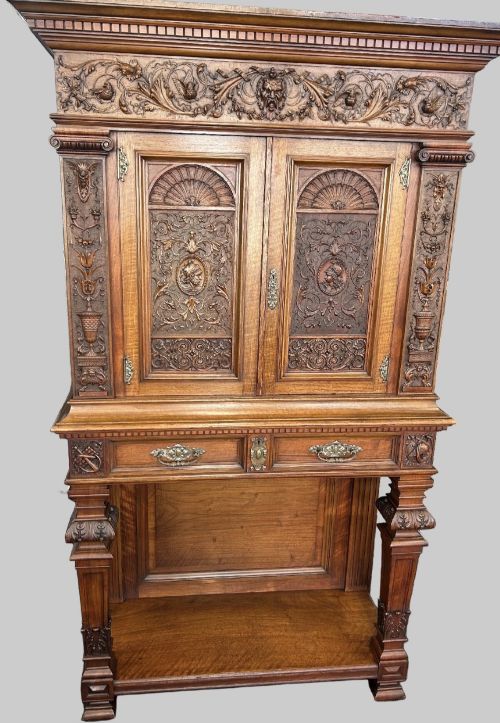
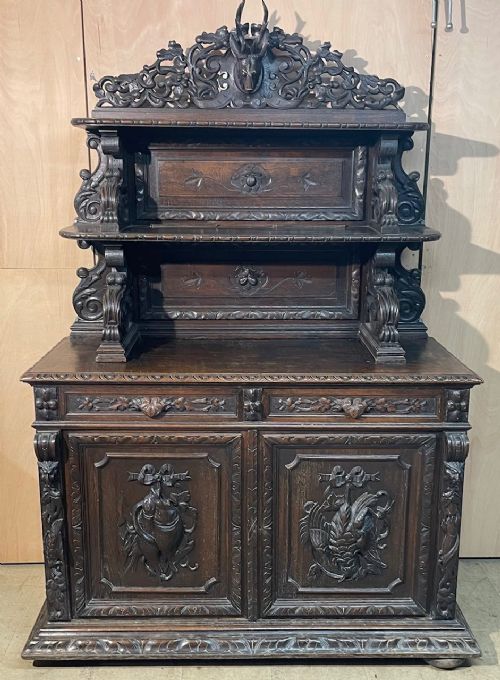



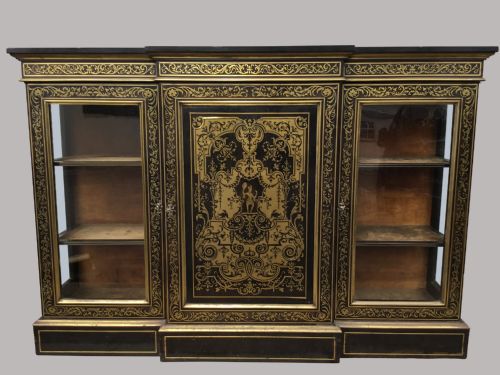


French Revival Sideboard
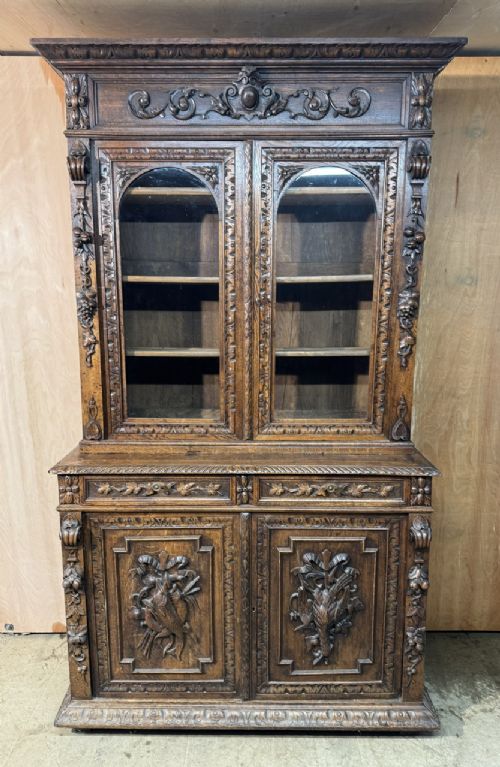
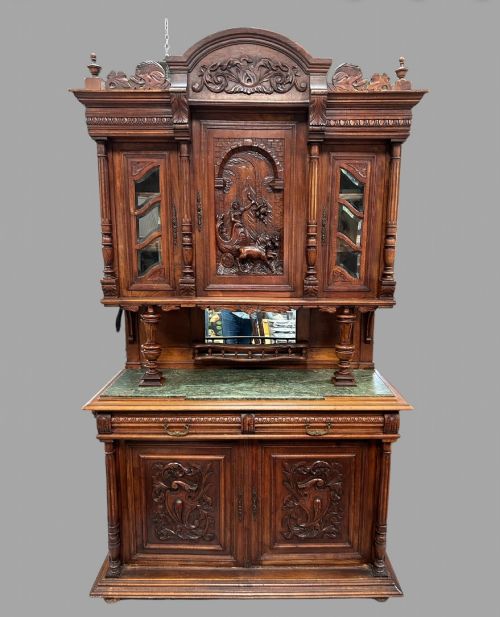
A french revival sideboard brings nineteenth-century Continental grandeur into a room through rich timber and ornate mounts.
French Revival Sideboard
A french revival sideboard encompasses heavy oak hunting cabinets, marble-topped servers, and elaborate walnut credenzas built during the nineteenth and early twentieth centuries. These large storage pieces draw on Renaissance, Louis XVI, and provincial design traditions to anchor dining rooms and grand hallways.
The most frequent examples on this page date from the Victorian era and feature walnut or oak carcasses ornamented with carved panels and marble surfaces. Credenzas and side cabinets dominate the selection, offering enclosed shelving flanked by glazed or mirrored display compartments.
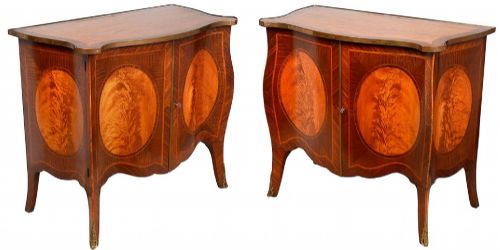
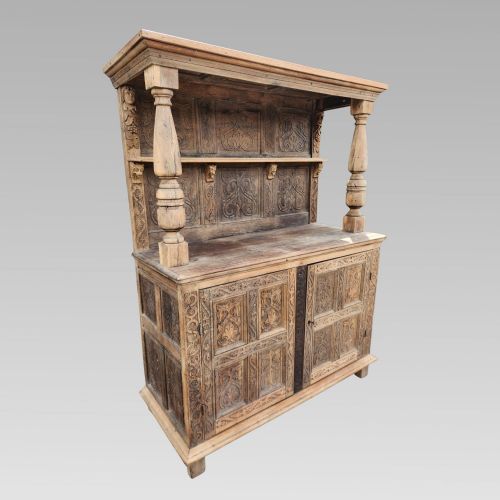
Provincial variations appear alongside formal exhibition-grade pieces, providing a spectrum from rustic oak dressers to highly polished marquetry cabinets. Each form serves as a focal point that combines substantial display space with deep interior storage.
Distinctions in craftsmanship and design
Quality rests in the depth and crispness of hand-carved wood details, the precision of marquetry patterns, and the integration of quality marble tops. Pieces bearing maker attributions or exhibition provenance display superior control over timber selection and mount casting.
Simpler provincial pieces rely on the natural grain of oak and honest joinery, whereas metropolitan examples prioritise ornamental symmetry, fire-gilt bronze mounts, and intricate veneer work.
Listings feature walnut, oak, and satinwood sideboards ornamented with marble, porcelain plaques, and cast ormolu.
Paul Sormani·Gillows
The French Revival Sideboard Glossary
- Credenza
- A low cabinet or sideboard, frequently featuring curved glass doors and ormolu mounts, designed for display and storage. These pieces became central to nineteenth-century drawing rooms.
- Ormolu
- Gilt bronze mounted onto furniture surfaces as decorative handles, feet, or framing elements. This technique adds bright metallic contrast to dark woods.
- Marquetry
- The art of applying pieces of veneer to a structure to form decorative patterns and pictorial designs. Walnut and satinwood provide contrasting tones for these intricate surfaces.
- Pietra dura
- Inlay work using cut and fitted polished coloured stones to create geometric or figurative designs on cabinet panels. This painstaking technique appears on exceptional nineteenth-century furniture.
- Serpentine
- A furniture front or top curving outward at the centre and inward at the sides. This shape demands advanced cabinet-making skill to achieve smooth, continuous lines.
French Revival Sideboard: Frequently Asked Questions
How do I care for a marble top?
Clean marble surfaces using a soft cloth and warm water, avoiding acidic substances that can etch the polish.
Apply a specialist wax periodically to protect the stone from staining and preserve its smooth finish.
Where should I place a credenza?
Position credenzas against main walls in dining rooms, living areas, or large hallways where their length can be fully appreciated.
Ensure adequate clearance around doors and drawers for unhindered daily access.
How do I identify a revival style?
Look for specific historical motifs such as Louis XVI scrolling foliage, Renaissance strapwork, or Gothic tracery applied to nineteenth-century forms.
Makers often combined these older design languages with contemporary Victorian proportions and construction methods.
Can I use these for modern storage?
These sideboards and cabinets offer deep shelving and enclosed compartments well suited to contemporary tableware, linens, or media equipment.
Interior depths vary by era, so check individual cabinet dimensions to accommodate specific items.