
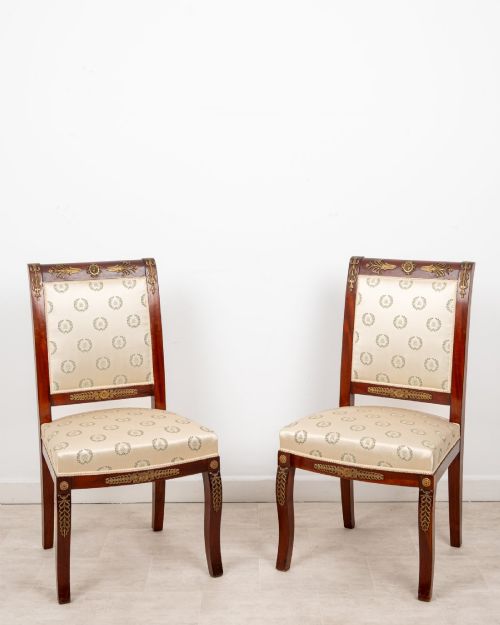
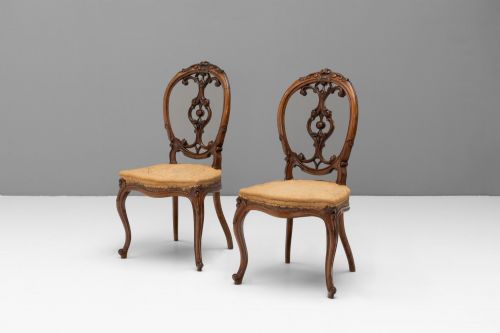


French Revival Side Chairs
French revival side chairs bring continental architectural ambition and carved elegance into domestic spaces through distinct historical revivals.
French Revival Side Chairs
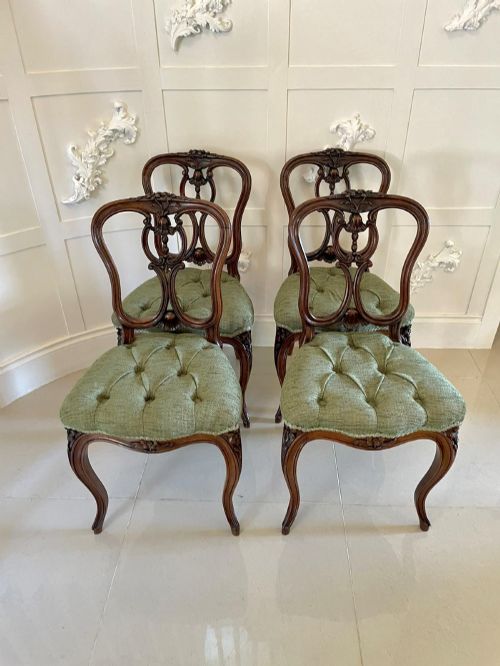
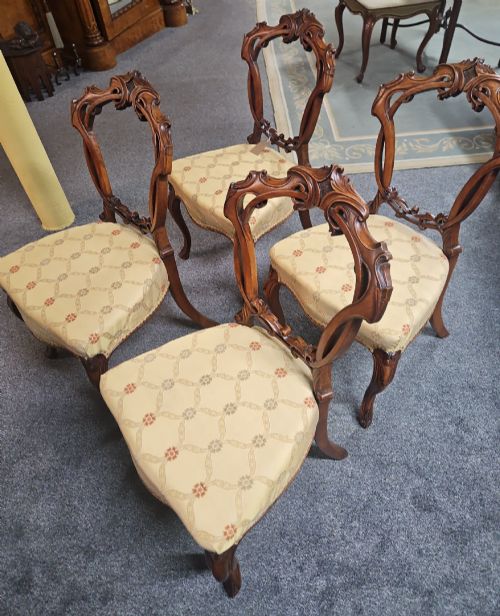
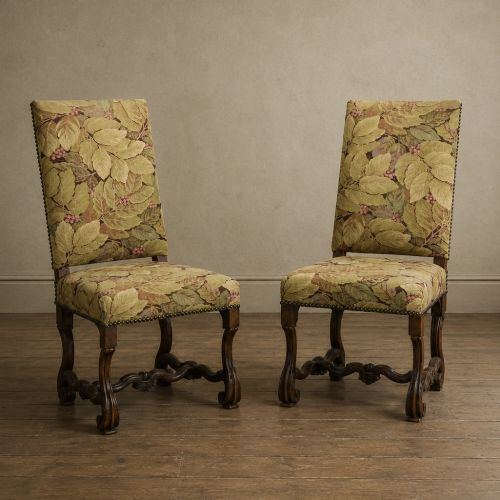
French revival side chairs encompass seating forms designed to echo historical European aesthetics, predominantly drawing on 18th-century court styles. When exploring french revival side chairs, buyers frequently encounter walnut, mahogany, and giltwood frames shaped during the Victorian era and the nineteenth century. These pieces function as decorative dining seats, salon chairs, and occasional furniture adapted from earlier French chateau designs.
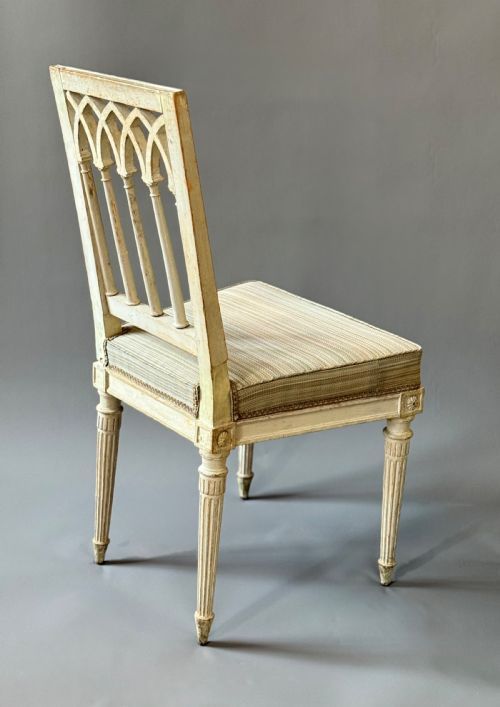
The selections span distinct sub-genres including Louis XV and Louis XVI revivals, alongside Empire, Gothic, and Rococo interpretations. Many pieces originate from the nineteenth century, utilising walnut or painted wood alongside traditional upholstery fabrics and silks. The forms range from pairs to larger sets suitable for formal dining rooms or intimate boudoir settings.
What Varies in Quality
The depth and crispness of the hand-carving distinguish finer examples from simpler production pieces, particularly in the rendering of scrolling foliage and structural motifs. Superior items exhibit substantial hardwood construction, such as solid walnut or mahogany, paired with high-grade ormolu mounts and authentic period finishes. The integrity of the original wood grain and the precision of parquetry inlay further separate standard seating from exceptional examples.
Quality also manifests in the cohesion of the stylistic revival, whether executing a Louis XVI neo-classical symmetry or an exuberant Rococo curve. Sets that retain their matching configuration and original painted or gilded surfaces hold greater design consistency. The standard of the underlying joinery determines how well the chair withstands centuries of use.
Makers occasionally hid their finest carved flourishes beneath the seat rails where only floorboards and stray cats could admire them.
Morison & Co of Edinburgh
The French Revival Side Chairs Glossary
- Ormolu
- Gilded bronze mounts applied to furniture for decorative effect. These metallic accents catch the light and punctuate dark wood surfaces.
- Parquetry
- Geometric wood inlay patterns arranged on surfaces. It creates decorative visual textures across seat backs and frames.
- Cabriole leg
- A furniture leg that curves outward and then tapers inward. This classic shape defines many Rococo and Louis-inspired designs.
- Giltwood
- Wood coated with a thin layer of gold leaf or gold paint. This technique imparts a brilliant, luxurious finish to carved frames.
- Damask
- A reversible figured fabric woven on a loom. It frequently provides the patterned textile upholstery seen on formal salon seats.
French Revival Side Chairs: Frequently Asked Questions
What periods do these chairs represent?
These seating options primarily reflect nineteenth-century revivals of earlier French aesthetics, drawing inspiration from eighteenth-century court designs, Empire styles, and Gothic motifs.
Craftsmen of the Victorian era and Edwardian periods reinterpreted these historical vocabularies for contemporary homes, producing eclectic and ornate dining and salon seating.
Where were French revival chairs made?
Production occurred across European workshops, with notable output originating in France and Britain. Makers in Paris and regional centres such as Edinburgh constructed these pieces to satisfy international demand for continental elegance.
Workshops varied from local cabinetmakers to larger firms supplying extensive dining sets for wealthy households.
What materials are commonly used?
Frames are constructed from hardwoods including walnut, mahogany, oak, kingwood, and occasionally exotic hardwoods. Surfaces frequently feature giltwood, grey paint, or parquetry inlay.
Upholstery materials range from silk damask and velvet to woven decorative fabrics secured over traditional padding.
How do I identify a revival style?
Louis XV revival pieces typically display asymmetrical curves and organic floral carving, while Louis XVI revival versions emphasise geometric symmetry and straight, fluted legs.
Empire revival items incorporate classical military motifs and ormolu mounts, whereas Gothic revival pieces feature pointed arches and tracery patterns.
How can I use them at home?
These chairs function effectively as accent seating in living rooms, boudoirs, and hallways, or as matching sets around a dining table. Their decorative frames add architectural interest to modern interiors.
Pairing occasional chairs with simpler furnishings highlights their carved woodwork and metallic mounts.