




French Revival Sconces
French revival sconces bring the opulence of gilded continental metalwork into domestic rooms, offering both illumination and decorative presence.
French Revival Sconces
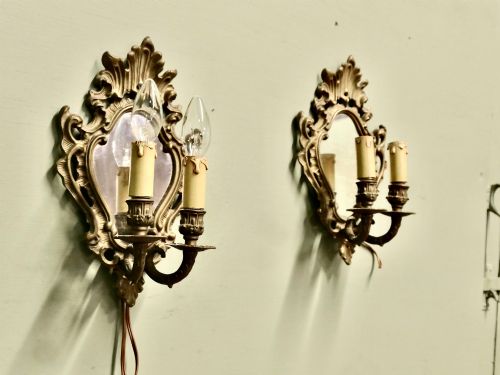
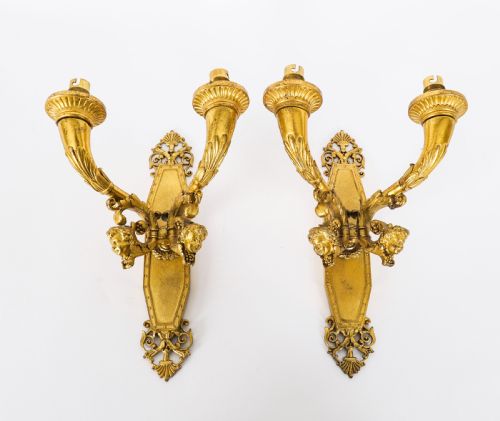
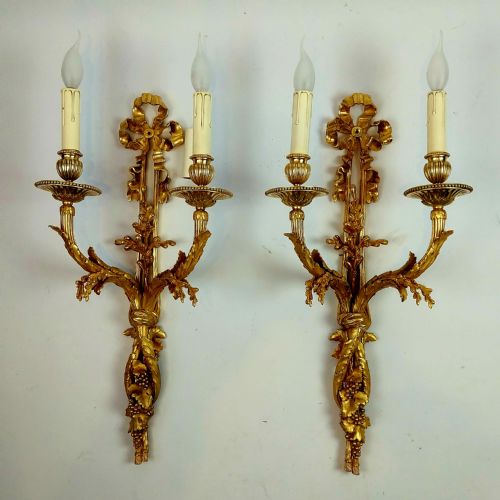
French revival sconces encompass wall-mounted light fixtures and associated decorative brackets spanning the nineteenth and early twentieth centuries, drawing heavily upon earlier royal design vocabularies. When exploring french revival sconces on this page, buyers frequently encounter multi-branched wall lights and candelabra utilising classical revival idioms.
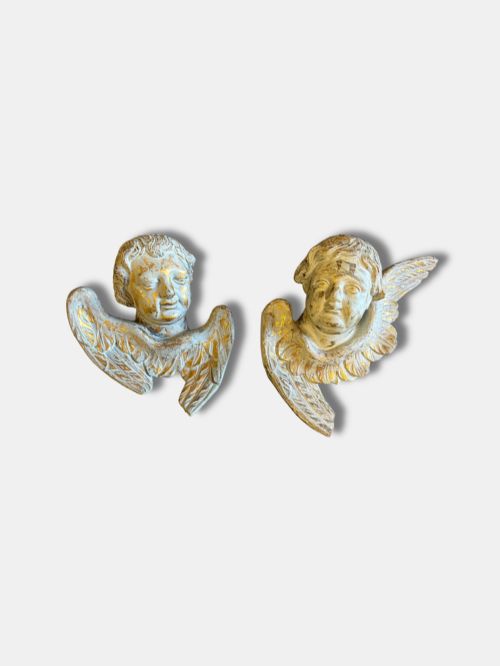
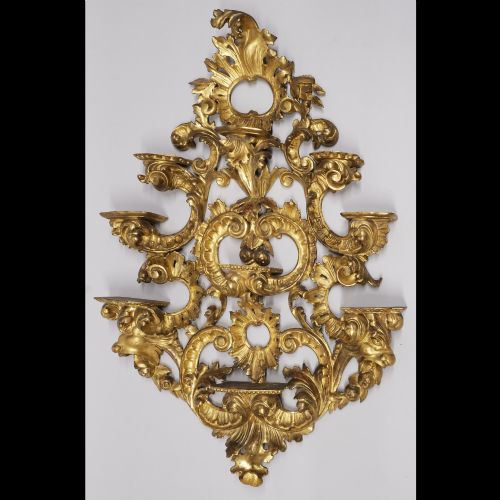
The material record demonstrates diverse iterations ranging from heavy cast ormolu and gilt bronze to brass, spelter, and carved giltwood. These pieces reflect historical revivals spanning Louis XIV, Louis XV, Louis XVI, Regency, and Napoleon III periods, often produced as matched pairs or larger sets.
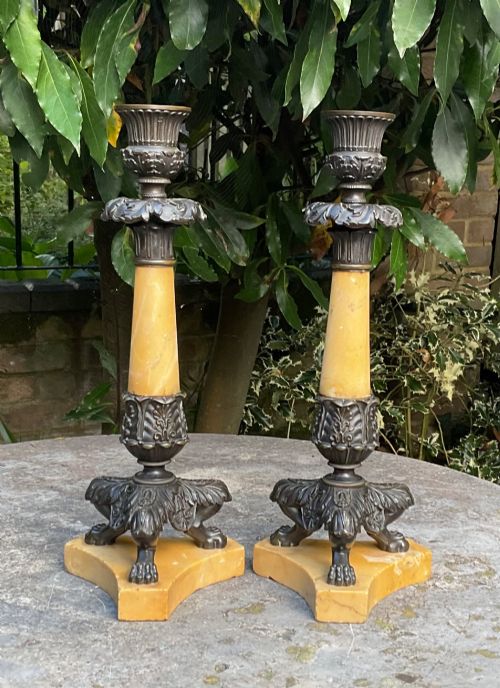
Beyond standard wall lights, related wall brackets, girandole mirrors, and converted candlesticks appear frequently within the inventory. Such items provide the distinct scrolling armatures and ornamental backplates characteristic of nineteenth-century decorative metalwork.
Materials and construction
Foundry work relied on casting metals such as bronze, brass, and spelter, frequently enhanced with surface gilding or ormolu finishing to emulate solid gold. These metal components were often combined with carved wooden elements, gesso, or inset panels of marble and onyx.
Makers utilised mechanical fastening methods including threaded rods and screws to secure multi-branch arms to backplates, alongside traditional wood carving techniques for giltwood brackets and girandoles.
French Revival Sconces Retail Price Guide 2026
Typical asking prices for french revival sconces among the pieces listed under this phrase on Sellingantiques today, from the lower quarter to the upper quarter. They describe what is for sale here now, not the wider market.
Several nineteenth-century soldiers stand ready on spelter mantel pieces, holding candles instead of muskets.
Assessing quality
Quality rests upon the crispness of the casting and the depth of the chasing work on metal surfaces, where finer examples display sharp relief and carefully finished details. Heavier gauge metals and substantial mounting plates generally indicate superior structural integrity.
The coherence of the revival style influences desirability, as well-proportioned scrolling arms and balanced branch configurations demonstrate a higher standard of period design execution.
The French Revival Sconces Glossary
- Ormolu
- Gilded bronze produced by applying a mercury-gilding amalgam to a bronze base, creating a durable golden surface finish. This technique was widely employed in high-status continental lighting and furniture mountings.
- Spelter
- A zinc alloy utilised as a less expensive alternative to bronze for sculptural castings and figural bases. It is frequently painted or electroplated to resemble bronze or brass.
- Girandole
- A branched wall light or sconce, often incorporating a mirrored backplate to reflect and amplify candle illumination. The reflective glass sits within an ornate frame of carved wood, gesso, or metal.
- Chasing
- The manual finishing of a metal casting using small punches and hammers to sharpen details and texture the surface. Superior chasing separates fine foundry work from mass production.
- Candelabra
- A multi-branched candlestick designed to hold several candles simultaneously. In nineteenth-century examples, these often feature removable nozzle inserts and central figural stems.
French Revival Sconces: Frequently Asked Questions
How do I wire antique wall sconces?
Many historical wall lights were originally designed for candles and require careful adaptation by a qualified electrician to house modern internal wiring safely. Components must be selected to fit existing channels without compromising the structural integrity of the metal armatures.
Electrical standards vary by region, so consulting a professional ensures that the installation complies with local building codes while preserving the external appearance of the fixture.
Are these sconces sold in pairs?
The listings include numerous matched pairs, which are particularly sought after for balanced placement flanking mirrors, fireplaces, or doorways. Single fixtures and larger sets of three or four also appear.
Checking the specific listing details confirms whether the pieces comprise a matched pair or form part of a larger decorative ensemble.
How do I distinguish Louis XV and Louis XVI styles?
Louis XV revival pieces, echoing the Rococo style, feature asymmetrical scrolling, organic plant motifs, and exuberant C-scrolls without rigid symmetry. The metalwork is fluid and curving.
In contrast, Louis XVI revival designs emphasise strict symmetry, neoclassical geometry, straight lines, urns, and architectural swags, reflecting a return to classical antiquity.
How should I clean gilded bronze sconces?
Dusting gently with a soft, dry brush or microfibre cloth is sufficient for routine maintenance of gilt bronze and ormolu surfaces. Moisture and abrasive cleaners must be avoided to prevent stripping the historic gilding.
If deeper cleaning is necessary, professional conservation advice should be sought to avoid permanent damage to the delicate metal finish.