





Ormolu Two Branch Sconces
Ormolu two branch sconces bring enduring French and Italian wall illumination into domestic spaces through gilt bronze and brass casting.
Ormolu Two Branch Sconces
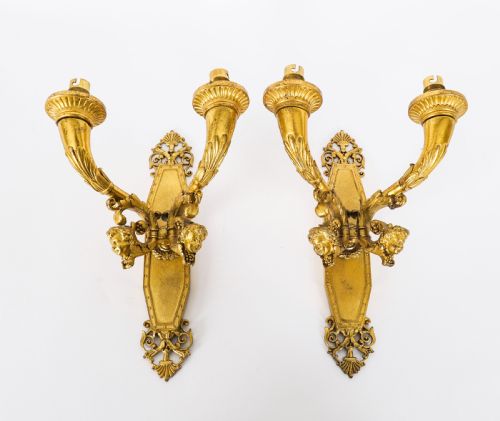
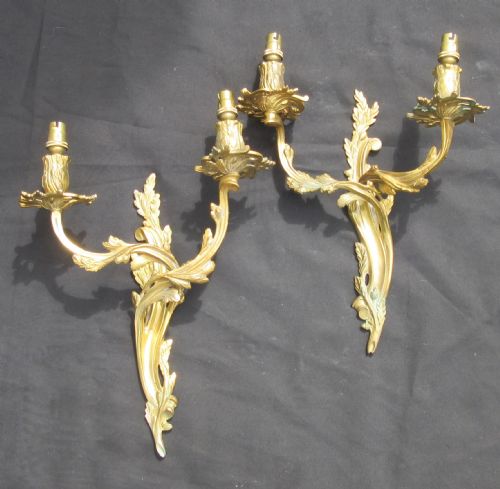
When searching for ormolu two branch sconces, buyers encounter wall lights and wall sconces spanning the nineteenth and early twentieth centuries. These fixtures project two light branches from vertical wall plates, predominantly originating from French and Italian workshops.
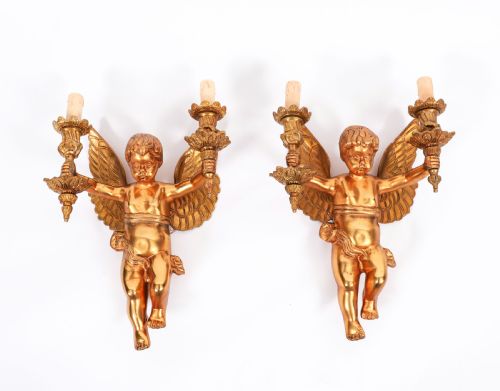
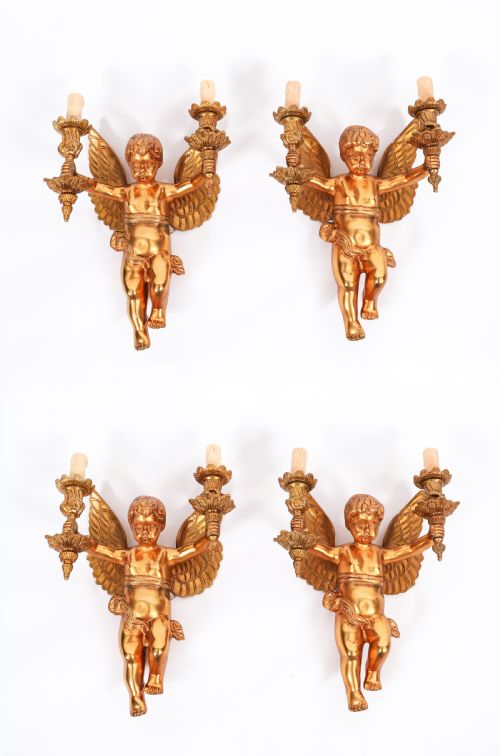
The pieces represented on this page date from the early nineteenth century through to the nineteen thirties, encompassing revivals of Louis XIV, Louis XVI, Adam, and Rococo styles. Pairs and larger sets predominate, frequently featuring figural elements such as cherubs alongside porcelain inserts from Sevres and Limoges.
Forms range from restrained neoclassical wall lights to ornate French chateau designs in gilt bronze and brass. Buyers meet both single pairs and larger sets of four, reflecting period interior schemes designed for formal reception rooms.
Materials and construction methods
Makers utilised cast bronze, brass, and gilt metal as the structural foundation for these wall lights. Molten metal was poured into detailed moulds, capturing the intricate scrollwork and figural motifs characteristic of revival periods.
Surface finishing involved the application of ormolu, gilded bronze, gilt brass, and gold leaf. These metallic layers provided the characteristic rich lustre seen on French rococo and neoclassical wall sconces.
Designers incorporated porcelain plaques from Sevres and Limoges into the metal frameworks. This combination of ceramic and gilt metal required precise mechanical mounting to secure the fragile centrepieces within the heavy cast frames.
Ormolu Two Branch Sconces Retail Price Guide 2026
Typical asking prices for ormolu two branch sconces among the pieces listed under this phrase on Sellingantiques today, from the lower quarter to the upper quarter. They describe what is for sale here now, not the wider market.
Distinctions in execution and finish
The definition of the cast work separates standard production from superior pieces. Crisp chasing and deep relief in the bronze or brass indicate skilled hand-finishing after casting, whereas softer details suggest secondary production.
The application of the gilt surface determines the longevity and visual depth of the fixture. Thick, even layers of gold leaf or fire gilding retain their warmth over centuries, while thinner metal treatments wear differently under cleaning.
The integration of decorative elements like porcelain panels or cast cherubs dictates the complexity of the piece. Matching components and rigorous symmetry across pairs distinguish higher grade commissions from utilitarian alternatives.
The Ormolu Two Branch Sconces Glossary
- Ormolu
- A technique of applying finely ground high-carat gold to a bronze object using a mercury amalgamation process, or simply the gilded bronze itself. This finish provides the bright, enduring golden surface characteristic of fine antique lighting.
- Gilt Bronze
- Bronze metal that has been coated with a layer of gold leaf or powder. It forms the heavy, durable base for many nineteenth century wall lights.
- Rococo Revival
- A nineteenth century design movement reviving the asymmetrical scrolls, C-curves, and naturalistic motifs of the eighteenth century French court. This style appears frequently on ornate wall sconces.
- Neoclassical
- A style drawing on classical Greek and Roman motifs, emphasising symmetry, urns, swags, and strict proportions. It influences the Adam and Louis XVI revival pieces found in this category.
- Sevres Porcelain
- Ceramic ware produced by the historic French royal porcelain factory, often incorporated into the backplates of luxury wall sconces. These painted plaques add contrasting colour to the gilt metal.
Ormolu Two Branch Sconces: Frequently Asked Questions
How do I install antique wall sconces?
These wall lights typically mount via a central bracket or screw holes behind the backplate. Many period pieces require professional rewiring to meet modern electrical safety standards before mounting.
Consult an electrician to ensure the wall structure can support the weight of cast bronze and porcelain fixtures.
Are these sconces wired for electricity?
Listings include both unadapted fixtures and pieces that have undergone rewiring for modern domestic use. Some nineteenth century examples retain evidence of their original candle or gas configurations.
Buyers should examine individual listing details to confirm the current wiring status of each wall light.
How do I clean gilt bronze sconces?
Dust gently with a soft, dry brush to prevent accumulation in the recessed cast details. Avoid harsh chemical cleaners or abrasive cloths that can strip the fragile gold leaf or ormolu surface.
Professional conservation cleaning is recommended for pieces with significant dirt buildup or degraded surface finishes.
How do I distinguish Louis XIV from Louis XVI style?
Louis XIV designs feature heavy, grandiose symmetry with bold scrolls and abundant acanthus leaves. Louis XVI pieces introduce lighter, straighter neoclassical lines, featuring ribbons, urns, and geometric framing.
Comparing the overall weight and ornament density helps identify the specific revival period of a wall light.