


French Revival Jewellery
French revival jewellery brings together 19th century opulence and classical design through gilt metal, enamel and fine porcelain.
French Revival Jewellery
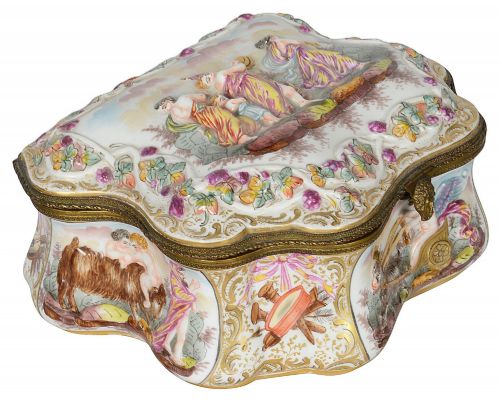
French revival jewellery and associated decorative caskets capture the theatrical historicism of the 19th century through styles like Rococo Revival, Renaissance Revival and Louis XV Revival. When you search for french revival jewellery, you encounter ornate personal adornments alongside small vanity objects such as jewellery caskets and bijouterie tables.
The pieces listed here span the 19th century, the Edwardian period, and around 1900, incorporating diverse forms from belt buckles and brooches to velvet-lined display tables. Cobalt blue Sevres porcelain, enamel and gilt brass predominate, demonstrating the period penchant for borrowing from earlier stylistic reigns.
How they were made
Craftsmen built these items using metals like ormolu, gilded brass, 18K yellow gold and damascene steel, often mounting them with hand-painted porcelain plaques. Enamel work provides vibrant colour, particularly seen in cobalt blue tones and intricate floral or heraldic motifs such as the fleur-de-lys.
Display tables and caskets frequently incorporate secondary materials like mahogany, rosewood and velvet linings to cushion precious contents. Structural elements rely on cast and chased ormolu mounts, combining heavy metalwork with delicate glass panels and hinged frames.
Some jewellery caskets were built with velvet interiors deep enough to hide a secret stash of scandalous love letters.
What varies in quality
The distinction between standard production and finer execution lies in the crispness of the ormolu chasing and the depth of the gilding on the bronze mounts. Superior pieces exhibit hand-painted detail on porcelain plaques and tightly fitted joinery on rosewood or mahogany cabinetry.
Signed items by known makers command attention through advanced techniques in enamelling and goldwork, whereas simpler brass or glass pieces rely entirely on mass-produced revival motifs. The weight of the metal and the preservation of original velvet interiors further separate ordinary examples from exceptional ones.
Piel Freres·Tissot
The French Revival Jewellery Glossary
- Ormolu
- Gilded bronze or brass mounts applied to furniture, caskets and decorative objects. This technique creates a rich gold-coloured surface finish popular in 19th-century luxury goods.
- Bijouterie table
- A glass-topped display table designed specifically for showcasing small valuables, jewellery and curiosities. These tables often feature velvet-lined interiors and ornate hinged lids.
- Damascene steel
- Steel decorated with intricate inlaid patterns of gold or other precious metals. The process produces a contrasting dark and metallic visual texture.
- Sevres porcelain
- Fine ceramic ware produced by the historic French factory. It is easily recognised by its rich cobalt blue glazes and hand-painted decorative panels.
- Cartouche
- An ornamental tablet or panel frame, often oval or oblong with scrolled edges. Designers used this motif to centre monograms, coats of arms or miniature paintings.
French Revival Jewellery: Frequently Asked Questions
What is french revival jewellery?
French revival jewellery and related decorative caskets encompass 19th-century ornaments and display pieces styled after earlier historic periods like the Rococo and Renaissance. These items celebrate historical aesthetics through the use of enamel, gold, porcelain and gilt bronze mounts.
Buyers searching in this category will find wearable pieces like brooches and belt buckles alongside vanity boxes and glass-topped display tables designed to house small treasures.
How do I date a piece?
Dating relies on examining the stylistic markers, materials and construction techniques characteristic of the 19th century and Edwardian eras. Pieces often incorporate specific revival styles, such as Louis XV or Art Nouveau, which correspond to distinct manufacturing periods.
Maker marks, where present, help narrow down the production window alongside the type of metal alloys and porcelain plaques utilised in the item.
How were bijouterie tables used?
Bijouterie tables served as specialised furniture for displaying personal collections of jewels, miniatures and curiosities in Victorian drawing rooms. The glass tops allowed guests to inspect delicate items without handling them directly.
Inside, plush velvet linings protected the displayed pieces from shifting or scratching while the table stood in prominent domestic spaces.
What materials are most common?
The dominant materials include ormolu, gilded brass, 18K yellow gold, and Sevres porcelain. Enamel work frequently adds vibrant colour to brooches and belt buckles.
Larger items like caskets and display tables incorporate woods such as mahogany and rosewood, paired with glass panels and velvet interiors.