





French Revival Hall Table
A french revival hall table brings grand continental design into a domestic interior through sculpted wood and cool stone.
French Revival Hall Table
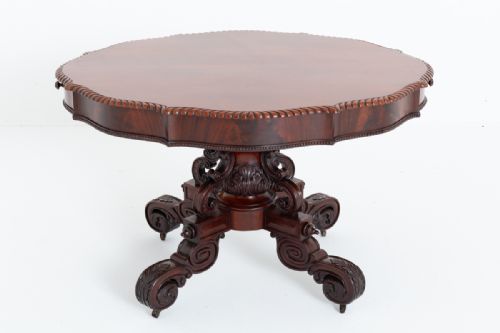
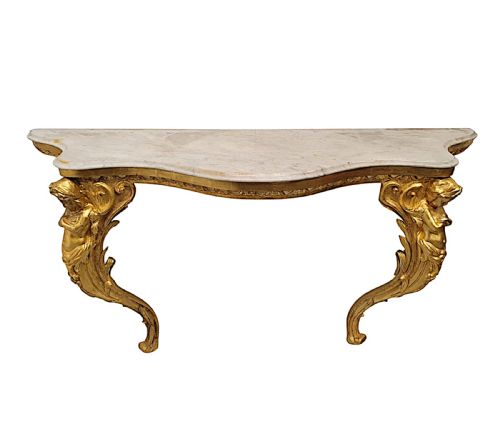
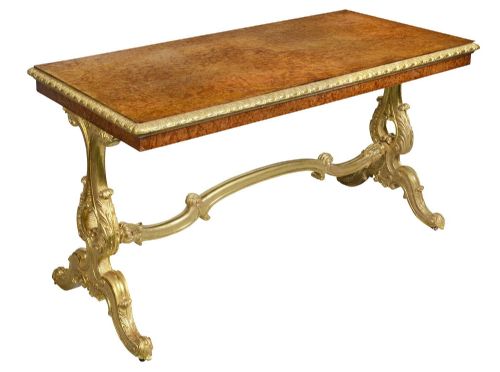
When you search for a french revival hall table, you encounter console tables and centre tables spanning from the eighteenth century to the early twentieth century. These tables draw heavily upon historical French idioms, particularly Louis styles and Rococo revivals, alongside Regency and Empire revivals.
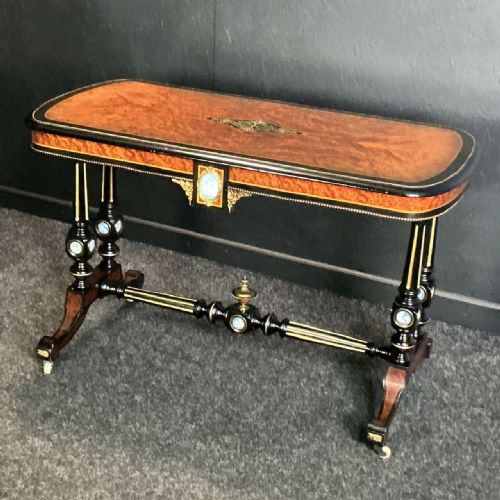
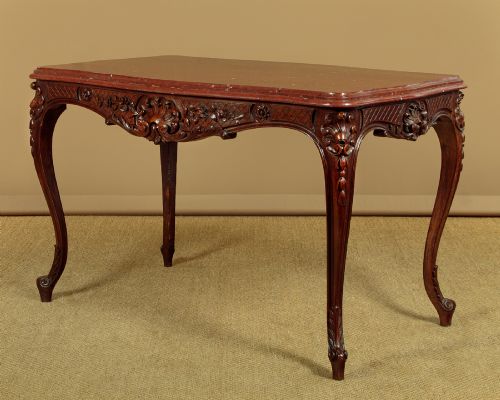
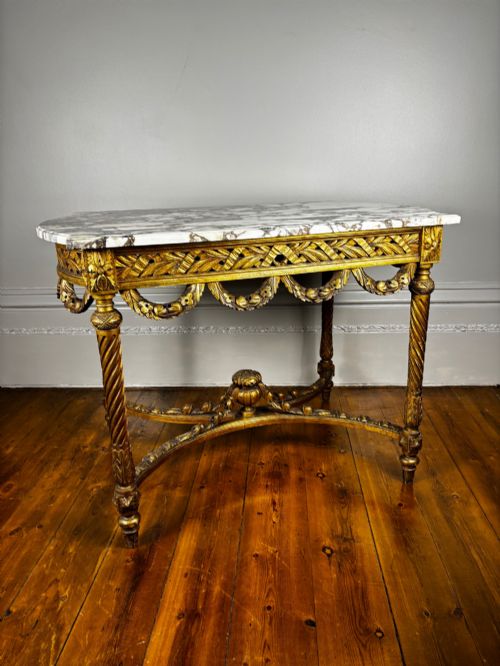
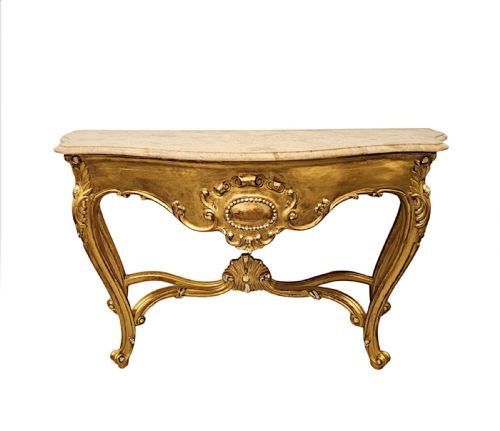
The pieces appearing here take the form of wall-anchored consoles with inset marble tops and freestanding centre tables designed for the middle of a room. Walnut, mahogany, and giltwood provide the primary structures, frequently paired with rouge or white marble surfaces.
Nineteenth-century examples dominate the selection, reflecting a Victorian appetite for Continental opulence. Cabinetmakers of the period utilised exotic timbers like burr birch and amboyna alongside traditional hardwoods to achieve these theatrical silhouettes.
How They Were Made
Carpenters constructed these tables using solid hardwoods such as walnut and mahogany, often applying intricate veneers like burr birch and amboyna to primary display surfaces. Frames feature extensive hand-carving in wood or gesso to produce the sweeping scrolls and organic motifs characteristic of revival movements.
Giltwood finishes rely upon the careful application of gold leaf over a prepared ground, while other pieces employ painted surfaces, ebonised wood, or polished brass and ormolu mounts. Heavy marble slabs, including rouge varieties, sit directly into recessed wooden tops without mechanical fasteners.
Several tables arrive with heavy stone tops that simply rest in place by gravity, daring you to test their weight.
What Varies In Quality
The distinction between standard production and exceptional execution lies primarily in the depth and crispness of the wood carving. Fine tables exhibit undercut foliage and sharply defined scrollwork executed by skilled hands rather than shallow, machine-routed patterns.
Material selection dictates upper tiers of quality, seen in thick, well-figured marble slabs, heavy fire-gilt ormolu mounts, and dense timber framing. The structural integrity of the joints and the finesse of the gilding further separate workshop masterworks from commercial output.
Edward’s And Robert’s·Holland + Son
The French Revival Hall Table Glossary
- Console table
- A table designed to stand against a wall, traditionally secured with brackets or legs at the front. These pieces frequently feature heavy marble tops.
- Centre table
- A freestanding table intended to occupy the middle of a room rather than sit against a partition. They present finished detail on all sides.
- Giltwood
- Timber that has been coated with thin sheets of gold leaf. This finish defines many revival tables from the nineteenth century.
- Ormolu
- Gilded bronze or brass mounts applied as decorative ornaments to furniture legs and aprons. The technique originated in French workshops.
- Rouge marble
- A deep red variety of limestone featuring white or grey veining. It appears frequently as the top surface on nineteenth-century console tables.
French Revival Hall Table: Frequently Asked Questions
Where should I place a console table?
A console table fits naturally against a flat wall in an entrance hall, landing, or living room. Because they are shallow, they provide a surface for lamps and objects without obstructing walkways.
Many examples feature finished backs or rely on wall fixings for stability. Pairing them with a mirror creates a traditional focal point upon entering a room.
How do I clean a marble top?
Marble requires gentle maintenance using warm water and a soft cloth. Avoid acidic cleaners, vinegar, or citrus substances, which etch the polished stone surface permanently.
Promptly blotting spills prevents staining, particularly on porous white or coloured marble slabs found on nineteenth-century tables.
Are centre tables stable enough for daily use?
Centre tables are structurally designed to stand independently in open spaces. Their heavy timber frames and substantial marble or wood tops provide natural weight and balance.
While sturdy, they should be lifted rather than dragged when repositioned to protect the joinery in the legs and stretcher base.
How can I tell the period of a revival table?
Dating relies upon examining construction methods, secondary timbers, and tool marks on the underside of the frame. Revival furniture borrows historical aesthetics while retaining the manufacturing techniques of its actual era of production, such as the nineteenth or early twentieth century.
Screws, glues, and the ageing of the wood provide reliable indicators of when the workshop assembled the piece.