
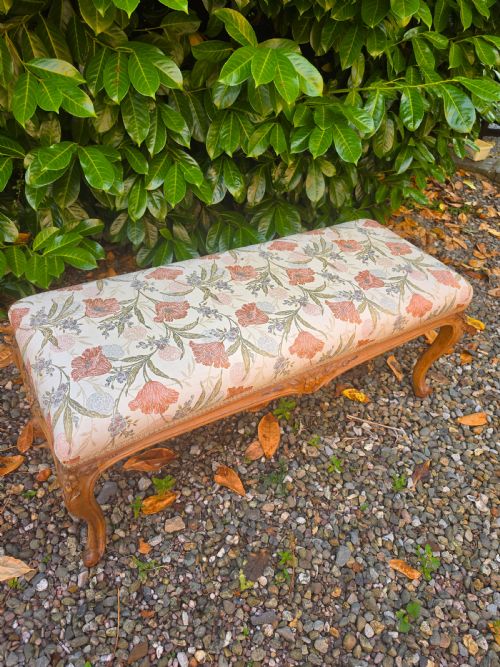


French Revival Footstools
French revival footstools bring decorative continental elegance into domestic rooms through carved timber frames and upholstered tops.
French Revival Footstools
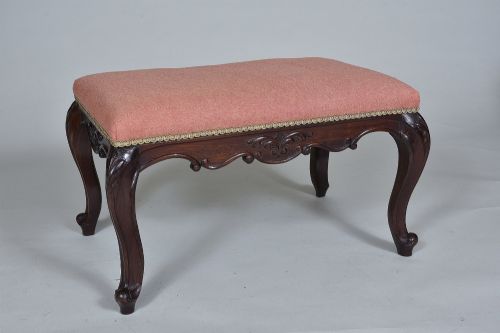
French revival footstools combine nineteenth-century manufacturing with historic continental design motifs spanning Louis periods and Victorian interpretations. These furnishings appear frequently in walnut, mahogany, and giltwood frames featuring characteristic cabriole legs and textured coverings.
Most examples originate from the nineteenth century, including specific dates across the eighteen-sixties, seventies, and eighties alongside broader Victorian categorisations. Buyers encounter individual pieces and matched pairs configured as salon stools, rocking gout stools, and low foot rests.
The form often echoes broader revivalist movements of the era, borrowing heavily from Rococo and Louis XIV, XV, and XVI aesthetics. These decorative objects served functional seating and resting roles within period drawing rooms and parlours.
How they were made
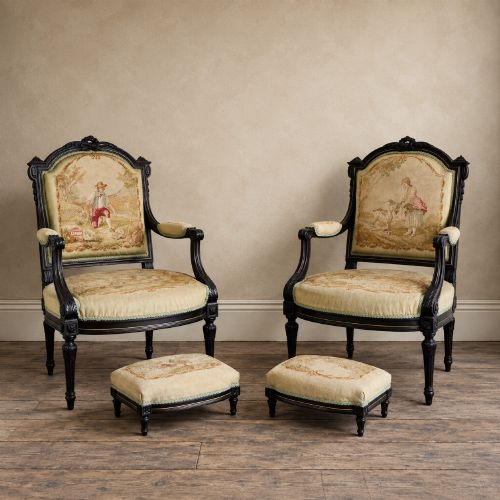
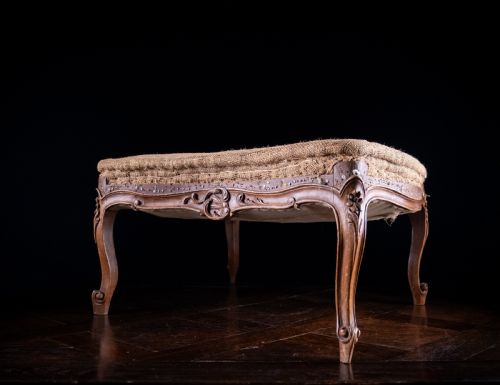
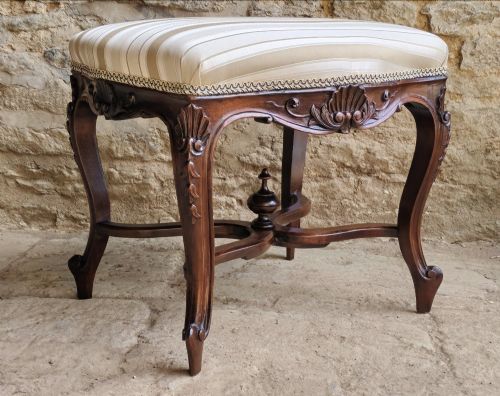
Carpenters constructed the structural frames from dense hardwoods like walnut, mahogany, and beech, frequently applying gilt finishes or ebonised treatments to mimic more costly luxury materials. Timber components were hand-carved with curved profiles, shell motifs, and foliage to achieve the desired continental revival aesthetic.
Upholstery techniques involved traditional stuffing methods secured over wooden bases, utilising textiles such as velvet, tapestry fabric, and patterned textiles. Brass hardware and decorative tacks occasionally secured the fabric edges along the frame rails.
Listings feature walnut, mahogany, and giltwood frames upholstered in velvet, tapestry fabric, and textiles across nineteenth-century periods.
What varies in quality
Quality reveals itself in the crispness and depth of the timber carving, where hand-executed details show superior definition compared to machine-milled mouldings. The choice of primary wood, such as figured walnut or solid mahogany, distinguishes standard utilitarian framing from finer salon pieces.
Proportion and structural harmony separate superior examples from simpler forms, particularly in the graceful sweep of cabriole legs and the secure joinery of the frame. The retention of period-appropriate upholstery materials also influences the integrity of the piece.
The French Revival Footstools Glossary
- Cabriole leg
- A furniture leg that curves outward at the knee and tapers inward toward the foot, mimicking animal limbs. This design feature appears frequently on eighteenth-century and nineteenth-century revival seating.
- Giltwood
- Timber that has been coated with a thin layer of gold leaf or gilt paint. Makers utilised this finish to create a lavish appearance on salon furniture.
- Rococo revival
- A nineteenth-century design movement that reinterpreted the asymmetrical scrolls, shell motifs, and ornate curves of the original eighteenth-century French Rococo style. This aesthetic dominates many decorative footstools from the period.
- Ebonised
- Wood that has been treated chemically or painted to resemble ebony. The dark finish provides a dramatic contrast against colourful upholstered fabrics.
French Revival Footstools: Frequently Asked Questions
What periods do these footstools date from?
The available pieces originate primarily from the nineteenth century, with specific examples dated around eighteen-sixties, seventies, and eighties.
Victorian era manufacturing methods and broader nineteenth-century cabinet-making traditions define the primary timeline for these decorative furnishings.
How were footstools used in period rooms?
Occupants utilised these low seats for resting feet while seated in armchairs or salon chairs during formal leisure time.
Certain specialised variants, such as rocking gout stools, provided adjustable comfort for individuals requiring physical support.
What timbers appear in these frames?
Craftspeople built the structural frames using hardwoods including walnut, mahogany, beech, and rosewood.
Selected pieces received giltwood treatments or ebonised finishes to enhance the formal visual impact within domestic interiors.
How do revival styles differ?
Revival designs borrow distinct motifs from specific French royal periods, such as the straight tapered legs of Louis XVI or the ornate curves of Louis XV and XIV.
Victorian makers reinterpreted these continental aesthetics to suit contemporary nineteenth-century domestic tastes and furnishing requirements.