






French Renaissance Style Cabinet
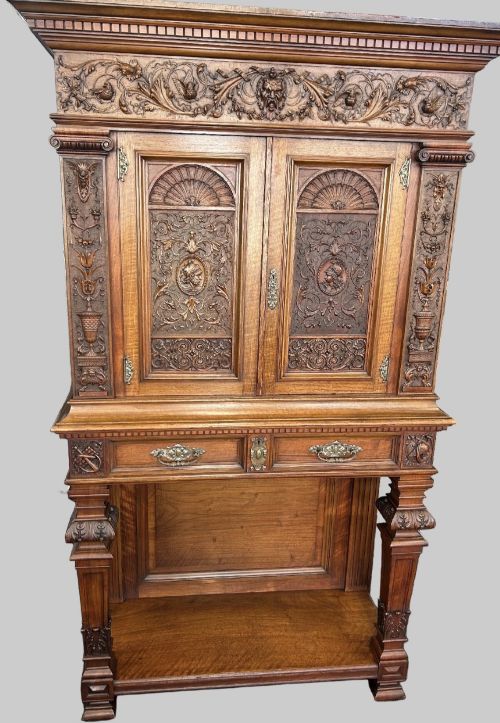
A french renaissance style cabinet brings robust historic presence and heavy architectural carving into a room.
French Renaissance Style Cabinet
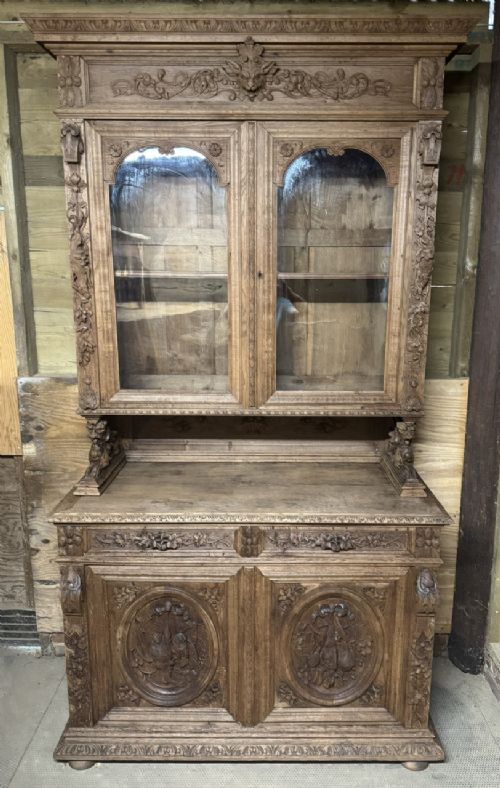
When you search for a french renaissance style cabinet, you encounter substantial furniture pieces originating primarily from the nineteenth century. These forms draw heavily on Renaissance revival aesthetics, often manifesting as hunting cabinets, buffets, and sideboards.
The versions most commonly met on this page are carved oak storage pieces from the Victorian era. They combine architectural grandeur with practical utility, serving as prominent storage items in halls and dining rooms.
Makers and workshops of this period embraced historicism, producing heavily ornamented cupboards and dressers that echo sixteenth-century French design. The surviving examples rely on dark timber and sculptural relief to command attention in an interior.
Materials and construction
Construction relies heavily on solid oak and walnut, selected for their structural strength and capacity to hold deep, sculptural carving. Joinery follows traditional methods appropriate for large sideboards and buffets, ensuring stability across heavy panel work.
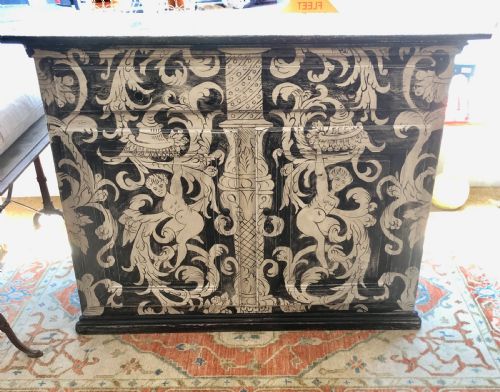
Surface ornamentation incorporates relief carving executed directly into the wood, alongside iron and brass hardware such as hinges and key escutcheons. Occasional pieces utilise painted finishes or incorporate glass panels and marble tops to vary the texture of the composition.
French Renaissance Style Cabinet Retail Price Guide 2026
Typical asking prices for french renaissance style cabinet among the pieces listed under this phrase on Sellingantiques today, from the lower quarter to the upper quarter. They describe what is for sale here now, not the wider market.
Keep an eye out for carved wooden hares hiding silently in the foliage of nineteenth-century hunting cupboard panels.
Assessing quality
Quality rests primarily on the depth, crispness, and ambition of the carved ornament rather than surface polish alone. Superior pieces exhibit three-dimensional figures, strapwork, and mouldings that demonstrate confident hand execution by skilled carvers.
The selection of timber grain and the integration of functional elements like drawers and heavy doors also separate standard production from finer workshop output. Well-balanced proportions and harmonious hardware integration elevate a piece above simpler utilitarian storage.
Gillows·Melissa White
The French Renaissance Style Cabinet Glossary
- Buffet de Corps
- A large two-part French sideboard or cupboard, typically featuring enclosed storage in both upper and lower sections. These substantial pieces provide significant display and storage space.
- Renaissance Revival
- A nineteenth-century design movement that revived sixteenth-century architectural motifs, classical columns, and sculptural relief. This style defined much of the heavy cabinetry of the Victorian period.
- Hunting Cabinet
- A specialised storage form decorated with carved game, foliage, and sporting motifs. These cupboards were traditionally used in country houses for provisions or equipment.
- Grotesque
- A style of decorative ornament featuring fanciful human and animal forms intertwined with foliage. It appears frequently in Renaissance and revival relief carving.
French Renaissance Style Cabinet: Frequently Asked Questions
What is a french renaissance style cabinet?
These are nineteenth-century storage pieces, often built as buffets or sideboards, that mimic the heavy carved aesthetics of the French Renaissance. They serve as focal storage furniture in large rooms.
They are constructed primarily from solid oak and walnut, featuring extensive sculptural relief and traditional hardware.
How were these cabinets used?
Originally placed in dining rooms, halls, or country houses, they stored tableware, provisions, and household goods. Their sturdy top surfaces also doubled as serving areas during meals.
Today, they function as statement storage units that anchor a dining space or large hallway.
How do I live with one?
Given their substantial weight and dark timber tones, these cabinets require a room with adequate scale and light to balance their visual mass. They pair well with neutral walls that allow the carved details to stand out.
Position them away from direct heat sources to protect the aged wood and historical joinery from drying out.
How do I identify a hunting cabinet?
Hunting cabinets are distinguished by specific carved iconography, including game birds, hares, hunting dogs, and dense oak leaf foliage. These motifs reflect their original association with country pursuits.
They generally take the form of tall, two-door cupboards with prominent cornices and heavy panel doors.