

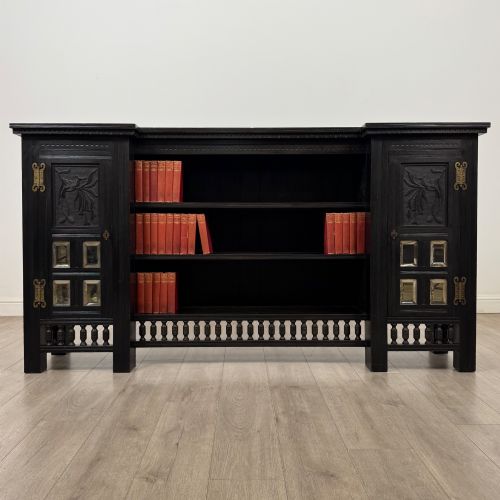
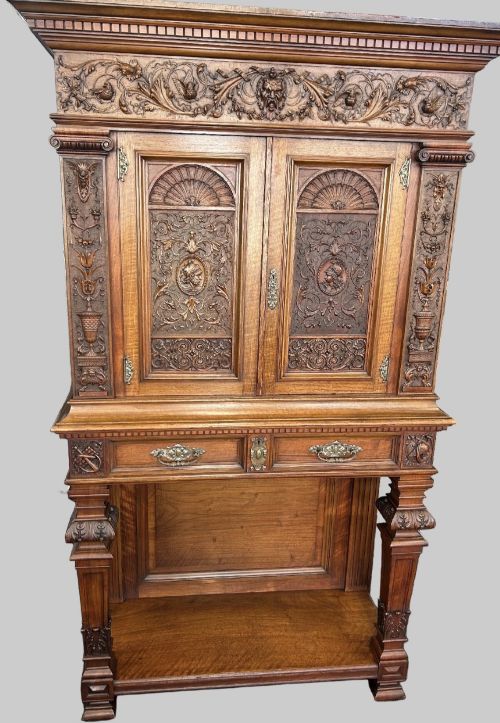
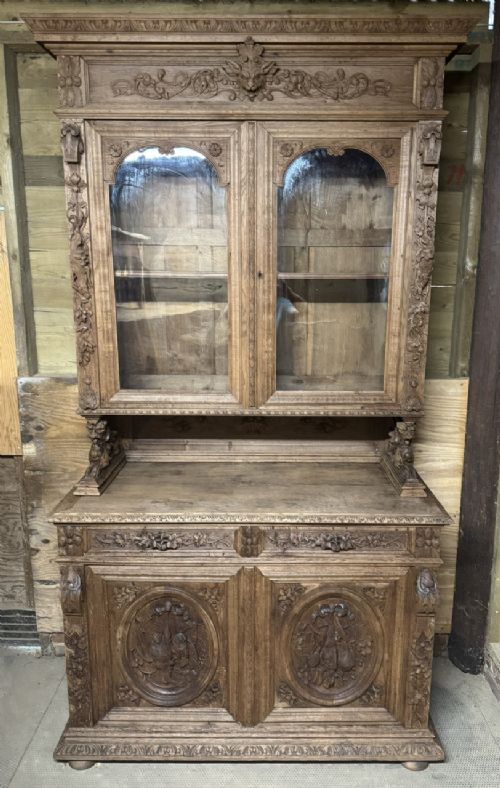
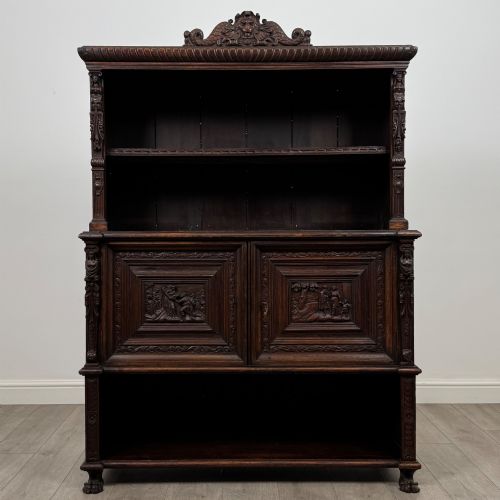
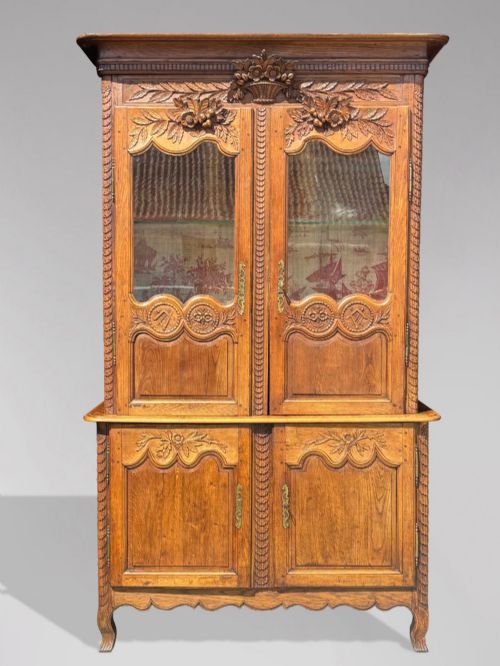


Carved Oak Buffet Bookcase
These heavy carved oak buffet bookcase pieces bring solid timber presence and display space to a room, built to last for generations.
Carved Oak Buffet Bookcase
A carved oak buffet bookcase combines substantial storage with display capacity, rooted in traditional cabinet-making traditions. Buyers examining this search phrase encounter sturdy timber furniture designed to hold books and display treasured objects simultaneously.
The selections on this page draw from several distinct periods, most notably the nineteenth century, Victorian era, Edwardian period, and eighteenth century. Pieces range from French hunting styles and Renaissance revivals to Arts and Crafts designs and Louis XV influences.
Forms include cabinets and dressers, sideboards, display cabinets, and pieces described as a deux corps. Oak serves as the primary timber, often complemented by glass, brass, lead, walnut, and ebonised wood.
How they were made
Construction relies heavily on solid oak, shaped with traditional joinery and detailed hand carving such as linenfold motifs. Makers utilised sturdy timber frames to support heavy upper bookcase sections and lower buffet cupboards.
Secondary materials like glass panes, brass hardware, and lead cames appear in doors and display compartments. Certain pieces incorporate ebonised wood or walnut elements to add contrast and visual depth to the carved surfaces.
Carved Oak Buffet Bookcase Retail Price Guide 2026
Typical asking prices for carved oak buffet bookcase among the pieces listed under this phrase on Sellingantiques today, from the lower quarter to the upper quarter. They describe what is for sale here now, not the wider market.
Current listings feature pieces spanning the eighteenth to the early twentieth century, utilising oak, glass, brass, and ebonised wood.
What varies in quality
Depth and crispness of the carved ornamentation distinguish finer examples from simpler production. Workmanship in the joinery determines how securely heavy doors and upper sections align over time.
The selection of timber grain and the integration of secondary materials such as leaded glass or brass fittings influence the overall character. Cohesiveness of style, whether French Renaissance Revival or Arts and Crafts, marks superior execution.
Gillows
The Carved Oak Buffet Bookcase Glossary
- Buffet bookcase
- A dual-purpose piece featuring a lower sideboard or buffet base combined with an upper bookcase or display section. This form maximises vertical storage and display space in a single footprint.
- Linenfold carving
- A style of wood relief carving that resembles folded parchment or linen fabric. It is frequently seen on panels of traditional oak furniture.
- Renaissance Revival
- A nineteenth-century architectural and decorative style drawing inspiration from fifteenth and sixteenth-century Italian and French design. It relies on bold symmetry, robust carving, and classical motifs.
- Deux corps
- A large cabinet made in two distinct sections, usually a heavier lower cupboard base beneath an upper cabinet or bookcase. The term translates from French as two bodies.
- Ebonised wood
- Timber treated with a chemical stain or finish to imitate true ebony. It provides a dense black surface used for contrast on nineteenth-century pieces.
Carved Oak Buffet Bookcase: Frequently Asked Questions
What is a carved oak buffet bookcase?
A carved oak buffet bookcase is a tall, heavy storage item featuring a lower sideboard base and an upper display or book shelving section. These pieces combine robust timber construction with decorative relief carving.
They serve as practical storage units for books and dining wares while adding a strong architectural presence to a dining room or study.
How do I date a carved oak cabinet?
Dating relies on observing construction methods, hardware, timber preparation, and stylistic markers such as French Renaissance Revival or Edwardian linenfold details. Nineteenth-century examples often display machine-assisted elements alongside hand carving.
Comparing the specific wood finishes, glass types, and overall proportions against known period styles helps narrow down the era of manufacture.
Where should I place a large oak bookcase?
These substantial pieces require a solid wall capable of supporting heavy timber furniture with deep proportions. Placing them away from direct heat sources prevents the oak and any secondary woods from drying out.
Ensure adequate floor clearance and stable footing, as two-body cabinets can be top-heavy when fully loaded with books.
How do I care for antique oak furniture?
Maintain the finish by dusting regularly with a soft, dry cloth and avoiding silicone-based polishes that build up over time. Natural beeswax applied sparingly helps nourish dry timber without harming the patina.
Keep the room at a stable humidity level to prevent the oak panels and carved sections from expanding or contracting excessively.