


French Religious Charm
These small wearable artworks are a french religious charm, crafted to hold personal devotion close.
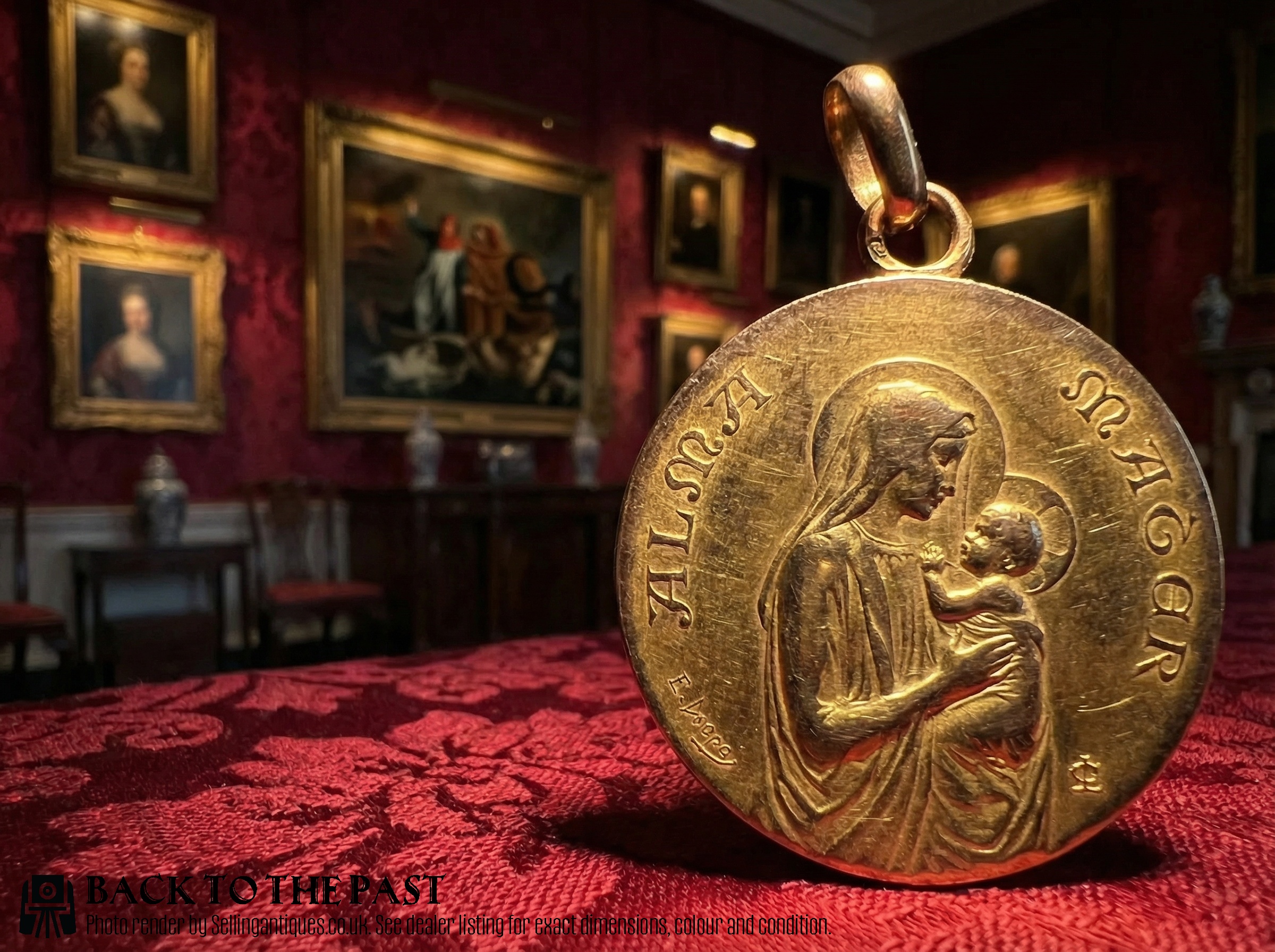
French Religious Charm
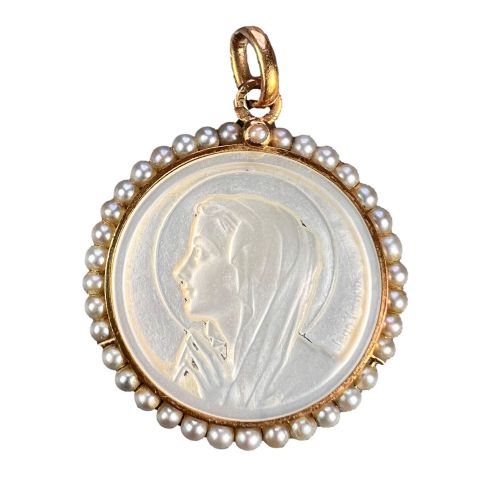
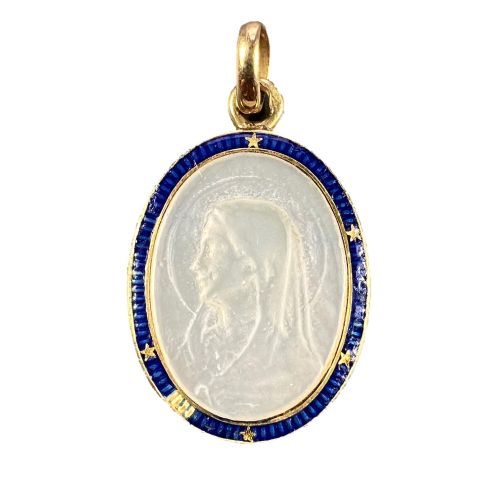
A french religious charm takes the form of a small pendant, medal, or cross meant to be worn on a chain or attached to a bracelet. These pieces depict sacred figures, most commonly the Virgin Mary, the Madonna and Child, or various saints such as Saint Christopher and Saint John the Baptist.
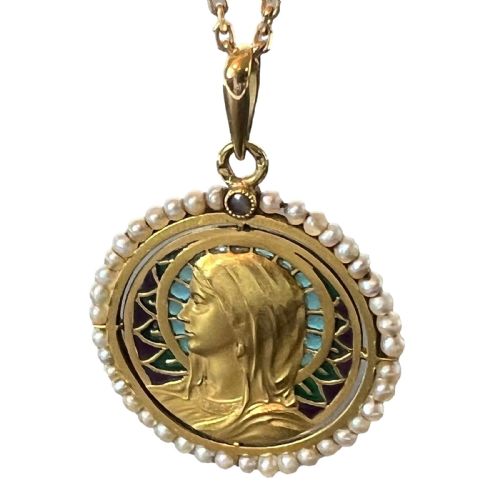
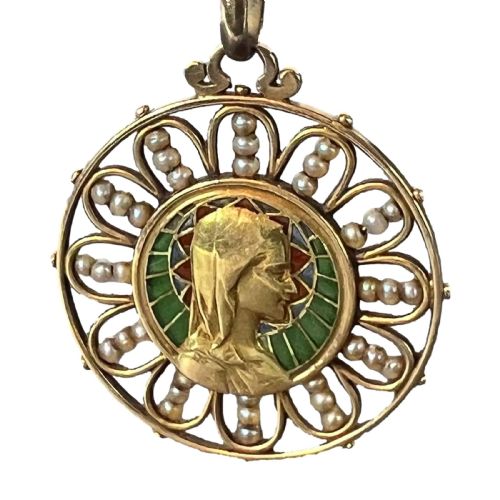
The version met most often on this page is a gold pendant or medal originating from the late nineteenth century or the early decades of the twentieth century. They combine devotional imagery with distinct decorative movements, including Art Nouveau and Art Deco designs.
How they were made
Metalsmiths worked primarily in 18-carat yellow, rose, and white gold to form the base medals and charms. These gold structures were frequently enhanced with luminous mother of pearl backgrounds or detailed engravings.
Craftsmen applied vitreous enamel, including translucent plique-à-jour techniques that let light pass through the colour, alongside seed pearls and coral to add depth and texture to the sacred subjects.
Listings span the Georgian period through the 1960s, with a strong concentration of pieces originating from the early decades of the twentieth century.
What varies in quality
The distinction between standard output and finer work lies in the crispness of the metal relief and the delicacy of the hand-finishing on the figures. Pieces bearing the signature of recognised medallists display superior sculptural depth in the facial expressions and drapery of the garments.
The preservation of fragile decorative elements, such as translucent enamel work and tiny seed pearls, determines the integrity of the piece. Superior examples retain intact vitreous surfaces without chipping or stress fractures in the metal.
Emile Monier·Paul Brandt·Mazzoni·Pageli Perriat·Emile Dropsy·Guilbert·Vernon·Sellier·Rasumny·Ovide Yencesse·Tairac
The French Religious Charm Glossary
- Plique-à-jour
- An enamelling technique where the enamel is applied without a backing, resembling miniature stained glass. This delicate method allows light to shine directly through the coloured glass cells.
- Medal
- A flat, coin-like metal object struck or cast with commemorative or devotional imagery. In this context, they were often worn daily as expressions of faith.
- Mother of pearl
- The iridescent inner layer of mollusc shells used as a backing material. It provides a shimmering, opalescent ground for raised gold figures.
- Seed pearl
- Very small natural or cultured pearls used to accent borders or halos. Their tiny scale requires precise drilling and setting by the jeweller.
French Religious Charm: Frequently Asked Questions
What are french religious charms made of?
These pieces are constructed primarily from 18-carat gold in yellow, rose, and white tones. They incorporate decorative materials such as mother of pearl, enamel, coral, and seed pearls.
Enamelling techniques like plique-à-jour are also utilised to add translucent colour to the gold framework.
Who are the figures shown on these medals?
The most frequent subject is the Virgin Mary, often shown alone or alongside the infant Jesus as the Madonna and Child. Other depictions include saints like Saint Christopher, Saint Joseph, and Saint John the Baptist.
Sacred symbols such as the Holy Dove, the Sacred Heart, and crosses also appear frequently.
How do I wear a antique charm?
These items function traditionally as pendants suspended from a neck chain or as charms attached to a link bracelet. Their compact scale makes them suitable for everyday wear either alone or layered with other small gold pieces.
Care should be taken to protect delicate enamel surfaces from hard impacts.
How do I identify the period of a piece?
Dating relies on stylistic clues such as the flowing organic lines of Art Nouveau from around 1900 or the geometric symmetry of Art Deco from the 1920s. Maker signatures stamped into the metal also help anchor pieces to specific active decades.
Materials like mother of pearl and specific enamel styles further point to turn-of-the-century French workshops.