



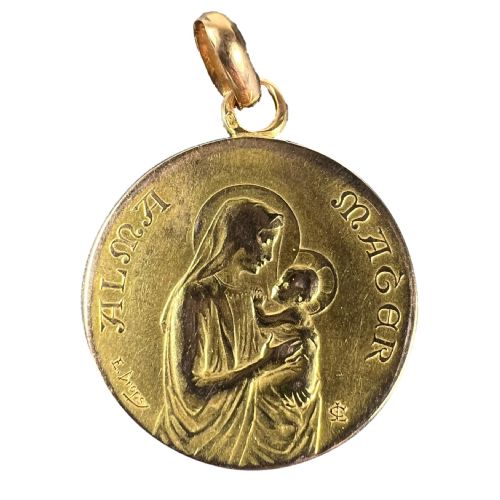


Madonna and Child Charm
A madonna and child charm offers a tangible link to devotional history, worn for centuries as a personal talisman.
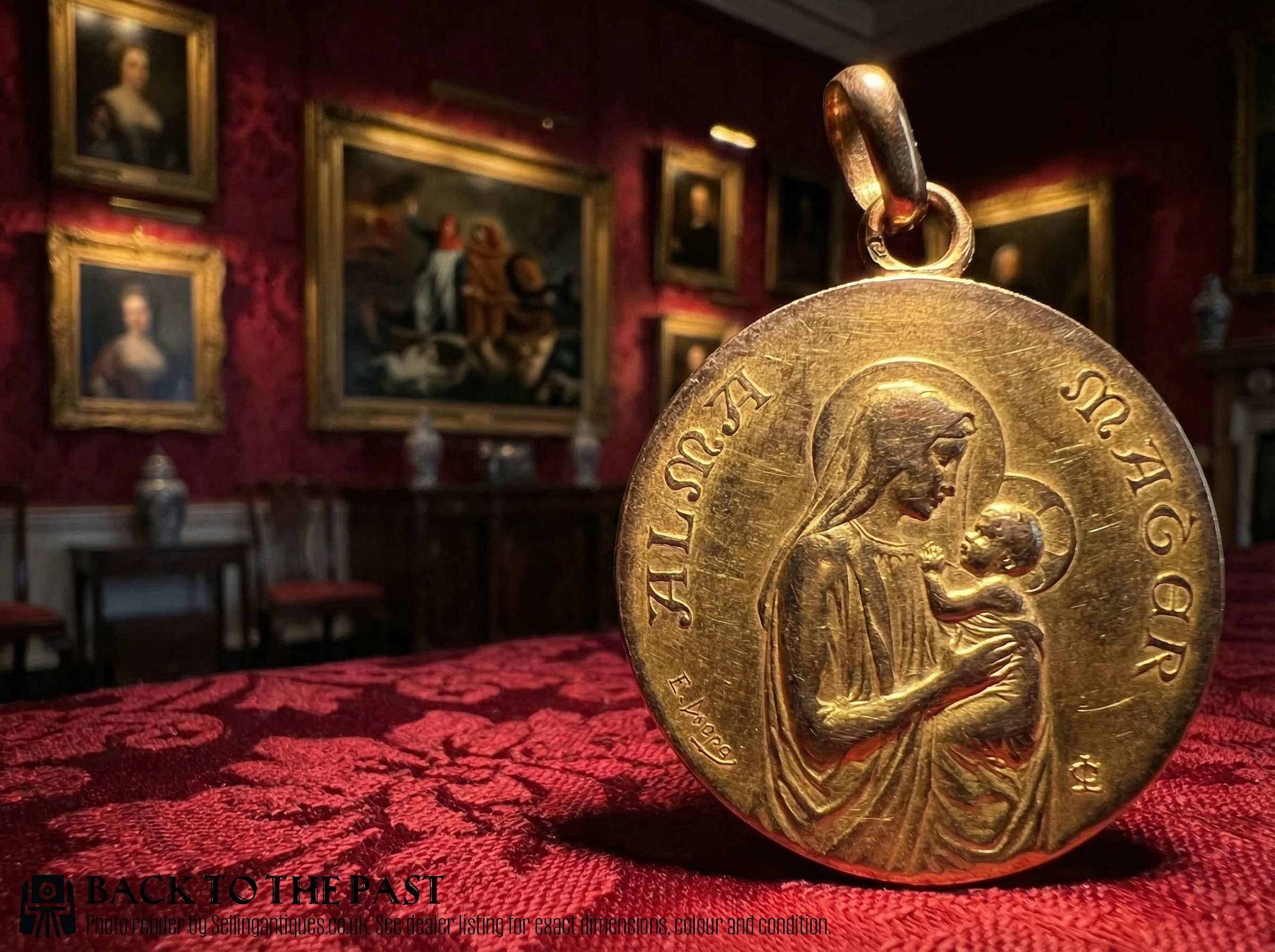
Madonna and Child Charm
A madonna and child charm takes the form of a small pendant or medal, typically fashioned in yellow gold or rose gold. These pieces derive predominantly from French religious traditions, spanning the opening decades of the twentieth century from nineteen hundred to nineteen thirty.
Most examples function as dual-purpose items, listed interchangeably as pendants, medals, or charms. They depict the traditional iconography of the Madonna and Child, often incorporating sacred heart motifs or enamel work.
Earlier archive pieces push back into the nineteenth century with hand-painted porcelain plaques, though the core of the selection centres on twentieth-century gold stampings. Buyers encounter distinct regional French styles including Art Nouveau interpretations and ecclesiastical designs.
How they were made
Maker workshops utilised eighteen-carat yellow gold and rose gold, occasionally reaching higher purities such as twenty-two-carat gold for specific French medals. Artisans stamped, cast, and chased the precious metal to create high-relief figures of the Madonna and Child.
Enamel work appears on select pieces, including plique-à-jour techniques that allow light to pass through translucent coloured glass cells. Hand-painting on porcelain plaques also occurs in earlier nineteenth-century examples, secured within gold metal mounts.
Madonna and Child Charm Retail Price Guide 2026
Typical asking prices for madonna and child charm among the pieces listed under this phrase on Sellingantiques today, from the lower quarter to the upper quarter. They describe what is for sale here now, not the wider market.
Listings span four decades of the early twentieth century, from nineteen hundred through nineteen thirty, alongside nineteenth-century porcelain examples.
What varies in quality
The crispness of the strike defines the visual success of a gold medal, separating sharp relief work from softer, worn stampings. Master medallists achieved remarkable facial expression and drapery detail within miniature scales.
The inclusion of specialist enamel techniques like plique-à-jour elevates a piece beyond standard gold production. Signed works by established medallists and designers also command greater recognition among collectors.
Mazzoni·Dropsy·Perriat·Arnault·Oscar Roty·Vern
The Madonna and Child Charm Glossary
- Plique-à-jour
- An enamelling technique where enamel is applied in cells without a backing, resembling miniature stained glass. This lets light shine through the translucent coloured areas.
- Sacred Heart
- A Christian symbol representing the heart of Jesus Christ as a symbol of divine love. It frequently accompanies the Madonna and Child iconography on French devotional medals.
- Medal pendant
- A wearable devotional token struck in metal, designed to be suspended from a chain or charm bracelet. These combine religious iconography with personal ornamentation.
- Art Nouveau
- A decorative art style characterised by fluid, organic lines and floral motifs. Pieces from this movement display naturalistic curves in the framing and surrounding ornamentation.
Madonna and Child Charm: Frequently Asked Questions
How were these charms worn?
These pieces served primarily as personal devotional objects, suspended from chatelaines, chains, or charm bracelets.
Owners kept them close to the heart as protective talismans and expressions of faith.
What gold purity is common?
Eighteen-carat yellow gold dominates the surviving selection, alongside occasional rose gold variations.
Selected French medals reach higher gold standards, reflecting the premium nature of the workshop output.
Are these pieces French in origin?
The vast majority originate from French religious workshops and medallists active during the late nineteenth and early twentieth centuries.
Inscriptions and distinct stylistic markers link them directly to French devotional traditions of the period.
What is plique-à-jour enamel?
Plique-à-jour is an intricate enamelling method that creates a stained-glass effect by omitting the backing metal.
Light passes directly through the translucent enamel panels set within the gold frame.