





French Porcelain Dish
A french porcelain dish brings painted panels, cobalt grounds and gilded mounts straight to a table or cabinet.
French Porcelain Dish
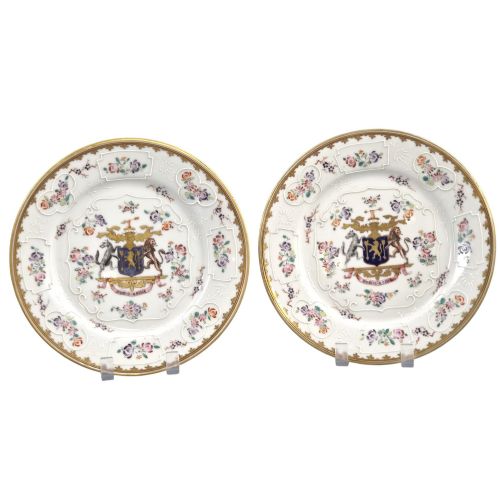
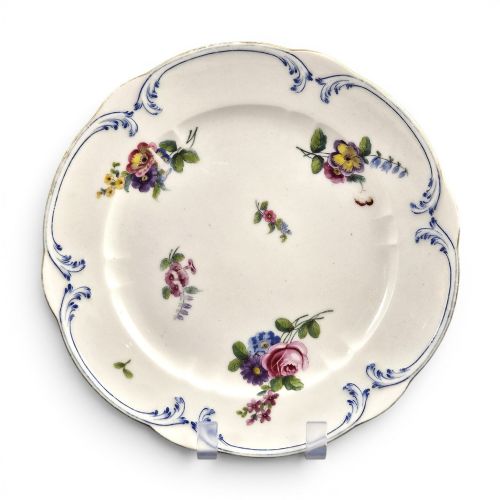
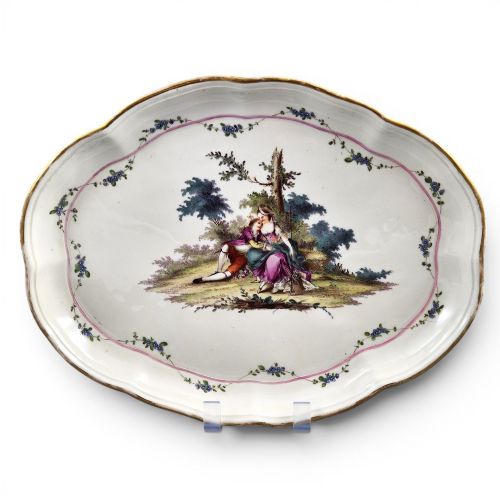
A search for a french porcelain dish encompasses items recorded across the eighteenth, nineteenth and twentieth centuries, spanning periods from Georgian and Victorian times to the nineteen-thirties. Cabinet plates, decorative trays, powder boxes, trinket boxes and centrepieces make up the main body of available examples.
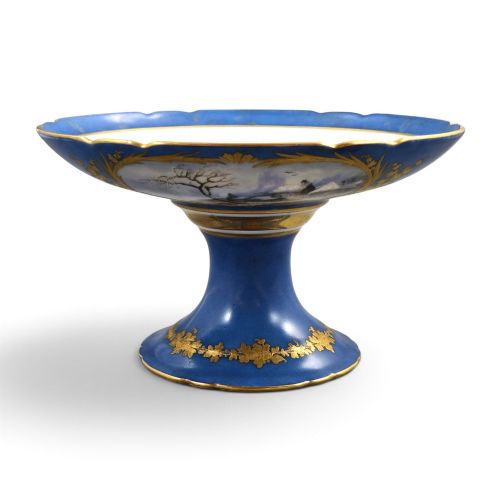
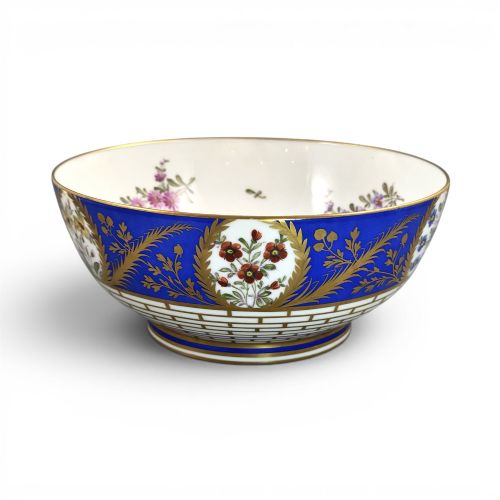
Makers and decorators operating in Paris, Sèvres, Limoges and Marseille produced these wares in styles including French Rococo, Louis XVI Revival, Art Deco and Japonesque. Pieces take the form of footed bowls, lidded dishes, tazzas and pin trays alongside flat plates.
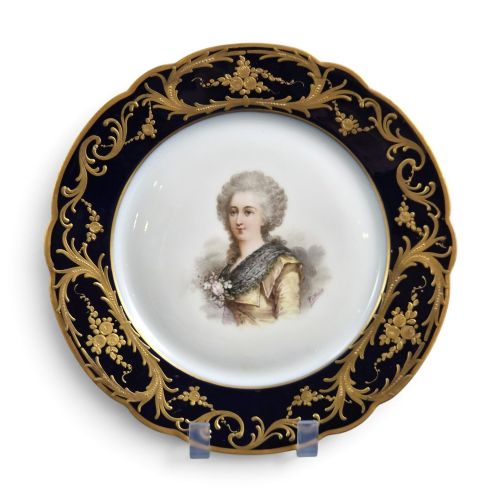
Nineteenth-century Sèvres-style plates and late-century Limoges powder boxes appear frequently, often carrying hand-painted portraits, floral scenes or armorial motifs. Eighteenth-century examples from Chantilly and Marseille represent earlier manufacturing traditions.
Materials and technique
Potters shaped ceramic and porcelain bodies, sometimes employing soft-paste porcelain, before applying coloured glazes such as blue ground and bleu céleste. Hand-painted enamels provided portraiture, battle scenes and floral details across the surface.
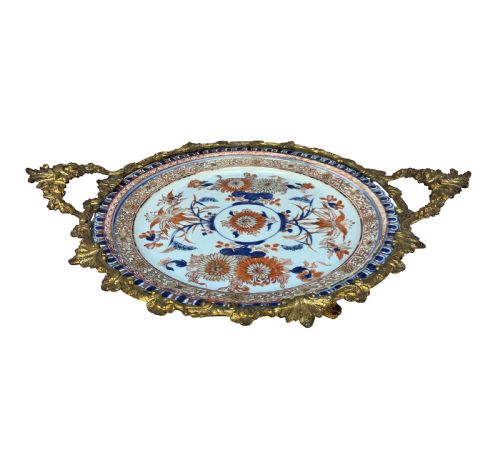
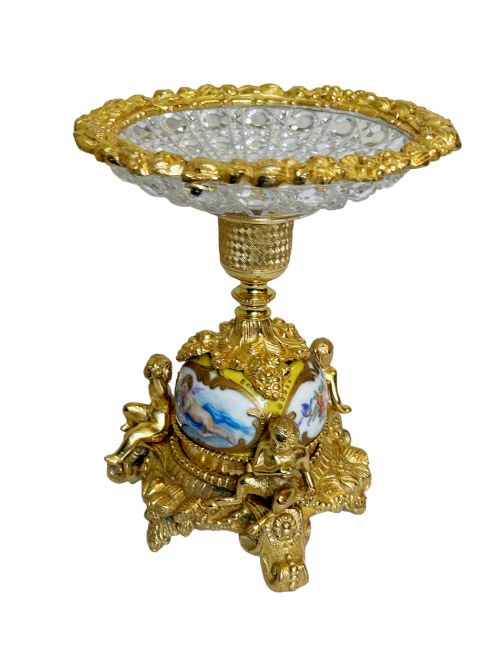
Metalworkers added ormolu, gilt bronze and champlevé enamel mounts to frame and elevate the porcelain trays, bowls and dishes. Gold leaf and gilt detailing highlighted rims, handles and structural borders.
French Porcelain Dish Retail Price Guide 2026
Typical asking prices for french porcelain dish among the pieces listed under this phrase on Sellingantiques today, from the lower quarter to the upper quarter. They describe what is for sale here now, not the wider market.
Nineteenth-century makers added champlevé enamel mounts to porcelain dishes just to ensure a plain plate had zero chance of being understated.
Quality and execution
The precision of hand-painting on portrait plates and scenic panels separates standard production from finer output. Painters working on Sèvres-style or Limoges pieces achieved varying levels of depth and control in brushwork.
The integration of metalwork dictates overall execution, where cast ormolu, gilt bronze and champlevé enamel mounts fit the porcelain body with strict alignment. Weight, crispness of chasing in the metal and purity of the glaze establish the standing of each piece.
Edmé Samson & Cie·Ambroise Michel·Joseph-Gaspard Robert·Louis Pierre Malpass·Pucher Deroche
The French Porcelain Dish Glossary
- Ormolu
- Gilded bronze used for mounts and decorative fittings. This technique gives metallic warmth to porcelain dishes and centrepieces.
- Champlevé enamel
- Enamelling technique where troughs are dug into metal and filled with coloured glass paste before firing. It frequently decorates nineteenth-century French frames and stands.
- Soft-paste porcelain
- A glassy porcelain composition fired at lower temperatures than hard-paste. Eighteenth-century factories such as Chantilly utilised this body.
- Tazza
- A shallow bowl raised on a stem and foot. These serve as display dishes on tables or cabinets.
French Porcelain Dish: Frequently Asked Questions
How do I date a French porcelain dish?
Dating relies on stylistic markers, factory marks where present, and manufacturing techniques like soft-paste versus hard-paste body composition.
Eighteenth-century items show different glaze formulations and hand-mixed pigments compared to nineteenth-century revival pieces or nineteen-thirty Art Deco ceramics.
What is the difference between Sèvres and Sèvres-style?
Genuine Sèvres pieces were produced by the official French royal porcelain manufactory.
Sèvres-style items were made by other factories, such as Samson in Paris, imitating the famous forms, colour grounds and painted subject matter during the nineteenth century.
How were powder boxes used?
Powder boxes held loose cosmetic powder on dressing tables in bedrooms and boudoirs.
By the nineteen-thirties, ceramic and porcelain examples from Limoges featured removable lids and decorative figurines or flapper girl motifs.
Can I display these dishes on walls?
Plates and shallow trays often feature pierced foot rings or rims intended for hanging wires.
Cabinet plates and armorial dishes suit wall display, while pedestal bowls, tureens and lidded boxes sit on flat surfaces.