
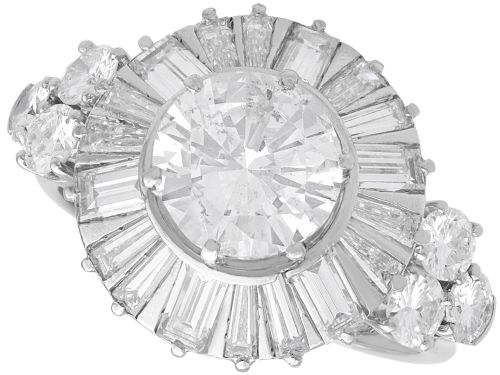
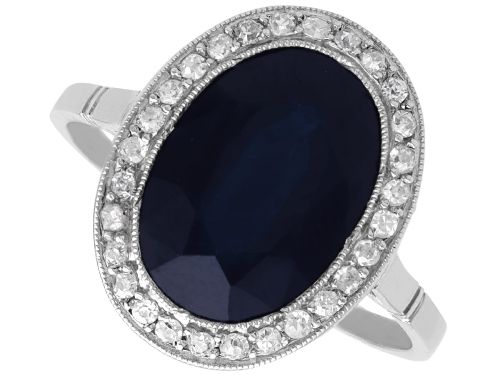


French Platinum Jewellery
French platinum jewellery brings together crisp white metalwork and vibrant gemstones from the Edwardian, Art Deco, and mid-century periods.
French Platinum Jewellery
When someone searches for French platinum jewellery, they encounter rings, bracelets, brooches, earrings, and necklaces shaped by Edwardian delicacy and Art Deco geometry. These pieces draw the eye through their combination of bright precious metal and contrasting coloured stones.
The versions most likely to appear on this page date from the 1920s and 1930s, alongside Edwardian creations and later mid-century designs. They range from delicate diamond solitaire rings to heavy bracelets set with large emeralds, sapphires, and aquamarines.
How they were made
Makers utilised durable platinum alongside 18ct white gold, 18ct yellow gold, and sometimes onyx to build structured mountings that could securely hold heavy arrangements of diamonds and coloured gemstones.
Gems were shaped into transitional cuts, old cuts, and rose cuts, then set using pave techniques or meticulous claw settings to maximise light reflection across bracelets, rings, and drop earrings.
Listings span platinum, 18ct gold, diamonds, sapphires, emeralds, pearls, and onyx across Edwardian, Art Deco, and mid-century periods.
What varies in quality
Quality rests upon the weight and purity of the platinum work, the matching and saturation of centre stones such as sapphires and emeralds, and the precision of the stone cutting. Signatures from established workshops elevate certain pieces above anonymous workshop output.
The fineness of the piercing in metalwork and the integration of secondary stones like small diamonds or black onyx distinguish ambitious high-jewellery commissions from standard production pieces of the period.
Boucheron·Cartier Paris·Paillette
The French Platinum Jewellery Glossary
- Platinum
- A dense, strong white metal that allows for fine, durable settings without heavy metal bulk. It dominated high-end European jewellery manufacturing through the early decades of the twentieth century.
- Transition cut
- A diamond facet arrangement bridging the old European cut and the modern brilliant cut, typically seen in pieces from the early twentieth century. It displays a small table and distinct culet.
- Rose cut
- A historic diamond shape featuring a flat base and a domed crown of triangular facets arranged in a symmetrical pattern. This cut produces a soft, translucent glow rather than sharp brilliance.
- Pave setting
- A technique where numerous small gems sit close together, held by tiny metal beads, creating a continuous surface of stones. This method maximises sparkle across the face of a ring or bracelet.
- Art Deco
- A design style spanning the 1920s and 1930s characterised by clean geometric lines, symmetrical patterns, and high contrast between white metal and coloured stones.
French Platinum Jewellery: Frequently Asked Questions
How do I clean French platinum jewellery?
Clean these items using warm water, mild soap, and a soft brush to remove everyday oils from the metal and stones. Avoid harsh chemicals that might harm softer gems like pearls or emeralds.
Pat the piece dry with a soft cloth rather than leaving it to air dry. Regular inspection by a specialist ensures the platinum claws remain tight around the diamonds and coloured stones.
Can I wear these rings every day?
Platinum provides a robust framework that withstands daily wear better than softer gold alloys. However, pieces containing emeralds, pearls, or intricate openwork require extra care to avoid sharp impacts.
Removing rings during heavy manual tasks prevents unnecessary scratching of the metal and protects fragile gemstone settings.
What is a French Tank ring?
A Tank ring is a bold, chunky jewellery style inspired by military machinery during the early twentieth century. These pieces combine geometric platinum and gold work with prominent centre stones.
They reflect the industrial aesthetic popular in France during the 1930s and 1940s, offering a heavier alternative to delicate Edwardian designs.
How do I identify Art Deco pieces?
Art Deco items show strict symmetry, straight lines, and rectangular or square motifs. Makers frequently paired platinum with contrasting black onyx, calibre-cut rubies, sapphires, or emeralds.
This aesthetic replaced the flowing floral motifs of the earlier Edwardian era with sharp architectural geometry.