


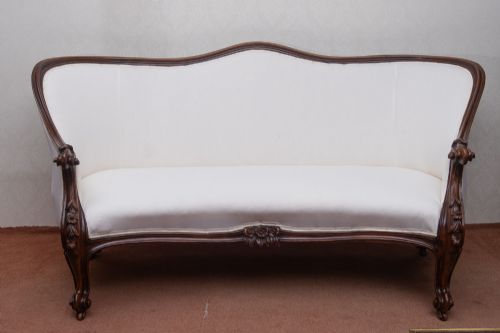


French Period Sofa
A french period sofa brings the grand proportion and carved timber of continental salons directly into a sitting room.
French Period Sofa
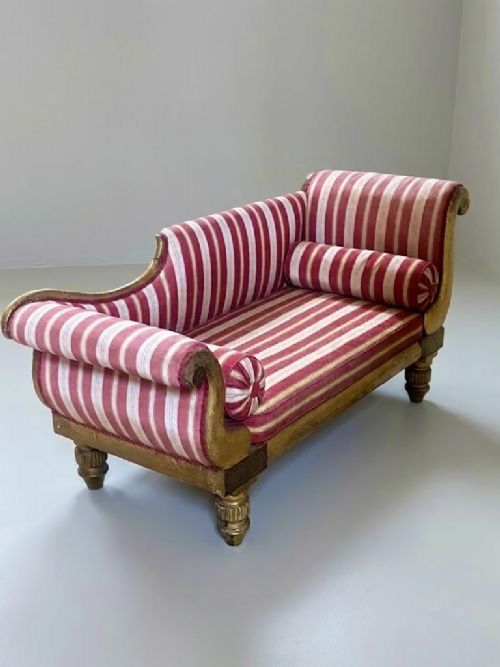
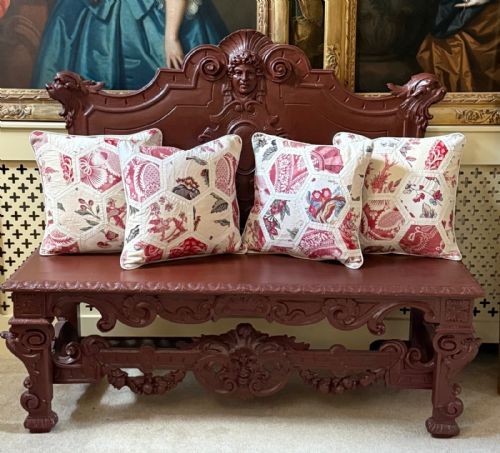
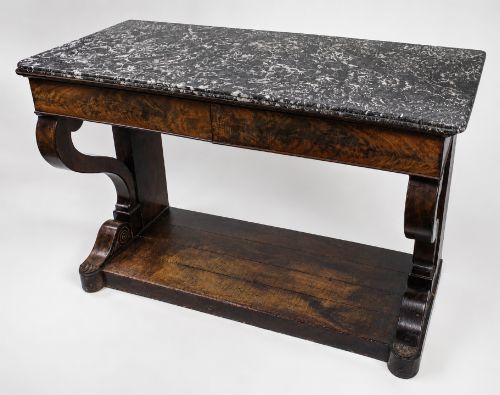
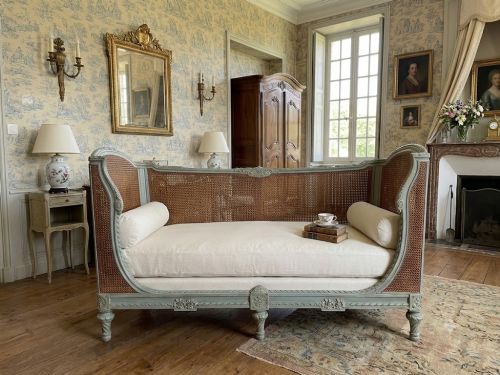
When searching for a french period sofa, buyers encounter pieces spanning the nineteenth century alongside early twentieth-century revivals. The selection includes giltwood settees, painted caned day beds, and mahogany couches designed for formal reception rooms.
Most examples belong to the nineteenth century, drawing heavily on Louis XV and Louis XVI design vocabularies. Makers of the period produced both gilded showframes and fruitwood caned settees intended for lighter drawing rooms.
Alongside large three-seater settees, the category embraces compact canapés and chaise longues. These smaller seating forms suit modern interiors while retaining traditional continental proportions.
Materials and construction methods
Carving and framing rely on hardwoods such as mahogany, walnut, fruitwood, and beech. Frames frequently feature giltwood or painted finishes applied over gesso or direct timber.
Caned panels utilise natural cane woven through drilled frame margins to create light backrests and seats. Upholstered variants employ traditional stuffing techniques beneath silk, linen, tapestry, or patterned fabric.
Listings feature frames in giltwood, painted wood, mahogany, walnut, and fruitwood across the nineteenth and early twentieth centuries.
Determining quality in historical seating
Superior examples display crisp hand-carving along the crest rails and cabriole legs, where floral motifs and scrollwork remain sharp. Lower quality production often shows softer moulding details and simpler machine-cut joinery.
The integrity of the original wood frame dictates structural merit, particularly where gilded or painted surfaces show genuine age. Secondary alterations to upholstery webbing or frame reinforcements influence how well a piece maintains its original posture.
Jean-Joseph Chapuis
The French Period Sofa Glossary
- Canapé
- An upholstered wooden settee with an exposed decorative frame. This term frequently describes continental forms with carved backs and open arms.
- Giltwood
- Timber coated with a thin layer of gold leaf over a prepared gesso ground. It provides the reflective metallic finish seen on formal nineteenth-century salon furniture.
- Caning
- A woven lattice made from rattan peel used for chair and sofa panels. It offers a resilient and lightweight surface for seats and backrests.
- Directoire
- A transitional style bridging Louis XVI and Empire periods characterised by neoclassical restraint. Furniture from this era favours simpler geometric lines over exuberant carving.
- Mahogany
- A durable tropical hardwood prized for its deep reddish-brown tone and stable grain. Makers utilised it extensively for high-status framing and occasional tables.
French Period Sofa: Frequently Asked Questions
Can I use a antique settee every day?
Most historical settees function well for daily seating provided the internal webbing and joints remain stable. Checking the frame strength ensures the timber can support regular weight.
Delicate gilt surfaces and antique silk upholstery require gentle treatment to prevent premature wear. Many owners choose durable linen or cotton replacement covers for practical use.
What is the difference between a settee and a canapé?
A settee is a general term for a wide seat accommodating multiple people with an upholstered back and arms. It encompasses various British and continental designs from different centuries.
A canapé specifically denotes a French-style settee featuring an exposed carved wooden frame, open arms, and distinct continental proportions.
How should I care for giltwood frames?
Giltwood requires careful dusting with a soft, dry cloth to protect the delicate gold leaf layer. Moisture and abrasive cleaners will damage the underlying gesso and metal leaf.
Keeping the furniture away from direct sunlight and dramatic temperature swings prevents the timber from warping and the gesso from cracking.