




French Period Settee
A french period settee brings seating of architectural balance and carved elegance straight into a modern salon.
French Period Settee
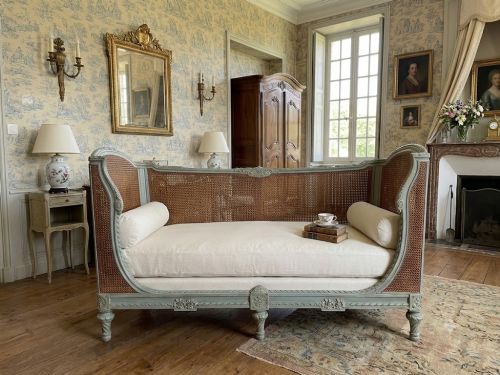
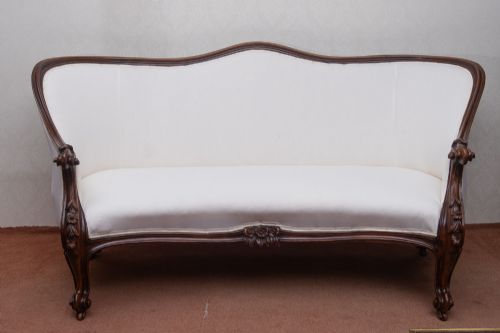
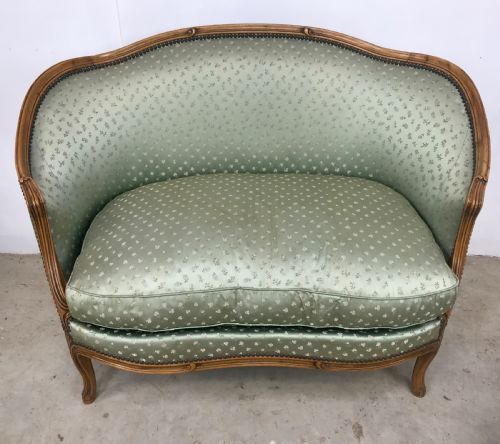
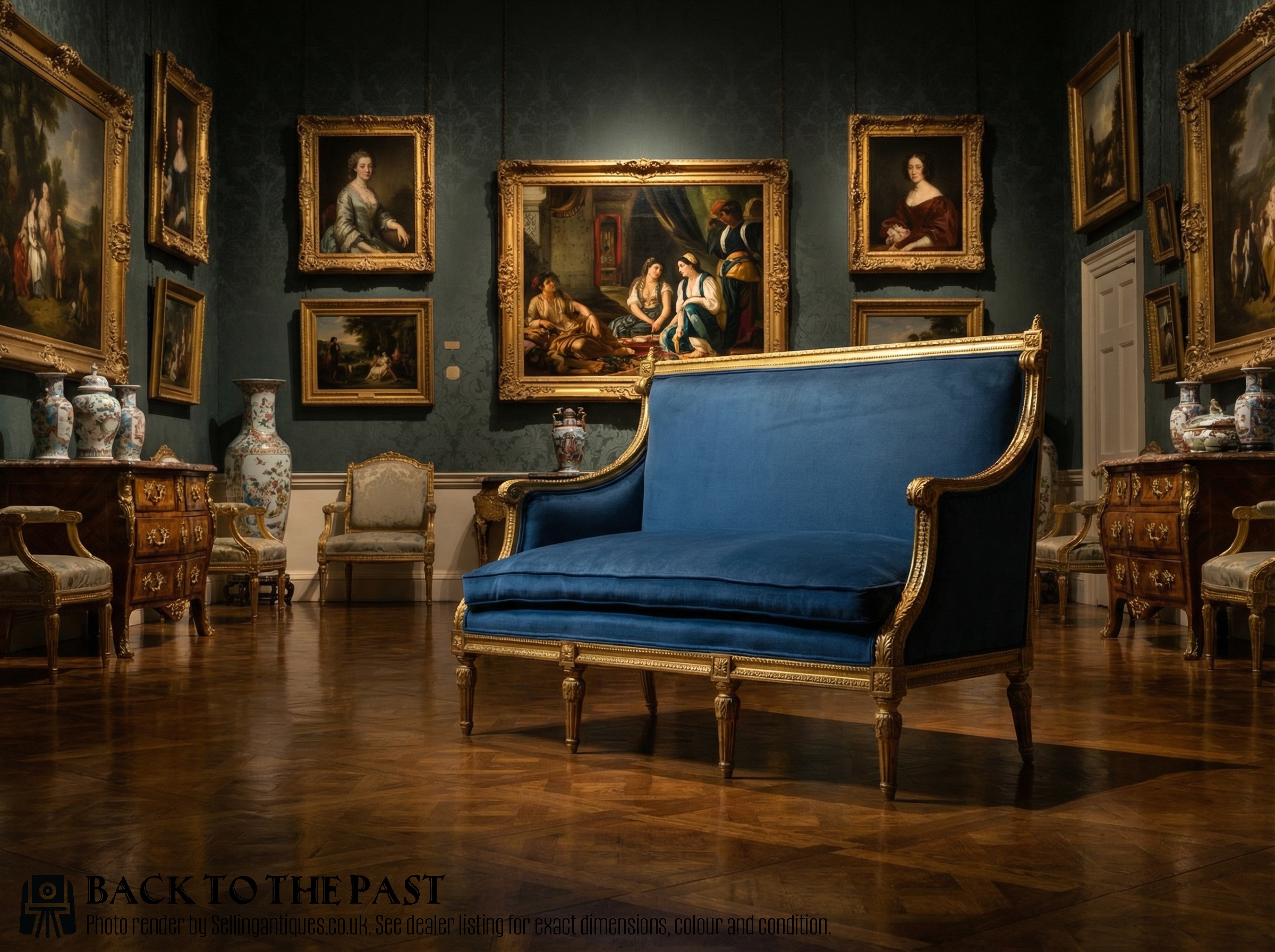
A french period settee encompasses a variety of multi-seat salon forms, ranging from carved daybeds and love seats to larger three-seater couches. These seating pieces typically appear in distinct historical expressions, including the Louis XV, Louis XVI, Empire, and Regency styles.
The materials utilised across these pieces include giltwood, painted wood, carved walnut, fruitwood, and mahogany. Upholstery choices vary from exposed cane panels to tailored fabric, linen, and plush velvet.
Most examples found on this page date from the nineteenth and early twentieth centuries, reflecting classic European interior traditions. Buyers frequently select these settees to anchor a drawing room or provide decorative seating in a hallway.
How they were made
Makers shaped these frames from solid timbers like walnut, mahogany, and fruitwood, often applying gilt leaf or decorative paint over the carved surfaces. Skilled artisans carved intricate floral motifs, fluted legs, and structural rails directly into the wood before finishing.
Cane panels were hand-woven into shaped frames to create breathable backrests and seats on lighter models. Upholstered variants relied on traditional stuffing and textile application to secure fabrics like velvet and linen onto the wooden armature.
French Period Settee Retail Price Guide 2026
Typical asking prices for french period settee among the pieces listed under this phrase on Sellingantiques today, from the lower quarter to the upper quarter. They describe what is for sale here now, not the wider market.
Listings feature items spanning from the early nineteenth century through to the early twentieth century, utilising giltwood, painted wood, and cane.
What varies in quality
The depth and crispness of the wood carving distinguish finer frames from simpler production. Sharp detail in the acanthus leaves or floral scrolls indicates a more skilled hand at the bench.
The integrity of the structural joinery and the original finish preservation determine the overall caliber of the piece. Surfaces retaining their authentic gilding or early painted layers hold higher visual coherence.
The French Period Settee Glossary
- Canapé
- An antique French settee or sofa featuring an upholstered or caned back and seat. It serves as the primary French term for a multi-seat couch.
- Giltwood
- Timber coated with a thin layer of gold leaf or gilt paint. This finish creates a bright, reflective surface characteristic of formal period furniture.
- Cane
- Strips of woven rattan used to form panels on seats and backs. This technique provides a lighter alternative to solid upholstery.
- Day Bed
- An elongated seating form designed for reclining as well as sitting. These often feature asymmetric or corbeille ends.
- Regency
- An English and continental design period spanning the early nineteenth century. Pieces from this era often incorporate classical architectural motifs and clean structural lines.
French Period Settee: Frequently Asked Questions
What is a French settee?
A French settee is a traditional multi-seat upholstered or caned couch designed for formal salons and living spaces. These pieces showcase regional stylistic periods from Louis movements through the nineteenth century.
They function both as primary seating and as decorative focal points within traditional and eclectic interiors.
How do I style a settee?
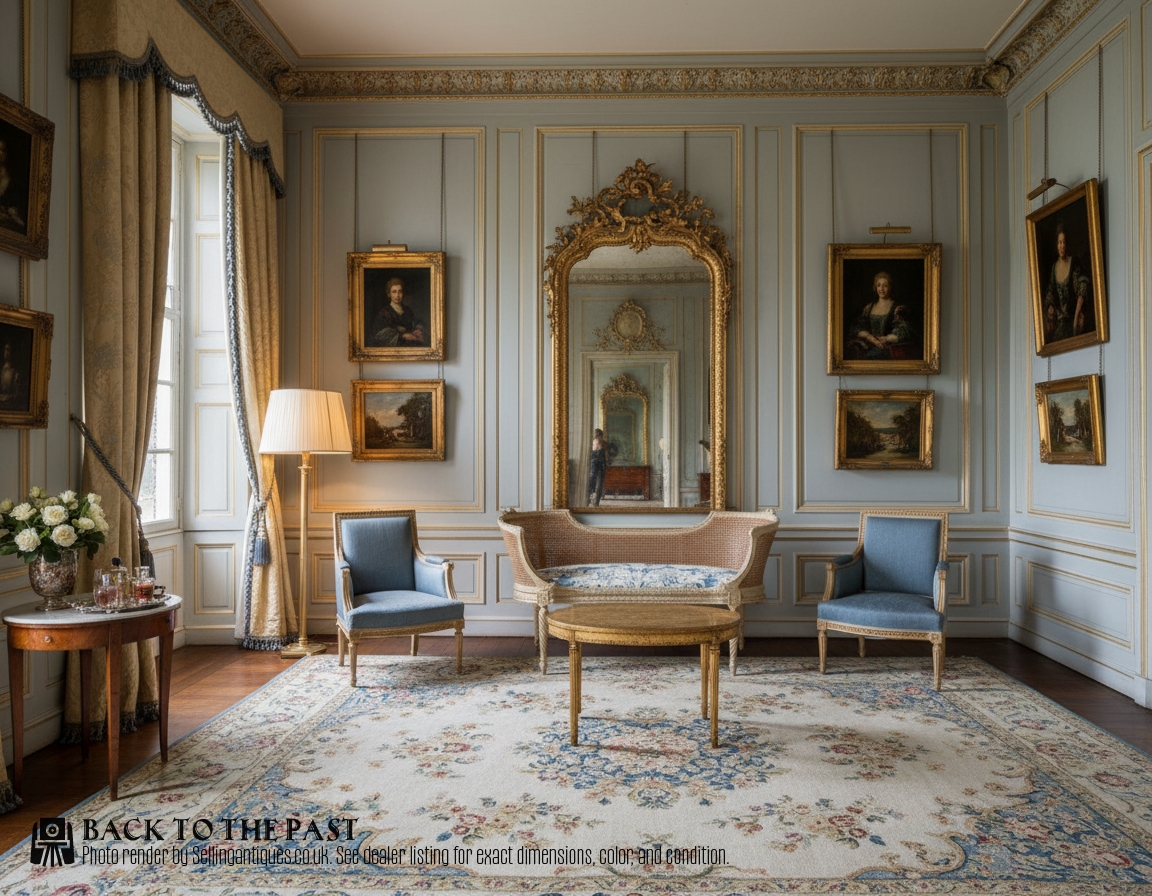
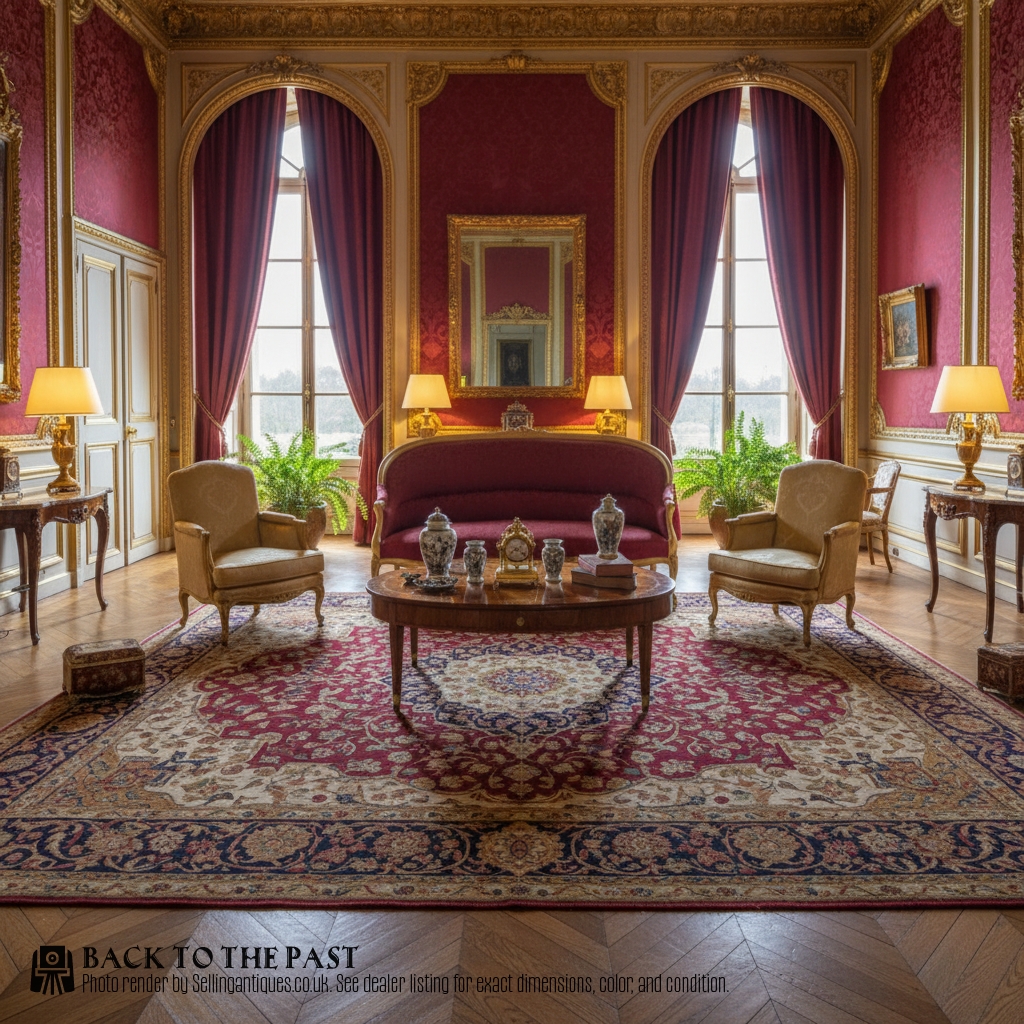
Place the settee away from walls to allow the carved wooden frame and back to remain visible from all angles. Pair it with complementary armchairs or salon tables to create a balanced conversational grouping.
Keep surrounding decor restrained so the carved woodwork and fabric textures retain visual prominence.
Are these settees comfortable?
Many period settees feature upright backs and firm seating profiles built for formal sitting rather than deep lounging. Upholstered versions offer softer support, while caned models provide a firmer, cooler seat.
Adding cushions can adjust the seating depth to suit daily use in a modern room.
How do I identify the style?
Examine the leg shapes, arm supports, and carving motifs to determine the period influence. Louis XV pieces typically display curved cabriole legs and flowing Rococo lines, whereas Louis XVI examples favour straight, fluted legs and neoclassical symmetry.
Material finishes like giltwood or fruitwood further help align the piece with its era of origin.