

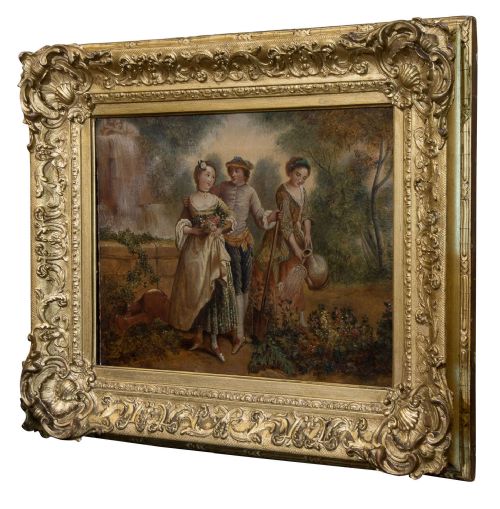


French Pastoral Scene Artwork
French pastoral scene artwork captures rural idylls through oil paintings on canvas and framed prints from the seventeenth to the twentieth century.
French Pastoral Scene Artwork
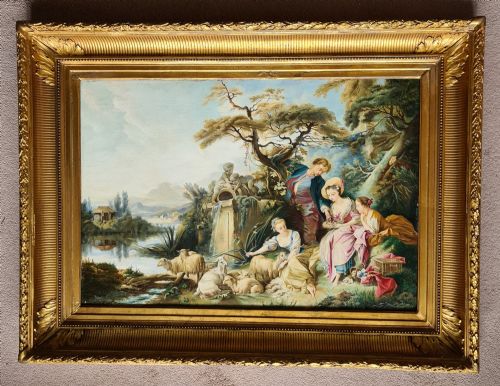
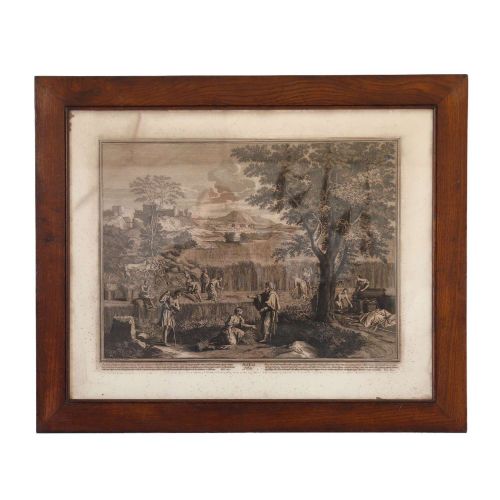
French pastoral scene artwork encompasses oil paintings and fine art depicting rural landscapes, farmyards, cattle by streams, and rustic river views. These pieces range from seventeenth-century engravings and eighteenth-century compositions after Francois Boucher to nineteenth-century Barbizon school canvases and twentieth-century deco-period depictions.
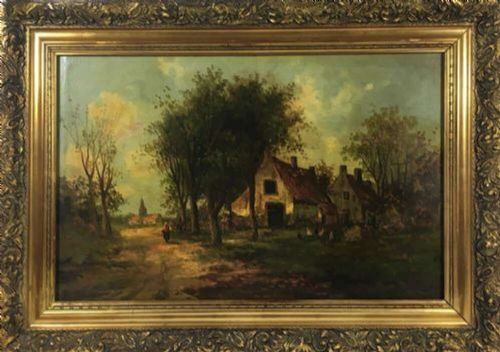
The version most commonly met on this page is the nineteenth-century oil on canvas, often rendered in styles such as French Rococo, Baroque Classicism, and the Barbizon school. Works frequently feature rural figures, haystacks, and rolling hills set in locales like Brittany and Bonny sur Loire.
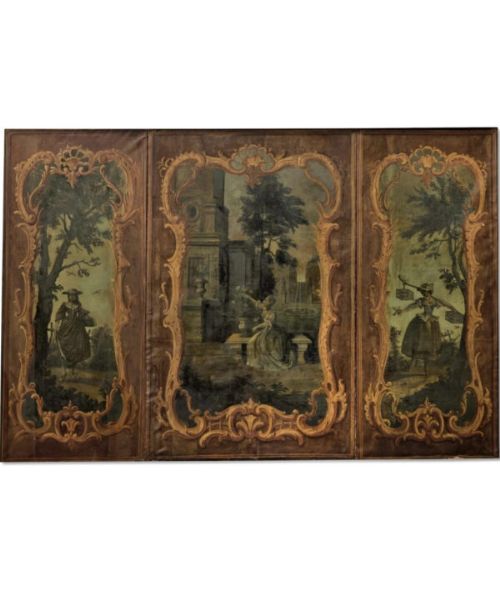
Collectors encounter both large country house paintings and intimate miniature paintings, sometimes presented in ornate gilt wood frames with gesso. Grand grisailles and polychrome triptychs also appear alongside single portraits and pairs of rural canvases.
Evaluating quality and execution
Quality in these pastoral works rests upon the dexterity of brushwork, the handling of light within the rural landscape, and the anatomical accuracy of figures and livestock. Finer examples display subtle tonal gradations and convincing depth in open-air settings.
The preservation of the original canvas and the integrity of the gilt wood and gesso frame contribute significantly to a piece's standing. Finer framing matches the period of the painting and retains its original ornamentation without heavy restoration.
Listings feature oil paintings on canvas alongside framed prints, glass-fronted miniatures, and wood-framed works spanning the seventeenth to twentieth centuries.
Francois Boucher·Poussin·Charles Zacharie Landelle·Jean-baptiste Joseph Pater·Eugene Battaille·Henri Joseph Harpignies
The French Pastoral Scene Artwork Glossary
- Barbizon School
- A nineteenth-century French art movement dedicated to naturalistic landscape painting, focusing on rural farmyards and forests. Practitioners painted outdoors to capture realistic light and atmosphere.
- Grisaille
- A painting executed entirely in shades of grey or neutral monochromatic tones, often used for decorative wall hangings or to imitate relief sculpture. Grand grisailles provide a stark contrast to polychrome works.
- Gesso
- A plaster-like mixture applied to wooden frames as a base for moulding and gilding. It provides a smooth surface for laying down gold leaf.
- Rococo Revival
- A nineteenth-century stylistic movement that revived the ornate, asymmetrical ornamentation and playful pastoral themes of the eighteenth-century French court. It informs many romantic oil paintings on this page.
French Pastoral Scene Artwork: Frequently Asked Questions
What periods do these paintings cover?
The selection spans from the seventeenth century through the Victorian era and into the nineteen-thirties art deco period. Seventeenth-century engravings and eighteenth-century compositions sit alongside nineteenth-century Barbizon canvases.
Later works extend into the early twentieth century, reflecting enduring interest in rural French subjects and regional landscapes.
How were these artworks originally displayed?
Many of these oil paintings were created for country houses and salons, housed within decorative gilt wood and gesso frames. Grand pieces functioned as prominent wall art or wall hangings.
Smaller works, including miniatures and engravings, offered intimate decoration for private rooms and studies.
What subjects appear in these scenes?
Common subjects include cattle grazing by streams, figures by haystacks, farm gates, and rural river landscapes. Artists recorded scenes from regions such as Brittany and Bonny sur Loire.
Mythological and romantic motifs also appear, particularly in works referencing masters like Boucher and Poussin.
How do I identify a Barbizon school piece?
Barbizon pieces focus on naturalistic outdoor settings, such as farmyards and river banks, painted with earthy palettes and atmospheric light. They reject classical grandiosity in favour of direct observation of rural life.
Canvas works from this tradition often date from the mid to late nineteenth century.