







French Parquetry Gueridon
A french parquetry gueridon brings circular elegance and intricate wood patterns into a room, serving as a striking focal point.
French Parquetry Gueridon
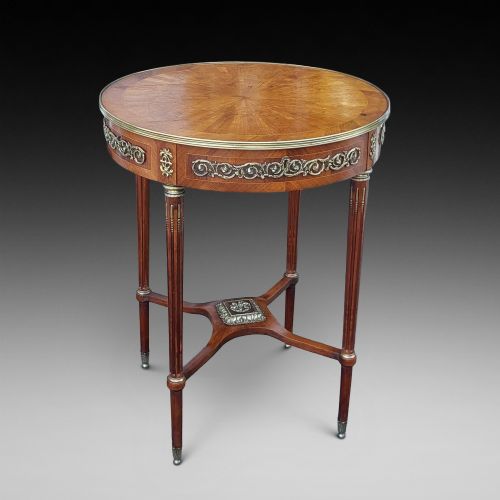
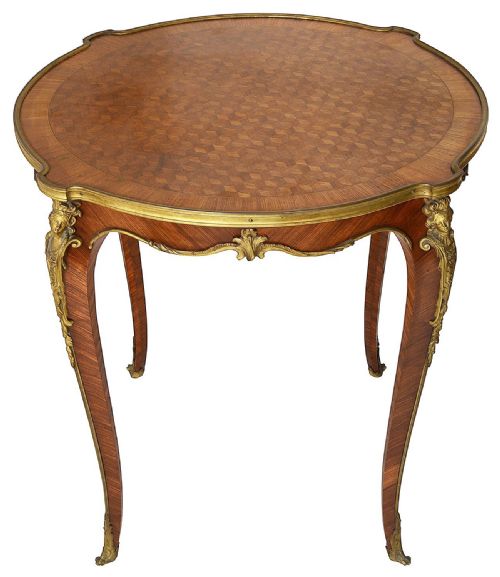
A french parquetry gueridon is a round occasional or centre table characterised by geometric wood veneers arranged on the top. These pieces appear across the nineteenth century and into the early twentieth century, spanning revival movements such as Louis XV and Louis XVI alongside Empire and Neoclassical designs.
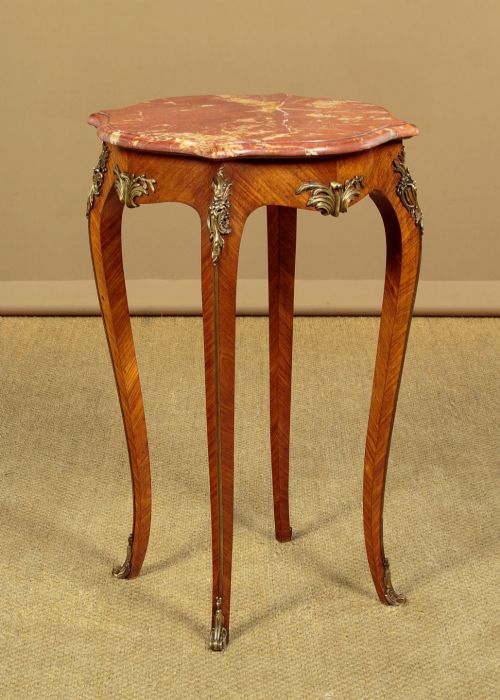
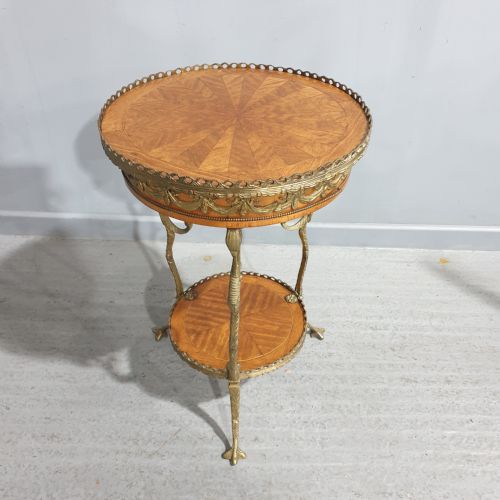
The selection here encompasses side tables, wine tables, lamp tables, and small pedestals suited for domestic display. Walnut, mahogany, satinwood, and kingwood frequently form the body, often paired with marble tops or brass galleries.
Materials and Construction
Cabinetmakers constructed these tables using solid carcases of oak or mahogany beneath decorative veneers of kingwood, satinwood, and walnut. Artisans cut small geometric pieces of timber by hand to create the intricate parquetry and marquetry patterns across the circular tops.
Gilding and metalwork played a central role, with cast ormolu mounts, brass galleries, and bronze details fitted around the edges and legs. Marble inserts frequently provided a heavy, smooth surface for the tabletops of nineteenth-century examples.
French Parquetry Gueridon Retail Price Guide 2026
Typical asking prices for french parquetry gueridon among the pieces listed under this phrase on Sellingantiques today, from the lower quarter to the upper quarter. They describe what is for sale here now, not the wider market.
Listings feature circular occasional and centre tables spanning the nineteenth and early twentieth centuries, constructed in walnut, mahogany, and kingwood.
Assessing Quality and Craftsmanship
The precision of the wood mosaic work dictates the primary tier of craftsmanship in a french parquetry gueridon. Tighter joints between individual veneer tiles and more complex geometric arrangements distinguish superior examples from simpler production.
The quality of the cast ormolu mounts and the weight of the marble top significantly influence the overall standard of the piece. Crisp chasing on the bronze details and substantial secondary timbers demonstrate higher workshop standards.
L.Martin of Paris·A Hugnet Paris·François Linke
The French Parquetry Gueridon Glossary
- Gueridon
- A small circular table on a central pillar or multiple legs, originating in seventeenth-century France. These pieces function as side tables, lamp tables, or wine stands.
- Parquetry
- A geometric mosaic of wood veneers used to decorate furniture surfaces. Artisans arrange contrasting timbers in repeating patterns such as cubes or chevrons.
- Ormolu
- Gilded bronze mounts applied to the edges and legs of fine furniture. Makers cast and chased these metal elements to add ornamental relief.
- Marquetry
- The art of applying pieces of veneer to a structure to form decorative pictures or non-geometric designs. This technique differs from parquetry by depicting floral or figurative scenes.
- Kingwood
- A dense, richly figured timber imported from South America and frequently used in French cabinetmaking. Its dark brown colour and golden streaks suit elaborate veneer work.
French Parquetry Gueridon: Frequently Asked Questions
What is a french parquetry gueridon used for?
These tables traditionally served as small decorative stands for lamps, porcelain, or wine within reception rooms. Today they function effectively as bedside tables, lamp stands, or prominent centre pieces in smaller spaces.
Their circular proportions allow them to fit easily beside seating or in corners where rectangular furniture would block movement. The inclusion of lower tiers or galleried edges on certain models adds practical storage for small items.
How do I identify the period of a gueridon?
Examining the underlying timber, the style of the mounts, and the nature of the parquetry helps determine the age. Nineteenth-century versions frequently adopt Louis XV or Louis XVI revival styles with machine-sawn veneers or hand-cut details.
Later pieces from the early twentieth century often retain cleaner lines while continuing traditional French veneering techniques. Maker signatures or stamps on the bronze mounts or underside can also clarify the production date.
Are marble tops original to these tables?
Many nineteenth-century French tables featured inset marble slabs designed to provide a durable and cool surface for drinks or plants. These stones were cut specifically to fit the recessed circular frames of the wooden tops.
Matching the edge profile of the marble to the wooden rebate helps confirm originality. White, grey, and coloured varieties appear across different revival styles.
How do I care for a parquetry top?
Maintaining wood veneers requires avoiding direct sunlight and excessive moisture to prevent the timbers from fading or lifting. Gentle dusting with a soft, dry cloth preserves the polished finish.
Applying a specialist wax occasionally nourishes the grain without building up a heavy residue. Keeping the table away from direct heat sources protects the old glue beneath the veneer.