
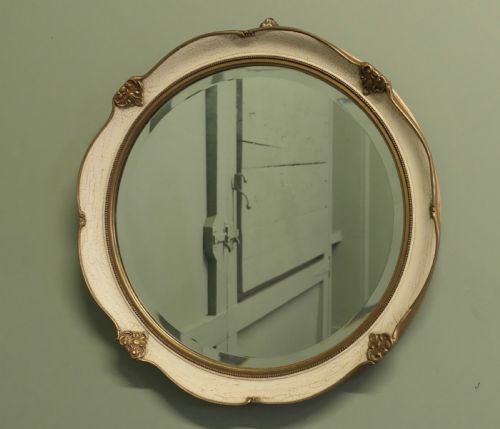


French Painted Vanity
When you look for a french painted vanity, you find dressing tables, mirrors, and stools spanning the nineteenth and early twentieth centuries.
French Painted Vanity
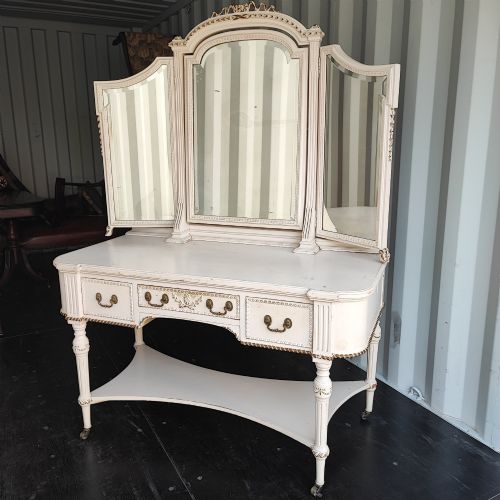
A french painted vanity encompasses dressing tables, mirrors, and matching seating designed for personal grooming. The pieces on this page span the nineteenth century through the 1930s, showing influences from Louis XV style, Louis XVI revival, and French Provincial design.
Buyers frequently encounter dressing tables paired with wall mirrors, dressing table mirrors, and boudoir stools. Materials such as painted wood, gesso, and glass define the primary forms available in this selection.
How they were made
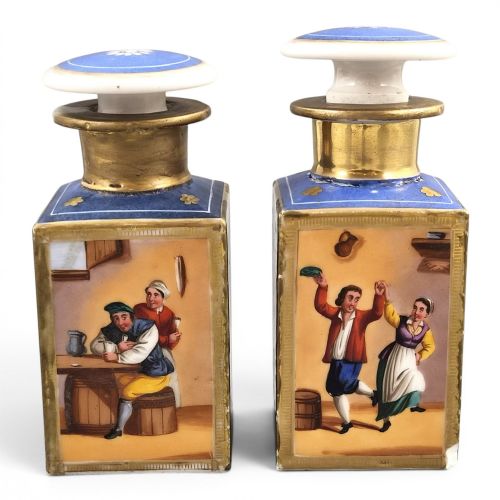
Wood serves as the foundational material for dressing tables, desks, and stools, often enhanced with gesso and layers of paint. Artisans applied gold leaf and gilt detailing to wooden frames and porcelain items.
Glass forms the mirrors and dressing table components, whilst brass and ormolu provide structural embellishments and hardware. Fabrics like silk appear on upholstered stool seats.
Materials across the inventory include wood, glass, paint, painted wood, gesso, brass, gold leaf, and fabric.
What varies in quality
The standard of surface finish dictates the visual impact of each piece. Original paint surfaces, delicate hand-painted floral motifs, and preserved gilding separate finer examples from later or simpler interpretations.
Construction details such as carved wooden elements, ormolu mounts, and integrated brass embellishments indicate the level of craftsmanship invested by the maker.
Maples of London and Paris·Jacob Petit·Joseph Meissonnier
The French Painted Vanity Glossary
- Gesso
- A plaster-like mixture applied to wood surfaces to prepare them for painting or gilding. It provides a smooth base for decorative details.
- Ormolu
- Gilded bronze used for mounts, decorative hardware, and decorative objects on furniture and dressing items. It adds metallic contrast to painted wood.
- Louis XV Style
- A decorative style characterised by asymmetry, curves, and rococo motifs. It influences many of the nineteenth-century stools and tables.
- Gustavian Neoclassical
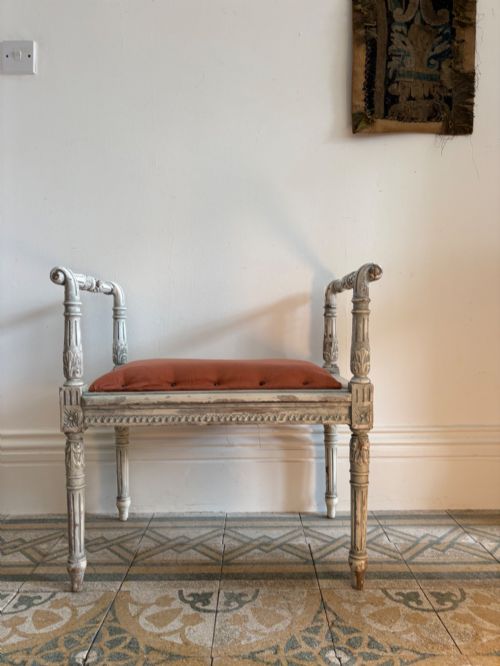
- A Swedish adaptation of neoclassical design featuring restrained painted finishes and clean lines. Stools from this tradition appear in the selection.
French Painted Vanity: Frequently Asked Questions
What periods do these pieces date from?
The inventory spans the nineteenth century through the early twentieth century, including items from the 1860s, 1870s, 1880s, 1890s, 1900s, and Art Deco pieces from the 1930s.
Specific dates depend on the individual maker and style, ranging from Louis XVI revival pieces to later painted items.
What materials are used in these vanities and accessories?
Items utilise wood, painted wood, glass, gesso, brass, gold leaf, and fabric. Smaller accessories incorporate porcelain, enamel, and champleve.
Surfaces often feature original paint finishes, gilt detailing, and silk upholstery.
How do I identify a Louis XV style stool?
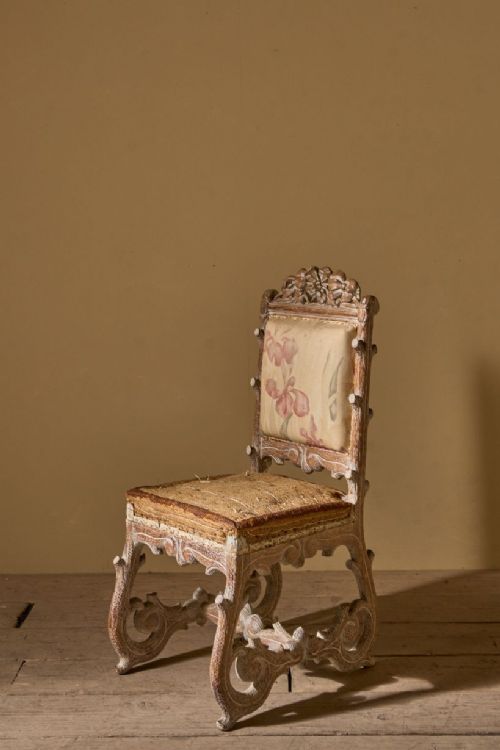
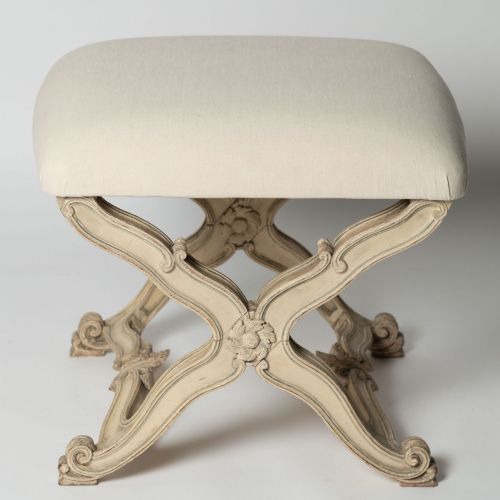
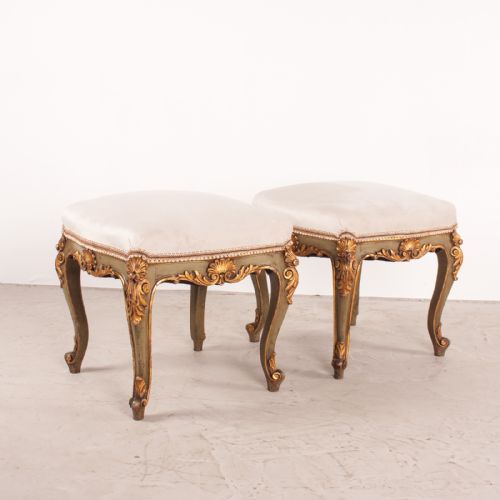
Louis XV style pieces typically display curved wooden legs, carved ornamentation, and painted or gilded surfaces. They frequently accompany dressing tables and desks.
Upholstered seats in silk or matching fabrics complete the seating forms.
Are dressing table mirrors sold separately?
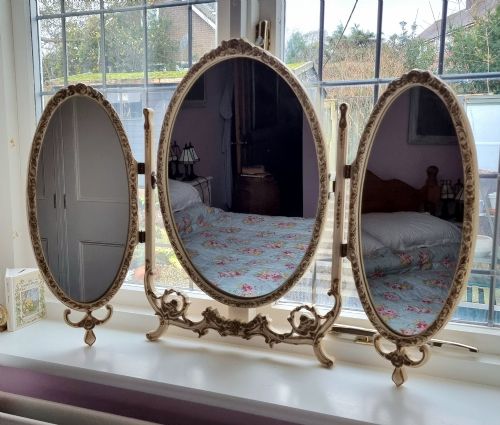
Yes, the selection includes standalone wall mirrors, triple dressing table mirrors, and hand-mirrors alongside complete dressing tables.
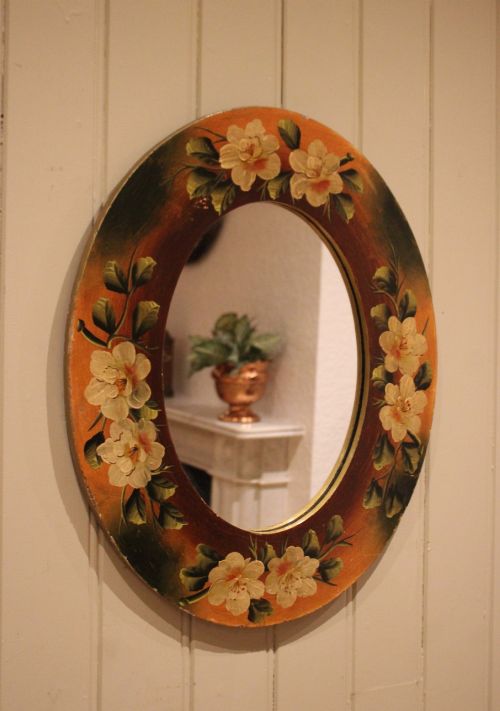
Items range from oval floral painted wall mirrors to Art Deco gilt and cream designs.