

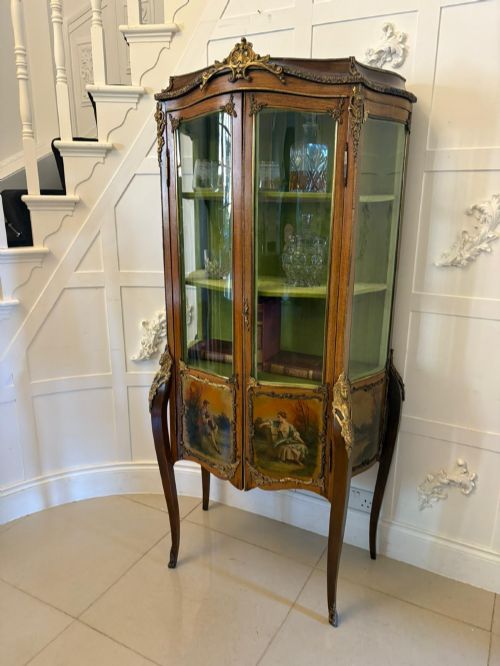
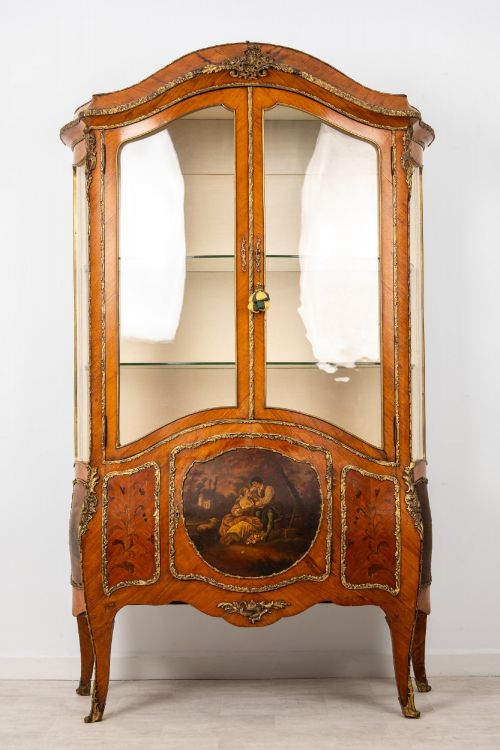


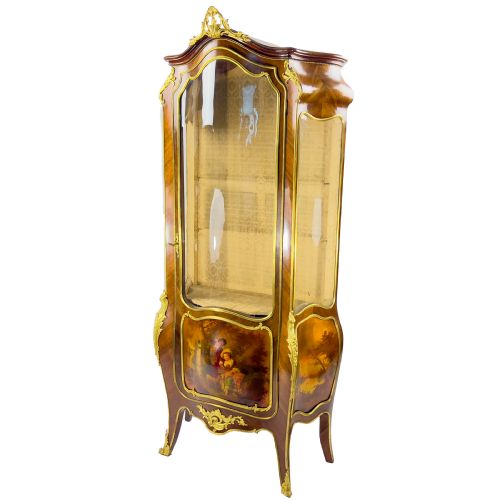
French Painted Panel Cabinet
A french painted panel cabinet brings figurative artistry and gilt mounts together, offering a display piece designed to catch the eye.
French Painted Panel Cabinet
A french painted panel cabinet combines display surfaces with figurative or decorative painted scenes, often taking the form of a vitrine or side cabinet. These pieces draw heavily on revival aesthetics, with Louis XV Revival and French Rococo Revival styles dominating the selection.
Most examples hail from the nineteenth century, utilising woods such as kingwood, walnut, and mahogany alongside glazed doors and marble tops. Alongside full cabinets, buyers also encounter related architectural elements like painted doors and architectural salvage.
The integration of painted panels, frequently executed in the Vernis Martin tradition, defines the visual character of these furnishings. They serve primarily as focal points in a drawing room or salon, designed to showcase porcelain and curiosities.
Assessing Quality
The finesse of the painted panels dictates the overall standard of the piece, separating mass decorative work from master artistry. Hand-painted scenes with subtle shading and detailed human figures command greater attention than simple, repetitive floral motifs.
Mount quality also plays a defining role, with cast ormolu and gilt bronze showing crisp chasing and secure integration into the woodwork. Heavier timber selection, marble tops with rich veining, and balanced proportions across revival forms distinguish superior examples.
French Painted Panel Cabinet Retail Price Guide 2026
Typical asking prices for french painted panel cabinet among the pieces listed under this phrase on Sellingantiques today, from the lower quarter to the upper quarter. They describe what is for sale here now, not the wider market.
Several listings include pairs of antique doors, proving that a french painted panel cabinet can sometimes start with just the entrance.
The French Painted Panel Cabinet Glossary
- Vernis Martin
- A simulated Japanese lacquer developed in eighteenth-century France by the Martin brothers, later imitated in nineteenth-century revival pieces. It uses successive layers of varnish to achieve a luminous, polished finish over painted scenes.
- Ormolu
- Gilded bronze mounts applied to furniture for decorative and structural accentuation. The technique involves a mercury-gilding process on historical pieces, producing a rich metallic sheen.
- Vitrine
- A glass-fronted display cabinet specifically designed to exhibit porcelain, silver, and small collectibles. These pieces often feature glazed side panels to maximise interior light.
- Louis XV Revival
- A nineteenth-century design movement inspired by the curves, asymmetry, and natural motifs of the mid-eighteenth-century French court. It favours serpentine forms and cabriole legs.
- Kingwood
- A dense, richly grained tropical timber used extensively as a veneer on fine French cabinets. Its deep brown colour and distinct figuring make it a hallmark of luxury furniture.
French Painted Panel Cabinet: Frequently Asked Questions
Where should I place a vitrine cabinet?
A vitrine suits drawing rooms, reception spaces, or hallways where natural or artificial light can illuminate the interior display shelves.
Because these cabinets often feature glass side panels and delicate painted artwork, placing them away from direct sunlight protects both the timber and the painted surfaces from fading.
How do I identify a revival piece?
Nineteenth-century revival pieces often utilise machine-sawn internal timbers and standardised ormolu casting methods, even when employing eighteenth-century design vocabulary.
Examining the construction of the carcase, the wear on the internal shelving, and the composition of the painted panels helps distinguish nineteenth-century interpretations from earlier originals.
What care do painted panels require?
Painted and varnished panels require stable indoor humidity and temperatures to prevent the lacquer from crazing or lifting from the wooden substrate.
Dusting should be done gently with a dry, soft cloth, avoiding commercial polishes or moisture that might penetrate the varnish layers.